Chinese scientists boost hydrogen fuel cell power fourfold with new design
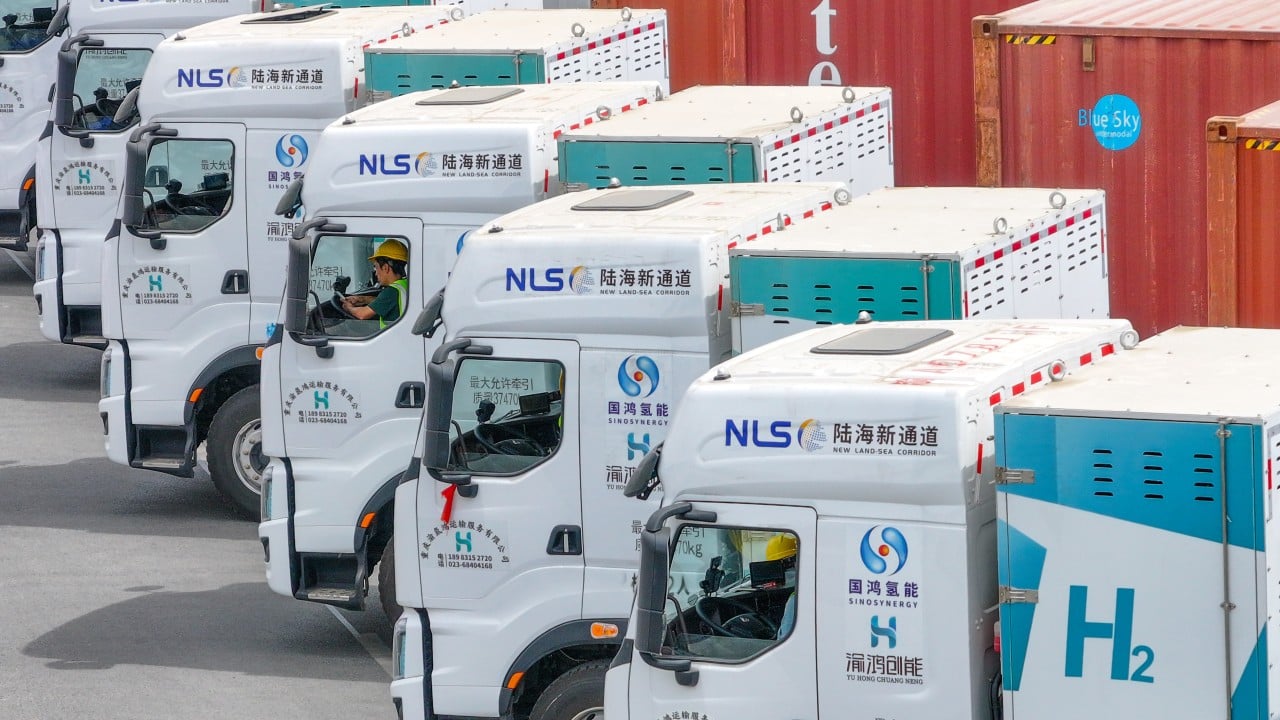
Chinese scientists have developed a way to generate a fourfold increase in power output of hydrogen fuel cells, an advance that could broaden their use from road vehicles to space missions.
Hydrogen is widely viewed as a promising clean energy source for a low-carbon future. Fuel cells convert the chemical energy in hydrogen directly into electricity, producing water as their only exhaust.
In a study published in the peer-reviewed journal Science on Thursday, researchers at the Beijing Institute of Technology reported a major advance in proton-exchange membrane fuel cells (PEMFCs), the type already used in many hydrogen-powered vehicles.
PEMFCs operate at relatively low temperatures, generally between 60 and 80 degrees Celsius (140 to 176 degrees Fahrenheit). They can convert about 50 to 60 per cent of the energy in their hydrogen fuel into electricity.
The process is straightforward: at the anode, hydrogen molecules give up electrons and become protons. While the protons pass through an electrolyte membrane to the cathode, the electrons flow through an external circuit, generating electricity. At the cathode, the protons, electrons and oxygen combine to form water.
The bottleneck lies in the speed at which protons can move through the catalyst layer, the part of the fuel cell where chemical reactions take place. For years, industry-standard materials such as Nafion – a synthetic polymer commonly used as a proton-conducting membrane – have tended to form tightly packed structures at the nanoscale when mixed with catalysts. This can slow proton transport and limit the cell’s efficiency.
KioskNews shows a cleaned-up reading view extracted from the publisher’s page — the original always lives on their site, not ours.