What Netanyahu didn’t say at the UN was as telling as what he did
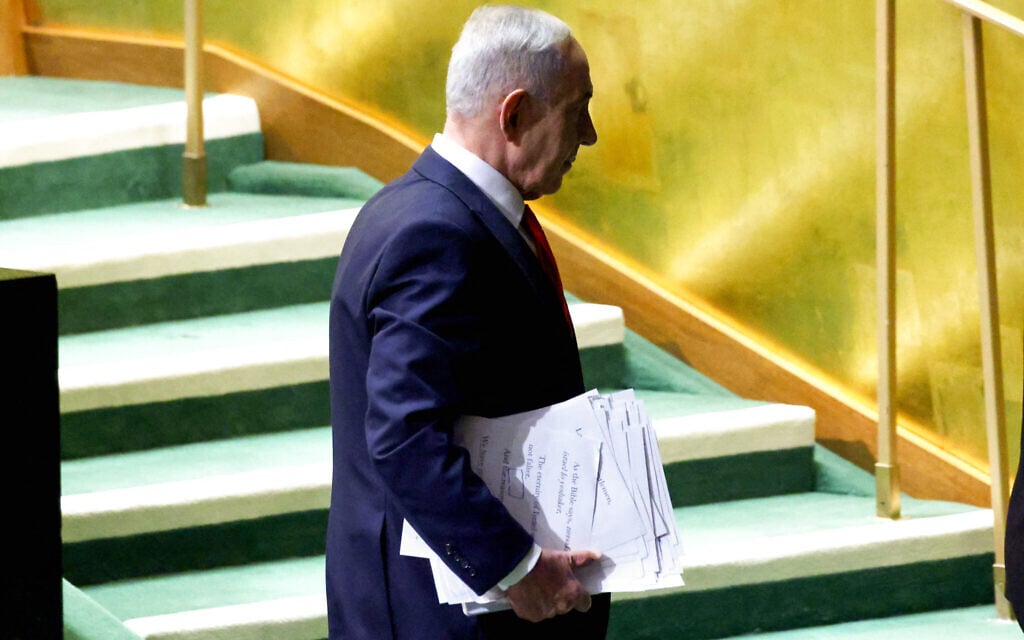
NEW YORK — Prime Minister Benjamin Netanyahu’s 15th address to the United Nations General Assembly on Thursday was in some ways a classic Bibi presentation.
He railed against antisemitism, blasted what he characterized as the moral fecklessness of European leaders, and came equipped with not one, but two props for his performance — a beeper to taunt Hezbollah for the stunning September 2024 exploding pagers and walkie-talkies operation, and a Starlink internet terminal to needle and shame the Iranian regime over its silencing of its own people.
At the same time, there were surprising omissions from the address, omissions that reinforce the sense that Israel does not have a clear and viable plan right now for countering the central threat to its national security: Iran’s nuclear weapons program, its ballistic missiles, and its rapacious, tenacious regime.
0:00 / 0:00
Promoted: Nefesh B'Nefesh - Aliyah is Now

Prior to the speech, senior Israeli officials told The Times of Israel that the “surprises” Netanyahu had promised would come in the form of new intelligence on malign Iranian activities.
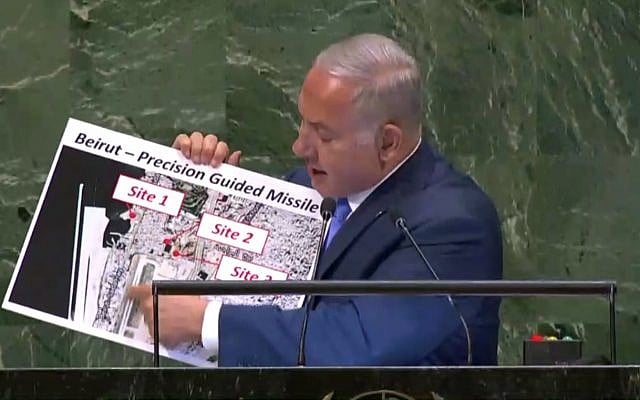
He has made such revelations in past speeches at the forum. In 2018, for instance, he exposed what he said was a “secret atomic warehouse” in Tehran and revealed details of Hezbollah missile factories in Beirut.
Get The Times of Israel's Daily Edition by email and never miss our top stories
By signing up, you agree to the terms
But this time, he revealed nothing new about Iran and its military machine.
He reiterated Israel’s justification for embarking on the war with the US against the Islamic Republic at the end of February — in a joint bid to definitively prevent Iran’s push to the bomb, destroy its ballistic missile capabilities and trigger the collapse of the regime. None of those goals, declared by both Netanyahu and US President Donald Trump, were achieved.
All Netanyahu had left was the empty claim, at the start of his speech, that he had “exactly” fulfilled his vow “to prevent Iran’s murderous dictatorship from developing atomic bombs,” and the prediction, near his conclusion, that “one day, and it may not be far away, the Iranian people will be free… This evil regime will fall.”
Curiously, he didn’t mention the Abraham Accords or the dream of normalized relations with Saudi Arabia.
And perhaps most surprisingly, he referred to Trump only once in the 40-minute speech, after lauding the US president five times in last year’s address.
Stepping carefully on Iran, to avoid irritating Trump
These omissions and marginalizations suggest a lack of operative pathways ahead.
On Iran, whatever steps Netanyahu might want to take to achieve those original war aims — presumably centered on a return to the intensive use of military force — he cannot publicly demand them.
Doing so would be seen as not only a blatant critique of Trump’s current policy — a mixture of repeated threats and ineffectual attempts at negotiations, an economic blockade that is causing Iran serious pain, pledges to ensure Iran does not attain the bomb, and reiterated demands for full and free passage through the Strait of Hormuz.
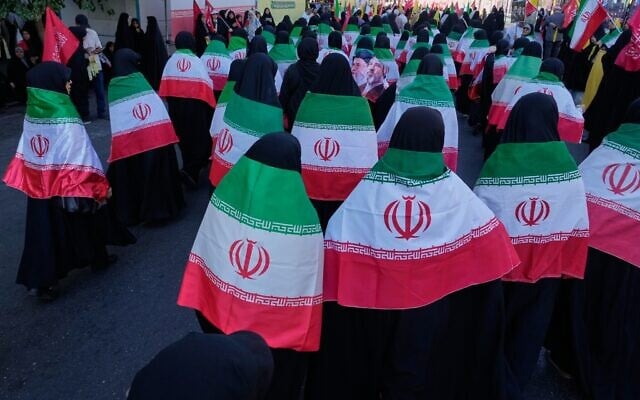
It would also be seen by anti-Israel elements on the global left and increasingly on the right — including figures in Trump’s inner circle — as constituting another unacceptable attempt to drag the US into a Middle East conflict that hurts Americans, voters and soldiers.
At least until the November midterms in the US, Israel has no choice but to sit on the sidelines and quietly prepare for likely conflict a little further down the road.
After November, Trump won’t have any more major election hurdles to worry about in office, and while he will not want to weaken a Republican successor’s chances, he could see logic in returning to major military operations.
The president has also been musing about a deal with Iran after the midterms, but hasn’t explained why a settlement then would be any easier to reach: Iran’s defiant position isn’t about to change based on US election results.
The regime has said repeatedly that the only deal it will accept is one that formally recognizes Iranian control over Hormuz, and that it isn’t even willing to discuss its nuclear program. If that remains the case, the only path to a deal is Trump utterly caving, or renewed military action potent enough to persuade the regime that a deal along Trump’s demands is its only path to survival.

Hence the absence of meat in Netanyahu’s passages on Iran, and the omission of the anticipated intel revelations. What the prime minister is doing now is watching and hoping — from out of the loop — that Trump’s envoys Steve Witkoff and Jared Kushner don’t jump into another Middle East deal that gives Tehran room to wiggle out of core commitments.
Covert, not overt, Saudi interaction
Closer to Israel’s borders, Saudi Arabia isn’t about to normalize ties anytime soon.
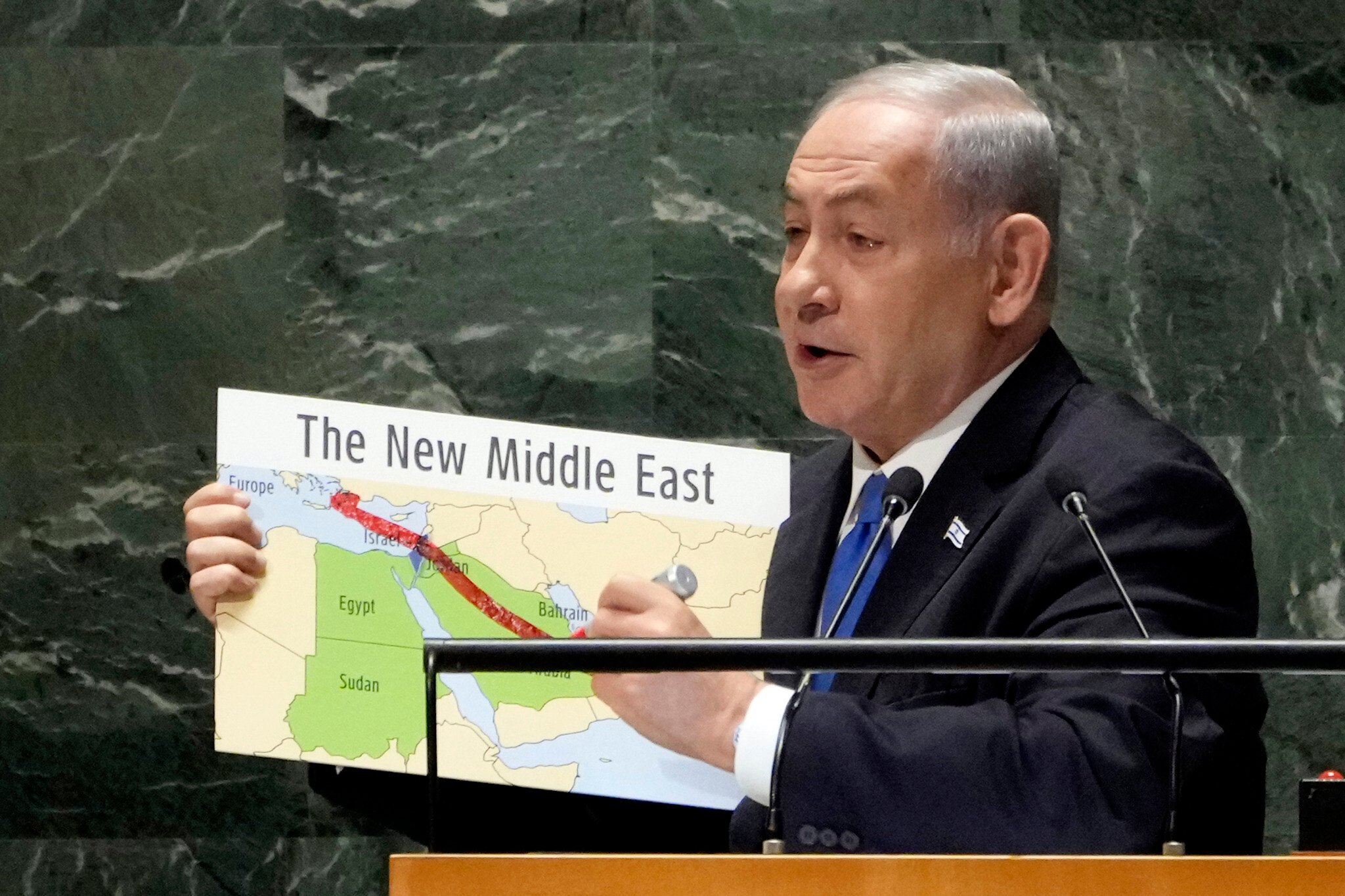
Peace with Riyadh has been a core goal for Netanyahu. At the UN podium in September 2023, barely two weeks before the Hamas invasion, he predicted imminent “historic peace between Israel and Saudi Arabia,” with the potential for “a new Middle East,” and held up the maps to showcase it. But he knows that the Saudis today have innumerable reasons to avoid any such agreement.
Israel’s brand is toxic in the Arab world after three years’ worth of footage of death and suffering in Gaza, and his government is defined in the region by far-right minister Itamar Ben Gvir and persistent settler violence.
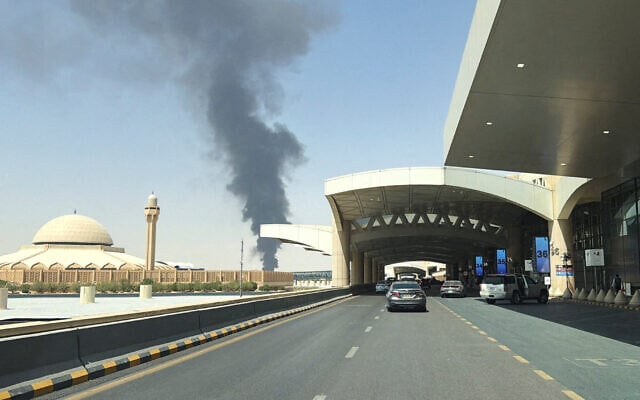
Iran’s attacks on the Saudis and other Arab countries underscore how firmly Riyadh and Jerusalem sit in the same Middle East camp, and strikes on the kingdom by the Houthis in Yemen and Shiite militias in Iraq are becoming a crisis for the Saudis. But they want any assistance from Israel to be covert, and continue to believe that engaging with Iran — rather than running toward Israel — is the best way to stave off future attacks.
Muted praise for the president
Given that Netanyahu faces a difficult election next month, his address was designed first and foremost to convince voters to back him. Though Trump is well-liked in Israel and is seen as one of the most pro-Israel US presidents in history, the way he pulled the rug out from under this year’s US-Israeli campaign against Iran still stings.
It’s also a vulnerability for Netanyahu. He has been attacked by domestic critics as being too pusillanimous in the face of Trump, letting a famously inconsistent president make decisions that went to the core of Israel’s national security.
If Netanyahu had again lavishly praised Trump from the podium while the president maintains his incoherent approach toward defeating the Islamic Republic, it would only have cemented the image in the minds of Israeli voters of an untenably subservient prime minister.
Moreover, Trump has thus far refrained from endorsing him, and was unable to find time to meet with him when Netanyahu was in town for the UN.
Should the Israeli public decide on October 27 that they want him to remain in office, Netanyahu might be able to use the next UN General Assembly to present new intelligence and talk tough on Iran, or assert fresh possibilities of regional normalization. But it is far from certain that he’ll be the Israeli prime minister making the speech next September.
Help us report truthfully on social media

As a multimedia journalist, my job is to take the quality, fact-based journalism produced by The Times of Israel newsroom and make it accessible across every platform — from Instagram posts to podcasts to short-form videos.
This is how many, especially young people, consume news these days. But misinformation is rampant on social media. Our team at ToI produces accurate, responsible short-form reporting on Israel and the Jewish world.
If you believe in the importance of factual social media journalism, please consider joining our reader support group, The Times of Israel Community. Your financial support is essential to sustain responsible multimedia reporting.
— Gabriella Jacobs, multimedia journalist
Support our work Support our work Already a member? Sign in to stop seeing this
KioskNews shows a cleaned-up reading view extracted from the publisher’s page — the original always lives on their site, not ours.