Beagles bred for research get new life amid questions over federal oversight
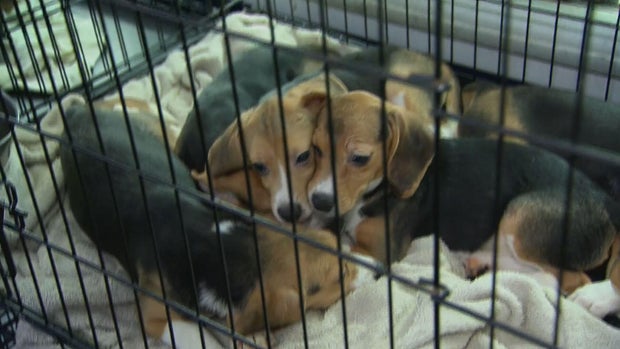
The final 155 beagles from Ridglan Farms, a Wisconsin facility that bred dogs for biomedical research, are beginning new lives after being relocated to a Florida rescue — the last of more than 2,000 dogs released from the facility this year.
Despite a growing push to reduce animal testing, USDA records show that more than 37,000 dogs were used in U.S. research last year. Many research dogs come from commercial breeding facilities regulated under the federal Animal Welfare Act as well as state animal-welfare and licensing laws. But a CBS News investigation found a stark disparity between state and federal regulatory findings at Ridglan — raising questions about federal government oversight at these facilities.
Wisconsin's Department of Agriculture, Trade and Consumer Protection investigated Ridglan between 2024 and 2025 and identified 494 violations, with several pertaining to dogs being handled in a practicable and humane manner.
In January 2025, Dane County Circuit Court Judge Rhonda Lanford found probable cause to believe Ridglan had committed crimes under Wisconsin's laws against animal cruelty, and appointed a special prosecutor to investigate alleged violations.
The facility ended up reaching a settlement to avoid criminal prosecution, agreeing to surrender its state license to sell dogs last month. Ridglan says it did not violate any state or federal laws.
Federal records, by contrast, reveal few signs of trouble. USDA inspection records reviewed by CBS News show federal inspectors cited four violations at the breeding facility and two at the research facility during inspections at Ridglan over the past decade, none classified as critical.
"To me that doesn't make any sense," Rep. Mark Pocan, a Wisconsin Democrat, told CBS News. "When you have that amount of state violations, clearly that stood out."
Ridglan denies violating state or federal animal-welfare laws and disputes allegations that it mistreated dogs, saying it has a "well documented history of exemplary animal care." It said the USDA was the "leading authority … that ensures animals involved in biomedical research are well cared for under strict federal guidelines" and that federal inspectors only found non-critical issues at its facility.
The USDA's own inspector general has repeatedly raised concerns about federal oversight of dog breeders in general for the past three decades. Its latest audit from 2025 found problems with USDA's inspection system and concluded that "inconsistent and untimely inspections may have contributed to the dog breeders' continued violation of AWA [Animal Welfare Act] requirements."
USDA told CBS News it works with state officials "to maximize enforcement outcomes" and has taken "swift and meaningful steps to strengthen oversight," including implementing the inspector general's latest recommendations.
The final group of 155 dogs was released to Big Dog Ranch Rescue, marking the end of a monthslong relocation effort. The rescue organization and its founder, Lauree Simmons, working with other rescue groups, helped negotiate the release of more than 2,000 beagles from Ridglan.

"They choose beagles because they're easy to handle and they're so forgiving. You hurt them one day and they're going to forgive you the next and let you do it all over again. This is inhumane," said Simmons.
"For me, it's never enough until animal cruelty ends," Simmons said. "I'll do this till the day I die."
The debate over how research animals are treated comes as the federal government is increasingly encouraging alternatives to animal testing. But many scientists say animals still play an important role in medical research.
Former veterinarian Larry Carbone, who has spent decades caring for animals in research laboratories, told CBS News that while scientists can increasingly use human cells and tissues, those methods cannot always replicate how a drug or disease interacts with an entire living body.
"Cancer was mostly a death sentence," Carbone said. "Now most of us know people who are taking HIV meds or HIV preventions, who are living with cancers or living post-cancer — all from things that were developed using animals."
In:
Wisconsin dog breeder faced nearly 500 state violations, but didn't see federal enforcement
KioskNews shows a cleaned-up reading view extracted from the publisher’s page — the original always lives on their site, not ours.