I don’t have children. So who will I leave my precious possessions to when I die? | Kiran Sidhu
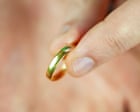
A friend of mine recently discussed his will with me. He talked about the importance of looking after his daughter financially when he’s gone. As a child-free woman, I confidently told him my money will go to organisations that have meant something to me: Macmillan Cancer Support and animal charities. It bemuses me how people think the absence of children is a problem when it comes to inheritance money; it’s always been obvious to me that I’d give my money to causes that touch my heart. But then my friend served something of a curveball. He asked me who will have my deceased mother’s ring?
It made me think: where do the precious artefacts from our lives go when we are no longer here? Whenever I’m away from home I look forward to being reunited with these things: the quirky vase that sits in the window of my study, and the owl candlestick, a birthday gift from my potter friend. These items carry parts of me – what will become of them? If you have children, the answer to this question is not presented to you as a puzzle; like a constellation of stars, the answer is perfectly aligned. If you don’t have children, the question can lead to existential angst.
This problem has caused both consternation and fascination among my child-free friends. It is a conversation topic that is something of a black hole.
I have a 12-year-old goddaughter – if I passed my mother’s ring to her (she was one when my mother died and so doesn’t remember her), can I trust her to cherish it? If she was my own daughter, would it be different, would I still feel this angst? My friends and I have wrestled with this question.
I’ve seen enough episodes of Antiques Roadshow to know that the world is full of people who cherish items that once belonged to relatives they have never met. If the ring went to my goddaughter, I’d be the last custodian who really knew what it meant to my mother. But a new relationship would be anchored with it: the one that I have with my goddaughter. Understanding this has made me realise that sentimentality can and does still get passed down.
I realise my concerns about the passing on of my mother’s ring stems from trying to hold on to what is tangibly left of her. Inadvertently, I have been willing time to stop. The philosopher Heraclitus said: “No man steps in the same river twice. For it’s not the same river and he’s not the same man.” Life moves forward and the lives of the first custodians of the things we hold dear, who have long passed, will become backstories.
When I’m gone, I will no longer be the custodian of the ring – and its meaning will alter with its new owner. This is how life works; in the exchange of hands. One day I will have to let go of what can no longer belong to me. Acknowledging this has brought me some clarity and comfort.
However, an unexpected conundrum has also popped up in my circle of child-free friends. My friend has two nieces and a nephew. The nieces don’t make an effort to be in her life and she plans to leave what she has to her nephew. She has been told this would cause strife among the siblings and her plan is “inconsiderate”. How much should we consider the feelings of others when it comes to writing our wills?
after newsletter promotion
The contents of our wills are not just the last performance of our lives – but the lasting performance. Child-free people may be at liberty to choose the recipients of our possessions without being bound by expectation and tradition, but we’re more open to rigorous criticism because of that freedom. It’s not as formulaic as leaving it to the kids.
The artist David Hockney died without having had children, but will leave a bigger legacy to the world than most. I’m a writer; perhaps my words will touch 10 or a thousand people, certainly more than the number of children I could have had. I will be a benefactor to many, rather than a few, through my words and the money I will leave to charity.
In the end, we all leave some form of a legacy whether we have children or not; traces of ourselves that whisper of our past existence. I’m not interested in any grandiose legacy when I’m gone, but I cannot deny, there’s something beautiful about leaving a token of ourselves in a world that we’ve left behind.
-
Kiran Sidhu is a freelance journalist and writer. She is the author of I Can Hear the Cuckoo. She also wrote the Bafta award-winning documentary Heart Valley.
KioskNews shows a cleaned-up reading view extracted from the publisher’s page — the original always lives on their site, not ours.