LOCAL ELECTIONS 2026: Ten critical questions as South Africa heads into high-stakes poll
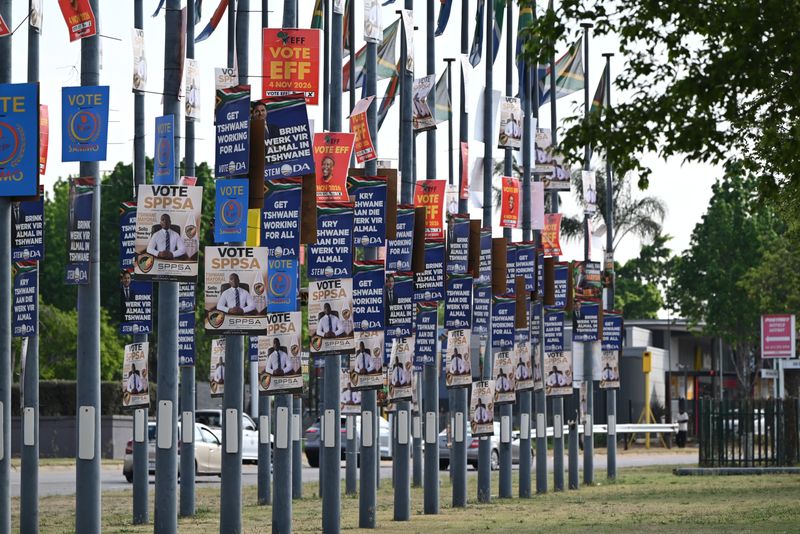
As South Africa prepares for the 2026 local government elections, key questions surround declining voter turnout, rising political fragmentation, and the growing dominance of coalition governance. With major battleground municipalities at stake and smaller parties positioned as kingmakers, the upcoming vote could fundamentally reshape the country’s local political landscape.
We look at 10 big questions that will define the 4 November elections.
1. How many voters might show up on polling day?
Data from the Electoral Commission of South Africa (IEC) shows that the number of voters who turn up on polling day has steadily declined over the years from a high of 89.3% in 1999 to an all-time low of 58.6% in 2024.
Polling data by eNCA and Mark Data published on 25 October predicts that just 48.8% of registered voters will turn up on election day. Polling data from market research company Ipsos showed that 47% of respondents felt that no political party represented their views, and 38% had no interest in politics or elections.
A low voter turnout often benefits the DA as it correlates with declining support for the ANC, indicating that disgruntled ANC voters are more likely to stay at home.
2. Are we moving towards a two-party system or becoming even more fragmented?
Polling data from Ipsos, News24, the Social Research Foundation (SRF) and The Common Sense has indicated that although support for the ANC is set to decline to between 22% and 32%, no other political party looks likely to get an outright majority.
Only the SRF poll predicts that the DA is likely to outpace the ANC and lead at 36%, up from a 19.87% result in the 2021 local government elections. Other polls put the DA slightly behind the ANC, with both around 30%.
Dr Harlan Cloete, local governance and public leadership research fellow at the Centre for Gender and Africa Studies at the University of the Free State, says South Africa’s political system is becoming more fragmented. This is because breakaway parties like the MK party and the EFF, as well as the SACP running independently for the first time, are likely to capture more of the ANC’s support base.
3. Could the ANC lose control of Gauteng metros?
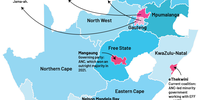
Dissatisfaction over service delivery and growing opposition competition threaten the ANC with further losses in major municipalities. Persistent water shortages, power outages, sewage spills and road decay dominate voter concerns, with Johannesburg and Tshwane’s water crises bringing service delivery failures into sharp focus.
In 2016, the ANC lost outright majorities in Gauteng’s metros and further declined in 2021, securing only 33.6% in Johannesburg, 34.31% in Tshwane and 38.19% in Ekurhuleni. DA-led coalitions ruled the three metros after 2021, but they were all replaced by ANC-led coalitions.
Polling highlights continued strain. October’s SRF poll put national ANC support at 32%, while eNCA-MarkData recorded 21.8% in Johannesburg against the DA’s 35%. The ANC’s prospects are further complicated by the party delaying mayoral announcements until after the elections, alongside a legal battle with the IEC in which a Constitutional Court ruling eventually restored 181 excluded candidates in six municipalities.
These setbacks come against a backdrop of sustained criticism of the ANC’s record in government. With voter dissatisfaction high, the ANC will probably become increasingly reliant on coalitions to continue to govern.
4. Will the EFF’s growth plateau, or can it rebuild its electoral support?
The EFF faces a tough test after its vote share fell from 10.8% in 2019 to 9.52% in 2024. Recent polling shows mixed recovery: October’s The Common Sense and SRF poll placed it at 8%, whereas an earlier Ipsos survey recorded 11%. In 2021, the party won 10.31%, up from 8.19% in 2016.
Several factors threaten its prospects. Competition from the MK party has intensified for disillusioned ANC voters, particularly in KwaZulu-Natal and Gauteng. High-profile departures, including those of Floyd Shivambu, Dali Mpofu and Mbuyiseni Ndlozi, have further raised questions about party cohesion.
Its Pan-Africanist stance on immigration also remains an electoral vulnerability amid rising anti-immigration sentiment.
Though the EFF claims membership growth, the local elections will test whether its organisational strength can reverse its national decline.

5. Could the elections mark a turning point for the MK party, particularly in KwaZulu-Natal?
In what will be the MK party’s first local elections, it is expected to maintain its position as the country’s third-largest party. Various polls indicate it could win between 33% and 55% in eThekwini, potentially winning an outright majority.
Of the four scenarios that polls predict for eThekwini, only two would allow opposition parties to form a coalition without the MK party. And if the Ipsos poll comes to fruition, the party may win an outright majority, potentially becoming the only political party to govern a metro without a coalition (although the DA will probably take a majority in Cape Town).
6. Can the DA secure control of more metropolitan municipalities?
The DA has campaigned for an outright majority in metros and urged voters not to vote for smaller parties to avoid “coalitions of chaos”. However, polling data indicates that coalition governments may be inevitable.
Although the DA is unlikely to overtake the ANC in overall support, polling data indicates that it may edge out the ANC as the top party in a number of key metros. The SRF, News24 and eNCA all predict that the DA may win Johannesburg with between 35% and 42% of the vote. Ipsos data predicts it may unseat the ANC in Buffalo City and Mangaung with 33% and 36% respectively. And eNCA predicts it may lead in Tshwane and Ekurhuleni with 33.9% and 31.2%.
The DA’s ability to govern will depend on the parties it is able to form coalitions with. It has declared that it refuses to enter into coalitions with the MK party or the EFF. This would leave it with potential coalition partners like ActionSA, with which the DA has previously clashed, the PA, another foe, and smaller parties like the FF Plus and IFP.
7. Will the FF Plus and PA eat into the DA’s support?
The DA faces slight pressure from smaller parties, though whether the FF Plus and PA draw directly from DA voters or simply force complex coalitions remains key.
In Gauteng, eNCA-MarkData polled the FF Plus at 7.9% in Tshwane and the PA at 2.1%. In Johannesburg, the PA was placed at 3.7% and the FF Plus at 0.9%. Out of 435 ward by-elections between February 2022 and June 2026, the PA won 23 wards (11 from the DA) and the FF Plus gained one from the DA.
In the 2024 Western Cape election, the DA won 55.58% against the PA’s 7.84% and the FF Plus’s 1.45%. However, the PA demonstrated growth by capturing a DA-held Stellenbosch ward in April 2026.
Recent Cape Town polling puts the DA at 52.6%, the PA at 4.9% and the FF Plus at 1%. In addition, the PA’s willingness to partner with the ANC adds leverage, positioning it to challenge DA-led administrations across tight municipalities.
8. Are coalition governments set to become the norm in South Africa, and how are political parties adapting to address their instability?
The number of local government coalitions rapidly increased from 27 in 2016 to 70 by 2021. Coalitions now govern 67% of municipalities in the Western Cape. Three provinces (Gauteng, KwaZulu-Natal and the Northern Cape) are governed by coalitions, as is the national government under the Government of National Unity.
Polling data from Ipsos predicts that all but one metro (eThekwini) are likely to get coalition governments, but the SRF, eNCA and News24 predict eThekwini may also get a coalition. Coalition governments have been marred by instability, and parties such as the DA blame the collapse of service delivery in Johannesburg on the city’s coalition.
The Mapungubwe Institute for Strategic Reflection’s 2026 Coalitions Barometer, published earlier in October, warned that the country could face more complicated coalition arrangements after the elections.
Dr Ongama Mtimka, acting director of the Raymond Mhlaba Centre for Governance and Leadership and a senior lecturer in history and political studies at Nelson Mandela University, told Daily Maverick that parties are likely to be more wary of potential coalition partners and the agreements they make to prevent instability.
“If we look at processes that have been taking place to reform how coalitions work, as captured, for example, in the coalitions bill [Local Government: Municipal Structures Amendment Bill], we see that there is a growing intention among political stakeholders to try to minimise the erratic nature of changes once coalitions are formed,” Mtimka said.
9. Can smaller parties play kingmaker?
Smaller parties hold outsized leverage in hung councils where no single party wins an outright majority. By-elections show clear fragmentation: 120 of 435 wards flipped between 2022 and 2026. The ANC lost 68 of them, with wins spread across the IFP, DA, PA, EFF and MK.
ActionSA also demonstrates this kingmaker dynamic: Nasiphi Moya became Tshwane mayor in October 2024 by way of an ANC-EFF-PA arrangement, and the party also participates in ANC-led setups in Johannesburg and Ekurhuleni.
The IFP, PA and FF Plus could provide the votes needed to elect a mayor or secure a governing majority, giving them influence beyond their overall electoral support.
10. Could the 2026 results reshape political alliances in Johannesburg, Tshwane, Ekurhuleni and eThekwini?
The 2026 local elections could redefine alliance boundaries across South Africa’s four largest metro battlegrounds. Johannesburg, Tshwane and Ekurhuleni rely on ANC-led pacts involving ActionSA, the EFF, PA and IFP. ActionSA’s shift from DA partner to ANC coalition ally will be tested by voters.
Polling highlights tight races: the DA leads Johannesburg on 35% (ANC 21.8%, ActionSA 10.3%) and Tshwane on 33.9% (ANC 24.9%, ActionSA 10.7%). Meanwhile, eThekwini faces a dramatic shift. Ipsos polls place MK at 55%, threatening the ANC-EFF-NFP governing coalition.
Ultimately, shifting vote tallies could break existing pacts and force entirely new coalition structures to be formed across all major metros. DM
This story first appeared in our weekly DM168 newspaper, available countrywide for R39. The e-edition of Daily Maverick’s weekly newspaper, DM168, is now free for readers who are signed into their Daily Maverick account. Click here to access the latest e-edition.
KioskNews shows a cleaned-up reading view extracted from the publisher’s page — the original always lives on their site, not ours.