Barbara Kay: Netflix’s fifth season of Fauda confronts the traumas of October 7
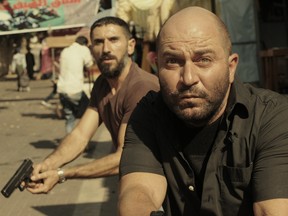
Season five of the wildly popular Netflix series Fauda, meaning “chaos” was released in September. Reality-based, Fauda chronicles the fictional adventures of a special-ops Israel Defence Forces (IDF) counter-terrorism unit called Mista’aravim, which is the Hebraization of an Arabic word meaning “they who become Arabs.”
Sign In or Create an Account
Seasons one to four ran from 2016-2023. Season five tackles the effects of the greatest calamity to befall the Jewish state in its 80-year history — October 7.
Charismatic actor Lior Raz, the series’ co-creator with fellow IDF veteran and journalist Avi Issacharoff, stars as Fauda’s protagonist, Doron Kabilio. Doron is a distinctly Israeli hero: scruffy, blunt, tenacious, he is respected for his extreme courage and competence, but his impulsivity and low tolerance for submission to authority, traits that often account for operational success, cause tension with his commanders and brothers-in-arms.

Columnist Jesse Kline keeps you up to date with what’s happening in Israel and the effects of antisemitism on life here in Canada. Friday mornings.
By signing up you consent to receive the above newsletter from Postmedia Network Inc.
A welcome email is on its way. If you don't see it, please check your junk folder.
The next issue of Channel Israel will soon be in your inbox.
We encountered an issue signing you up. Please try again
The Mista’aravim actors are Israeli Jews of Middle Eastern provenance. Raz is of Algerian and Iraqi refugee descent, and Arabic his mother tongue. In the IDF, he served as a commando in Sayeret Duvdevan, the unit that mirrors what his character Doron does in Fauda. The Hamas roles are played by Arab Israelis, both Muslim and Christian. One of the characters in the Hamas team is an Arab but looks European. In Fauda, his superiors jokingly call him “the Jew.”
Of Season five, Raz told the Jewish Chronicle, “We started to write from our trauma. It was the hardest thing we ever did in our lives, because it meant dealing with a wound that’s still open for us as writers, Israelis and for me, as an actor.” But they couldn’t wait for healing. They started writing when the hostages were still in the tunnels, not knowing how the war would end.
Five opens two years after October 7. The mood is unrelievedly grim. Grief, guilt and a gnawing hunger for revenge consume Doron and his former Mista’aravim comrades, Eli and Steve, as the cameras follow them through the breath-stopping peaks and valleys of their daring mission to foil a major Hamas plot intended to take place on Israel’s Independence Day. This time, it is being hatched in Marseilles.
Episodes seven and eight are stand-alone flashbacks of the October 7 invasion in which Eli’s stepchildren are murdered, along with his wife, who is also raped, prefaced by a trigger warning. These 90 minutes aren’t easy viewing, but discretion was observed; the scenes only point to similar depravities that occurred that day rather than re-enacting them.
Like previous seasons, five is extremely popular. Already, it’s in Netflix’s top ten. This season, it’s number one in Israel and Lebanon.
Why is Fauda so loved when Israel is so hated?
For one thing, Fauda is earthbound, uncluttered by political distractions. The viewer is never subjected to theories about Zionism, settler colonialism, the Nakba, the Resistance, the two-state solution, the machinations of Bibi Netanyahu or debates over human rights. Fauda doesn’t tell but rather shows the viewer the means by which Israel’s security is maintained, which is not always pretty, and the personal sacrifices exacted from those who maintain it.
The premise is straightforward. Hamas is bent on eliminating the Jewish state and its inhabitants. Israel is bent on thwarting that ambition. What’s passed is in the past. The future is unknowable. It’s all here and now. The stakeholders are continually locked in a thrilling cat-and-mouse game punctuated by mortal combat.
Fauda is the opposite of a James Bond thriller, where the defeat of a single arch enemy restores order. In Fauda, one fanatic Hamas leader is killed; another immediately takes his place. There is no resolution, no victory, no champagne popping. There is just enough quiet time in between crises for survivors to draw breath, embrace their loved ones and say kaddish, the prayer for the dead. Ideological “hate-watchers” of Fauda sneer at such simplicity, but then, no creative artefact that awards any points to Israel would please them.
Much has been made in the Arab world, rightfully, of the fact that 60 per cent of the dialogue in Fauda is Arabic. The Mista’aravim are fluently bilingual, and in appearance indistinguishable from Palestinians. They blend seamlessly into local Palestinian populations. When necessary, Doron prays convincingly alongside Muslims in mosques. The unit enjoys warm relations and co-operation with the head of the Palestinian Preventative Security Services. Some of the series’ most endearing characters are non-combatant Palestinians. Even the most fanatic Hamas leaders are not drawn as cartoon villains, but as three-dimensional characters with intelligence and agency, who make bad choices.
For me, one of Fauda’s great strengths is its exploration of masculine honour codes amongst these elite warriors, particularly Doron, whose self-worth is entirely bound up with securing his nation and family’s safety. Paradox attends the alpha warrior male’s relations with women. On the one hand, Doron’s unusual manliness and courage is what attracts women to him. On the other, to be effective — and stay alive — he must cultivate emotional invulnerability, focusing only on the mission, which can and does involve acts of cruelty. An unhealthy level of stoicism leads to his emotional estrangement from his wife and their divorce.
When such men cannot protect those they have been tasked with defending — Doron blames himself for the terror-related deaths of two family members he could not have prevented — their entire identity is called into question. October 7 unmans Doron. Paradoxically, expression of that vulnerability is key to loving reconciliation with his wife.
Fauda is a series like no other. I’m now watching all five seasons again, and — because of October 7 — appreciating it even more.
Join the Conversation
This website uses cookies to personalize your content (including ads), and allows us to analyze our traffic. Read more about cookies here. By continuing to use our site, you agree to our Terms of Use and Privacy Policy.
KioskNews shows a cleaned-up reading view extracted from the publisher’s page — the original always lives on their site, not ours.