Jensen Huang sends in the robot ducks to sell Nvidia's AI-everywhere vision
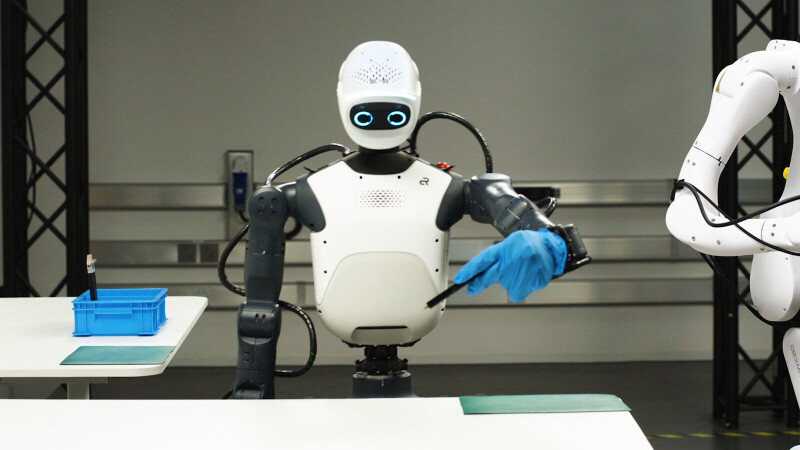
Containerized datacenters, androids, and telecoms all feature in Berlin keynote interrupted by environmental protesters
Cute robots stole the show at Nvidia's GTC keynote in Berlin, where Jensen Huang pitched a future powered by AI agents – and, naturally, plenty of his company's hardware.
The Nvidia chief remained his usual ebullient self despite environmental protesters interrupting his presentation at Berlin's tent-shaped Tempodrom.
"Why don't you clean up your act?" they demanded, holding up banners that partially obscured the presentation screen behind Huang.
REG AD
"All important issues, but let me get through my keynote," he joked, adding: "I'll talk to you guys later," as security swiftly removed them.
REG AD
Huang was discussing Vera Rubin systems before unveiling DSX POD, a reference design for factory-built, containerized AI infrastructure.
DSX POD combines seven liquid-cooled Vera Rubin compute racks using Nvidia's Spectrum-X networking. Partners will cable, integrate, and test the systems in modular containers before delivery, with availability expected in early 2027.
Nvidia claims deployment could shrink from six months to as little as 14 days at a prepared site. That excludes the not insignificant matter of getting power, connectivity, and other site infrastructure ready first.
He was keen to add that Vera Rubin systems are designed for closed-loop liquid cooling with coolant temperatures up to 45°C, while outdoor dry coolers release heat into the air without needing to evaporate water. "At 2 gigawatts, DSX can save 54 million litres of water a day," Huang claimed, perhaps thinking of those environmental protesters.
Yet much of the leather-jacketed leader's attention was focused on physical AI: robots, autonomous vehicles, and other machinery Nvidia hopes to supply with its hardware and software.
The Microducks from Pollen Robotics are small, two-legged robots with cameras for faces. Huang interacted with them on stage, getting them to lie down and roll over by voice command, and the little robots all beeped back at him in response.
The robo ducks demonstrated a workflow in which AI was trained in the cloud, evaluated on an Nvidia RTX Spark PC, then deployed on the robots.
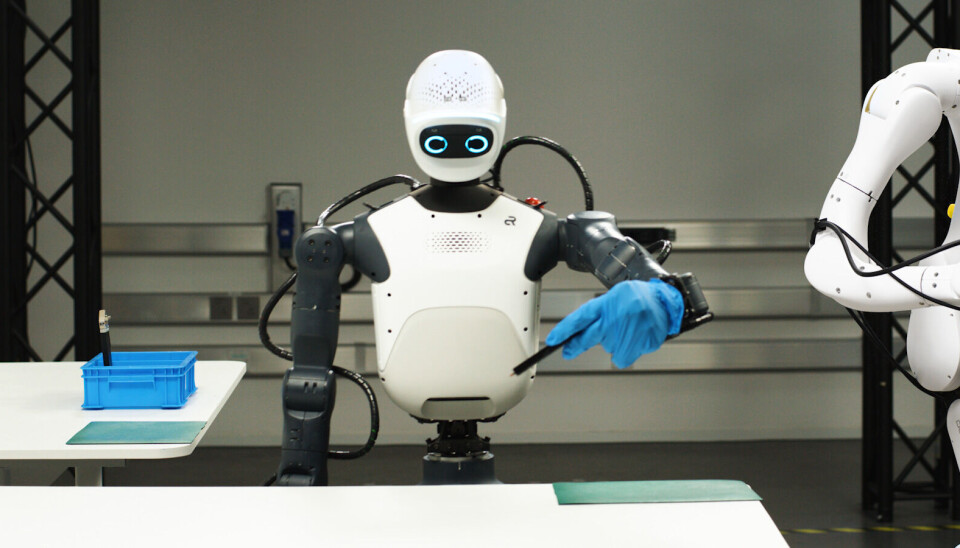
Huang also unveiled Agile ONE SN, a humanoid robot reference platform from German robotics startup Agile Robots, based on Nvidia's Isaac GR00T technology and a Jetson Thor compute module. Scheduled for early 2027, the platform is intended to give robotics researchers and developers a ready-made system for developing and testing capabilities.
REG AD
"This is going to be the next major industry, the next great industry," Huang claimed.
Beyond robots, Nvidia is pushing its AI hardware and software into cars and telecoms networks. Huang boasted that Nvidia's Hyperion car system is being adopted by more vendors, saying: "We turned this into an industry standard, and now it's being designed into one car fleet after another."
Europe's telecoms operators are also deploying Nvidia-powered computing in their networks to deliver advanced services using AI-RAN, according to Huang. "After working on this for nearly eight years, Nvidia made the first commercial phone call on the T-Mobile network with Nokia, and so now CUDA makes phone calls," he said.
Far from slowing down the progression of AI, it seems Nvidia is determined to push its technology into every corner of the world. "Everyone will become an AI company," Huang claimed.
He also took care to praise Europe and its technology efforts while he was in Berlin. "As expected, Jensen positioned Nvidia as a strong supporter of – and enabler for – Europe's sovereign tech ambitions. Nvidia has invested almost $10 billion into Europe in the past year, including 14 investments into European startups during Jensen's current trip," said Forrester principal analyst Paul Miller.
But Miller pointed out that Nvidia itself is not European. "Anything with critical ongoing dependencies on Nvidia (or any other non-European firm) is unlikely to meet the purest definitions of European tech sovereignty," he added.
Huang closed with a CGI video of robots performing a Eurovision-style song recapping his keynote. Yes, it was as bad as you imagine. ®
KioskNews shows a cleaned-up reading view extracted from the publisher’s page — the original always lives on their site, not ours.