First butterfly tagged in Winnipeg makes it to Mexico, expert says

Posted October 11, 2026 4:45 pm
Updated October 11, 2026 4:48 pm
2 min read

Tracking monarch butterfly migration
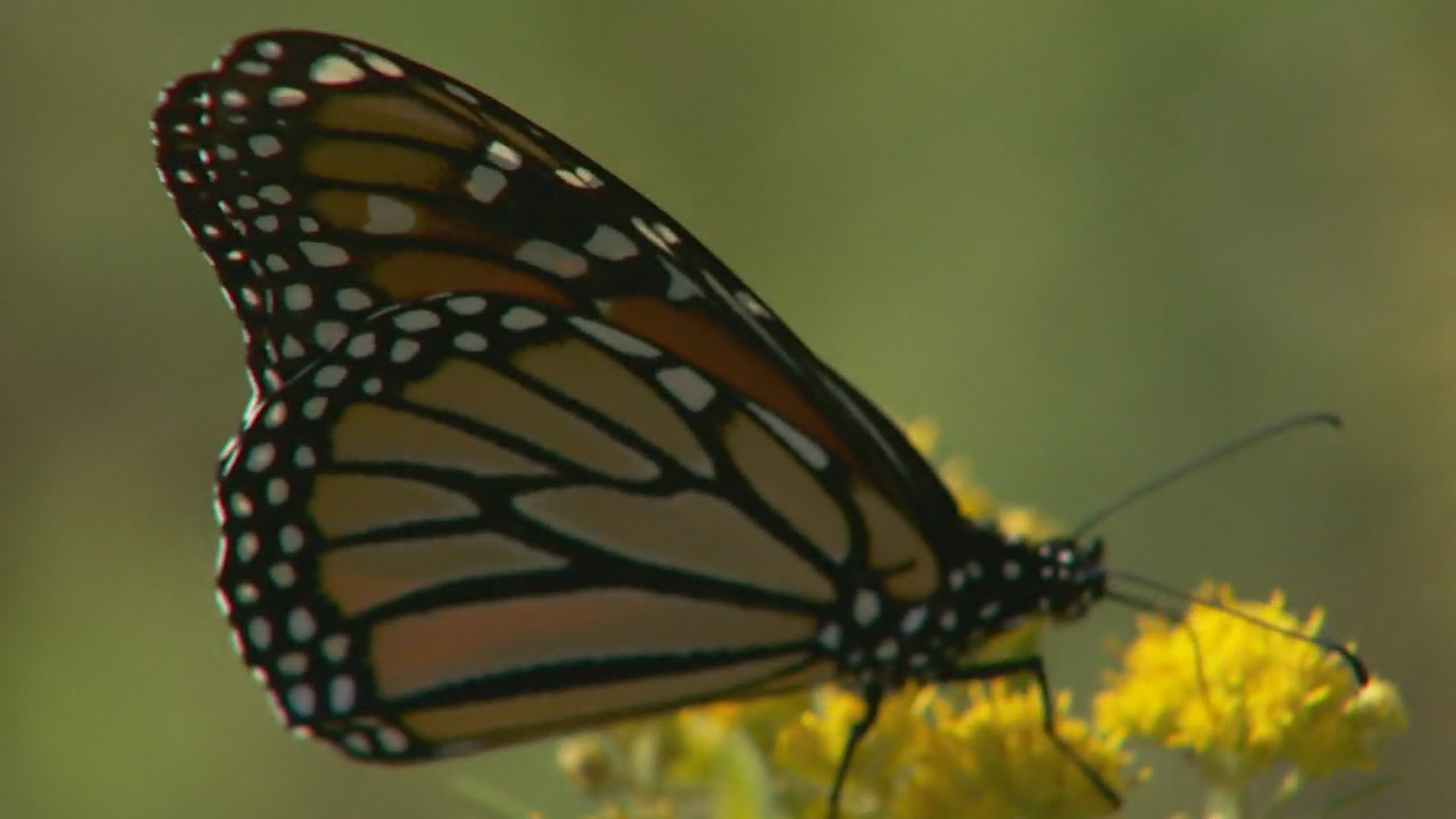
After a journey of approximately 2,300km over the span of 40 days, a monarch butterfly has arrived in Mexico from Winnipeg.

How exactly do researchers know? They’ve been tagging them.
A research team from the Assiniboine Park Zoo, in collaboration with Environment and Climate Change Canada, began attaching miniscule tracking devices to monarchs in August.
Laura Burns, conservation programs manager at the Assiniboine Park Zoo, said the devices run on solar power.
“There’s two tiny solar panels and each little tag weighs 0.06 grams. They are solar powered, so they’ll continue running as long as they have access to sunlight and they ping off of cell towers, cell phones and wildlife telemetry towers to track migration,” she said.
Burns said more than 1,300 monarchs have been tagged this fall across North America.
Story continues below advertisement
The Assiniboine Zoo tagged 29, and they are patiently waiting to see more arrive in Mexico.
“Some of them are still on the move. There are a bunch in Kansas and Missouri and Oklahoma and Texas right now,” Burns said. “A few of them will be making it to Mexico the next few days I’m hoping, if the winds are in their favor.”

Get breaking National news
Get breaking Canada news delivered to your inbox as it happens so you won't miss a trending story.
The journey though, is a dangerous one.
“They could run into cars, cities, agricultural fields, predators, bad weather events. All of these things can make the journey super dangerous, and we don’t really know the direct path they take,” Burns said.
But one butterfly tagged by the Winnipeg zoo has already made it to Mexico, one of three that have been detected in the country so far this season.
Story continues below advertisement
“It seems like it’s within the realm of normal, but she is one of the early arrivals in Mexico,” Burns said, adding the butterfly still has approximately 800 kilometres to go before it reaches its overwintering site.
Tracking the butterfly migration also allows researchers to identify what pathways they take so they can focus on conservation efforts in those areas.
“These data will show where those pinch points are, where [the butterflies] are not making it past. And maybe we should be focusing our mitigation and conservation efforts on those spots to make the biggest impact,” Burns said.
KioskNews shows a cleaned-up reading view extracted from the publisher’s page — the original always lives on their site, not ours.