Head of China's Baidu warns of AI 'bubble' ahead of APEC talks

AI adoption is not boosting profits for most companies, Baidu chief executive Robin Li said during a panel discussion with business leaders on Tuesday (Nov 17).
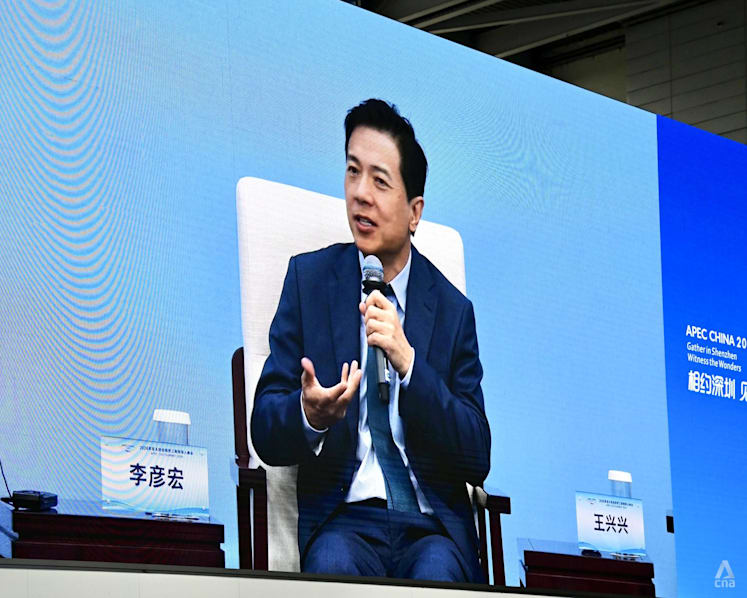
Baidu CEO Robin Li speaks at the 2026 APEC CEO Summit, seen from a livestream at the media centre in Shenzhen, China on Nov 17, 2026. (Photo: CNA/Lan Yu)
17 Nov 2026 02:09PM (Updated: 17 Nov 2026 02:20PM)
Artificial intelligence adoption is not boosting profits for most companies, the head of Chinese technology giant Baidu said Tuesday (Nov 17), ahead of talks on the sensitive sector between the world's top two economies.
The health of the global AI investment boom is under question, as US chip titan Nvidia reports quarterly results later in the day - its first since former CEO Jensen Huang quit over a widening affair scandal.
Robin Li, chief executive of Baidu, spoke during a panel discussion with business leaders in the southern Chinese city of Shenzhen, which this week hosts the Asia-Pacific Economic Cooperation (APEC) meeting.
Asked about the current global landscape for the technology, Li called the situation "urgent".
The "penetration and expansion of AI into the application layer has arguably fallen short of expectations", he said.
"While there is intense competition at the foundational level, can we say that companies are seeing higher revenues or increased profits after adopting AI?" Li asked.
"For most, the answer is no. If we fail to address this, the concern that AI might be a bubble could well become a reality," he added.
Chinese President Xi Jinping is due to hold talks with US counterpart Donald Trump on Thursday during APEC.
They are expected to discuss the risks posed by AI as calls grow for cooperation between the two tech powerhouses despite their fierce rivalry in the field.
Baidu, sometimes called China's Google, has made an aggressive push into AI in recent years.
But its challenges have grown as a domestic consumer slump drags on cash flows generated by advertising.
On Monday, the Beijing-based search engine provider posted a sixth straight drop in quarterly revenue, as Li acknowledged "headwinds in online marketing" despite "tangible results" in the company's AI strategy.
IMF chief Kristalina Georgieva told AFP in October that if investors lose confidence in future returns from AI investments, tanking stock market valuations, that could "lead to financial stability risks" worldwide.
Market jitters over the AI boom have been heightened by Huang's resignation as Nvidia CEO last week after admitting an affair, reportedly with a suspected Chinese spy.
The scandal has increased scrutiny of how Chinese companies gain access to Nvidia's most powerful chips to train and run AI systems, despite US export rules.
KioskNews shows a cleaned-up reading view extracted from the publisher’s page — the original always lives on their site, not ours.