TAT targets European market to boost tourism revenue by 5-7% next year
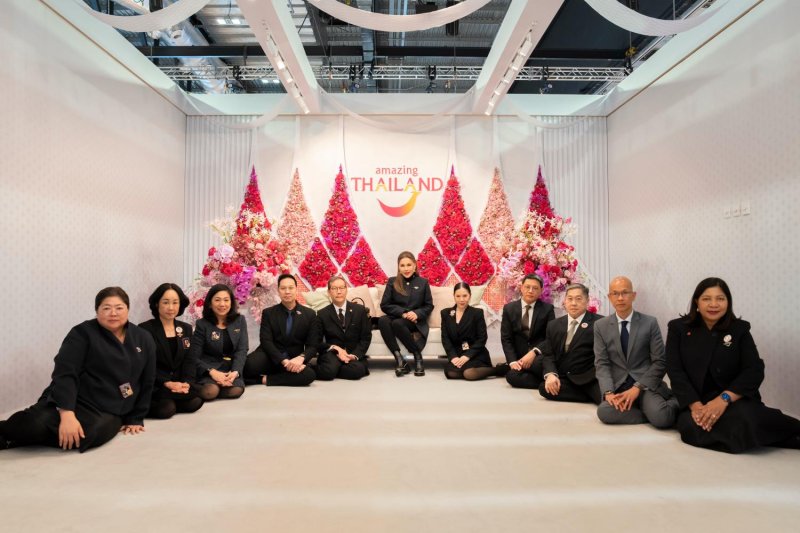
Amid the Middle East conflict, the Tourism Authority of Thailand (TAT) is focusing on tailoring products to individual European markets to lift tourism revenue by 5-7% next year, as the agency and Thai operators participate in this week's World Travel Market (WTM) trade show.
UK travel agents have reported a growing shift among travellers from Middle Eastern destinations to Asia, including Thailand, while marketing packages to these destinations have become highly profitable for tour operators.
TAT governor Thapanee Kiatphaibool said Thailand needs to rebalance its foreign tourism market to avoid overreliance on certain source markets, as global economic turbulence can affect any region anytime.
For the European market, TAT will maintain its focus on core markets such as the UK, France, Germany, Switzerland, Scandinavia and Italy by targeting travellers from secondary cities such as Nice, Lyon, Düsseldorf and Lausanne, she noted.
This strategy is expected to help generate more consistent demand for both new commercial and charter flights, helping them maintain traffic over the long run, said Ms Thapanee. Arrivals from these markets will be matched with new tourism products or Thai destinations, offering new reasons to travel.
For example, TAT wants to encourage visitors from the UK to explore lesser-known destinations such as Chiang Rai and Mae Hong Son. Health and wellness offerings in these areas are expected to attract high-spending tourists, she said.
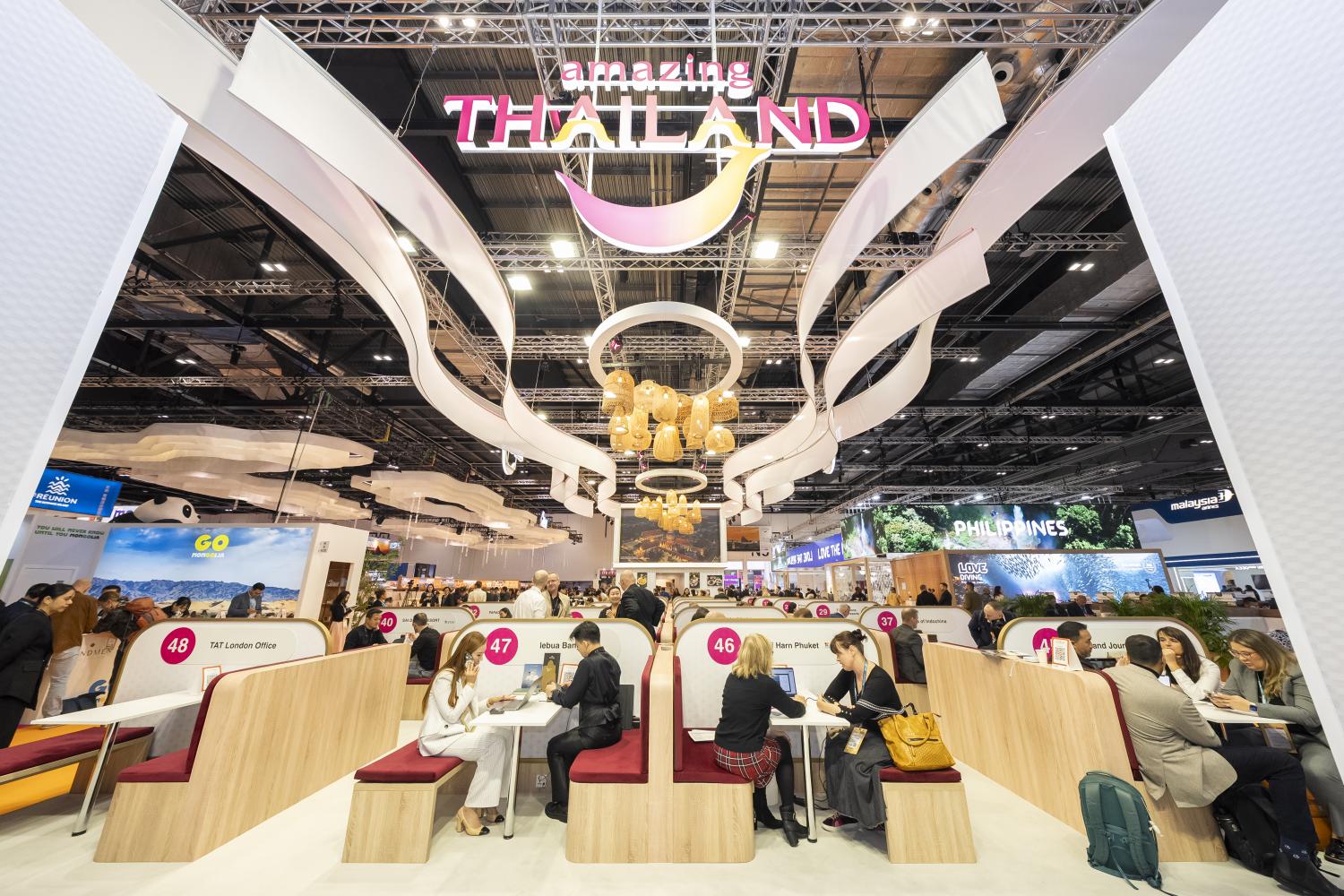
Thai tourism operators populate the Thailand Pavilion to discuss opportunities with UK travel agents during WTM 2026 in London.
European tourist arrivals are projected to reach 8.3 million this year, generating 530 billion baht in revenue. Despite ongoing conflicts in the Gulf region, the agency still targets revenue growth of 5-7% from the market in 2027.
Marketing efforts have continued despite conflicts throughout much of this year. This week, more than 47 Thai operators joined TAT at the WTM in London.
Business generated from the event is expected to contribute more than 1.5 billion baht in revenue to Thailand through at least 1,440 business-matching appointments, said Ms Thapanee.
The UK remains one of Thailand's top three long-haul source markets and is a magnet for tourism operators.
At WTM this year, TAT wants to stimulate demand from niche segments, including sports travellers, digital nomads and visitors seeking responsible tourism, luxury travel and wellness experiences.
However, arrivals from the UK are projected to reach 1.04 million this year, down 3.8% year-on-year, largely due to flight cancellations during the early stages of the conflict in the Middle East. Revenue from the market is expected to decline by 3.9% to 71.6 billion baht.
The UK market is trending up for the high season, with forward bookings from now until March next year increasing by 15.3% year-on-year, driven by higher direct flight frequency, noted TAT.
There are roughly 47 weekly direct flights between the UK and Thailand, including Virgin Atlantic's newly launched London-Phuket service for the cool season.
The agency is working with Virgin Atlantic Holidays to roll out both in-store and digital ad campaigns to promote the new route, aiming to secure 9,079 bookings and reach an audience of at least 5.41 million views.
However, amid the uncertainty surrounding the Middle East war, total foreign arrivals to Thailand are projected to decline by 4% year-on-year to 31.8 million this year, said TAT.
WAR IMPACT
Sam Collins, senior product manager for the Far East at UK-based tour operator Best at Travel, said this year's geopolitical conflicts have highlighted the importance of tour companies offering a broader range of travel packages.
Best at Travel expanded its Thailand and Asia product portfolio five years ago, complementing its long-standing focus on the Middle East and India over the previous four decades.
The Middle East market has struggled this year due to the conflict. However, bookings for Thailand have surged since July despite ongoing global uncertainty, he said.
"Within the last four months, Asia has become our most profitable destination," said Mr Collins. "Despite the rising cost of air travel, Thailand remains a phenomenal value-for-money destination, and UK travellers remain keen to return."
Many travellers are also shifting from destinations such as Dubai to the Far East. The company remains confident about continued growth in bookings to Thailand next year, and average visitor spending in Thailand has been increasing, he noted.
As most of its clients are first-time visitors to Thailand, Best at Travel's best-selling packages feature major destinations, including Koh Samui, Phuket and Khao Lak.
The company is also promoting more far-flung destinations that may appeal to visitors, such as Koh Lipe, said Mr Collins.
Alternative direct flights between Europe and Asia have increased, helping to reassure travellers as these services bypass traditional connecting hubs, said Helen Wheat, regional product manager for Southeast Asia at Audley Travel, a tour operator specialising in luxury travel experiences for customers from the UK and the US.
Ms Wheat said the company has not recorded a slowdown in outbound bookings to Thailand.
To differentiate its products from competitors, she said the company focuses on promoting non-beach destinations, such as Chiang Mai, which ranks as its No.2 destination after Bangkok.
For Audley Travel's Southeast Asia portfolio, Thailand is the second best-selling destination after Vietnam.
The company's customers spend an average of 12-14 days in Thailand, with booking value reaching as high as £16,000-17,000 per head, reflecting demand for premium airline services and high-end accommodation.
Bhakchuda Phonjarit, corporate area director of revenue and business development at hotel operator Promm Group, said hotels are offering flexible bookings to revive markets and retain customers during the geopolitical conflicts.
The company owns several hotels in Thailand including Prince Palace Hotel Bangkok and Renaissance Koh Samui Resort and Spa. Europeans were among the top five foreign markets at its Bangkok property, and were the No.1 market for its hotel in Samui.
Ms Bhakchuda said the outlook for the high season is promising, supported by European travellers who booked several months in advance.
However, challenges remain with unrecovered seat capacity and rising airfares due to global flight disruptions and surging fuel prices, she noted.
Although tourists still have spending power, Thailand faces growing competition from neighbouring destinations offering cheaper and fresher products. Thailand should upgrade its services, tourism products and infrastructure to remain competitive over the long term, said Ms Bhakchuda.
KioskNews shows a cleaned-up reading view extracted from the publisher’s page — the original always lives on their site, not ours.