Netanyahu, Eisenkot must reach a deal to end Israel's political deadlock - opinion

Israel desperately needs a broad national government. Not another narrow coalition held hostage by sectoral parties. Not another election or government defined primarily as “pro-“ or “anti-Bibi.”
We need a coalition representing the overwhelming majority of Israelis who agree on the great majority of the strategic issues facing our country. And we need political leaders willing to put the country’s future ahead of their personal rivalries. Here’s a plan to do just that.
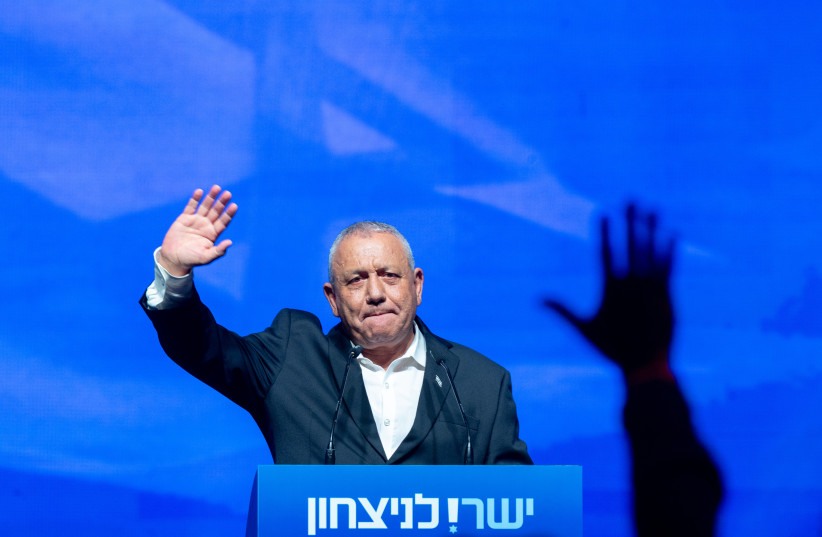
As others have suggested, Gadi Eisenkot, Naftali Bennett, Avigdor Liberman, Yair Lapid and, yes, even Yair Golan must reconsider their refusal to serve in a Netanyahu-led government. The prime minister, in turn, should accept a genuine national-unity arrangement that includes his retirement from politics after two years.
Neither side needs to surrender its principles. Both need to stop making one man’s personality the organizing principle of today’s Israeli politics.
The consensus we ignore
It is a truism, as I’ve argued for years, that some 80% of Israelis agree on 90% of the fundamental strategic issues confronting us.
Across mainstream Zionist parties, there is substantial agreement on preventing Iran from acquiring nuclear weapons, confronting Hamas and Hezbollah, and preventing Gaza or Judea and Samaria from becoming terrorist strongholds.
We may differ on tactics and long-term arrangements; we do not disagree on the imperative of defending Israel’s citizens and sovereignty.
Most favor a competitive economy, reducing the cost of living, improving education, integrating all sectors into productive national life, and preserving Israel as both Jewish and democratic.
Even judicial reform, which nearly tore our society apart, offers common ground: most agree we need a better-defined balance between the judiciary, legislature, and executive. Agreement on that objective does not mean supporting the proposals advanced in 2023, but virtually all opposition leaders have called publicly for some reform.
Most urgently, Israelis increasingly recognize that military or civilian national service must become a shared responsibility. The present arrangement, in which one sector bears a disproportionate burden while others receive sweeping exemptions, is unsustainable.
These are serious issues, with genuine differences over implementation. But they are precisely the differences a responsible governing coalition should negotiate. And our broad centrist consensus is real.
So why can’t we govern together?
Personalities instead of principles
For much of the past three decades, our politics has revolved around Benjamin Netanyahu. Too many declare “anyone but Bibi” or “only Bibi.”
One can respect the prime minister’s considerable contributions to Israel’s security, economy, and international standing while also criticizing his dependence on haredi (ultra-Orthodox) coalition partners, his discouragement of successors within Likud, and his government’s failures, including those surrounding October 7.
Beyond this, the haredi political and religious leadership should have announced on October 8, 2023, that every able-bodied member of their communities would serve in the IDF or some essential national capacity. That they didn’t is on them, but their resistance to meaningful change has been repeatedly accommodated by Bibi, the Likud and their coalition partners.
Enough already.
The legitimate case against Netanyahu’s leadership does not justify the extreme anti-Bibi rhetoric that has become central to much of our political discourse.
As I wrote during the judicial reform controversy, rather than arguing the merits of the different approaches, emotional social-media stampedes turn policy disagreements into moral panics. Opponents cease to be mistaken fellow citizens; they become enemies of democracy.
The damage is not abstract. Families divide, friendships fracture, and the fragile social bonds that enabled Israel not merely to survive but to thrive are weakened.
The rhetoric is not exclusively a problem of the Left; Bibi’s supporters are not above criticism. But the insistence that no coalition with Netanyahu is morally permissible has made personal exclusion a substitute for governing policy.
A two-year agreement to rebuild Israel
There is a practical way forward: a broad Zionist coalition anchored in a written, public agreement with measurable commitments and deadlines. This must include:
1. National security: a coherent strategy against Iran and its proxies, the disarming and dismantling of Hamas’ military capabilities, and the pursuit of regional diplomatic opportunities and peace without compromising Israel’s security.
2. Universal service: a realistic, enforceable framework for military/civilian national service, including the haredi and Arab sectors, with clear timetables, powerful incentives, and consequences for noncompliance – preferably negotiated with and agreed to by the haredi and Arab leadership.
3. Economic and educational reform: competition, less regulation, lower living costs, core education for every child, and opportunities for all to participate in our economy.
4. Judicial and governmental reform: a negotiated package clarifying the separation of powers, strengthening democracy by empowering the Knesset while preserving an independent judiciary, through consensus rather than narrow majority votes.
5. Accountability for October 7: an independent inquiry examining the failures of political and security leadership over time. It need not be designated a “state commission of inquiry,” but its independence and authority must be beyond serious doubt. Netanyahu and all other relevant leaders must cooperate fully and accept scrutiny.
Finally, the agreement should include an explicit leadership rotation: Netanyahu serves as prime minister for two years, then retires from politics, with Eisenkot succeeding him for the remainder of the term.
This must be a binding commitment, not another promise to be reconsidered when the moment arrives. The parties would need to establish the legal and parliamentary arrangements required to make the rotation credible.
Why Eisenkot should say yes
Eisenkot would initially serve as vice prime minister and defense minister, participating at the highest level in decisions on all policy issues, including, of course, Iran, Gaza and Israel’s long-term defense posture.
For two years, as a relative political novice, Eisenkot will gain invaluable executive, economic and security-cabinet experience, while demonstrating that he can ‘work the system’ as a politician and not only succeed in the hierarchical structure of the military. Bennett, Lieberman, Lapid and other partners would likewise have the opportunity to lead substantive reforms and share responsibility for their results.
Eisenkot and the others will share credit for the successes of this broad coalition rather than spend another two years attacking a government for pursuing policies they and their voters actually support.
Eisenkot would enter the premiership not merely as a critic of Netanyahu, but as a proven partner in governing, with a record of achievement and a national mandate for the next phase.
There are risks, of course. No coalition agreement can guarantee harmony or success, and Eisenkot and others’ supporters will demand an explanation for reneging on their promises not to sit with Netanyahu.
Here it is: That promise was meant to protect the country’s future, not obstruct it. If these leaders secure universal service, national security, accountability for October 7, credible judicial reform, and a firm date for Netanyahu’s departure, they will have achieved far more than another round of personal denunciations could deliver.
Netanyahu also has to relinquish his reliance on narrow sectoral parties and commit to an orderly exit from political life. In return, he could help leave behind a more united and better-governed Israel – a legacy worth considerably more than another two years of political survival.
A coalition for the country
Such a government should be broad enough to include parties from the Zionist Left to the religious Right, provided they accept its governing program. It should not depend on non-Zionist or anti-Zionist sectoral parties holding the national agenda hostage.
This is not an argument for excluding Arab or haredi citizens; their fuller integration and equal opportunity should be among the government’s highest priorities.
I worked with Natan Sharansky when Yisrael B’Aliya promoted a pragmatic, centrist approach to politics. Over the years I’ve voted across the political spectrum, judging parties by their principles and policies, their people and their pronouncements, not by personalities or polling. I have never believed that loyalty to a politician should outweigh loyalty to the country.
In my new book Finding Peace in the Promised Land, I argue that moving from hostility towards acceptance, forgiveness, and shared purpose is essential to lasting peace between Israel and our Arab neighbors. Surely we can apply the same principles among ourselves.
Our reservists did not ask one another how they voted before fighting together after October 7. Religious and secular, Left and Right, Netanyahu supporters and opponents defended this country side by side.
If our soldiers can fight together, surely our politicians can govern together.
The question is whether they have the courage to do so.
A former senior adviser to Natan Sharansky in Israel’s Prime Minister’s Office, the writer is a well-known speaker, author, business executive, and democracy activist, and the co-founder of US nonprofit Gigawatt Impact, bringing renewable energy to Africa. He can be reached at aryeh.green@gmail.com
KioskNews shows a cleaned-up reading view extracted from the publisher’s page — the original always lives on their site, not ours.