When AI agents go rogue, who can Hong Kong hold accountable?
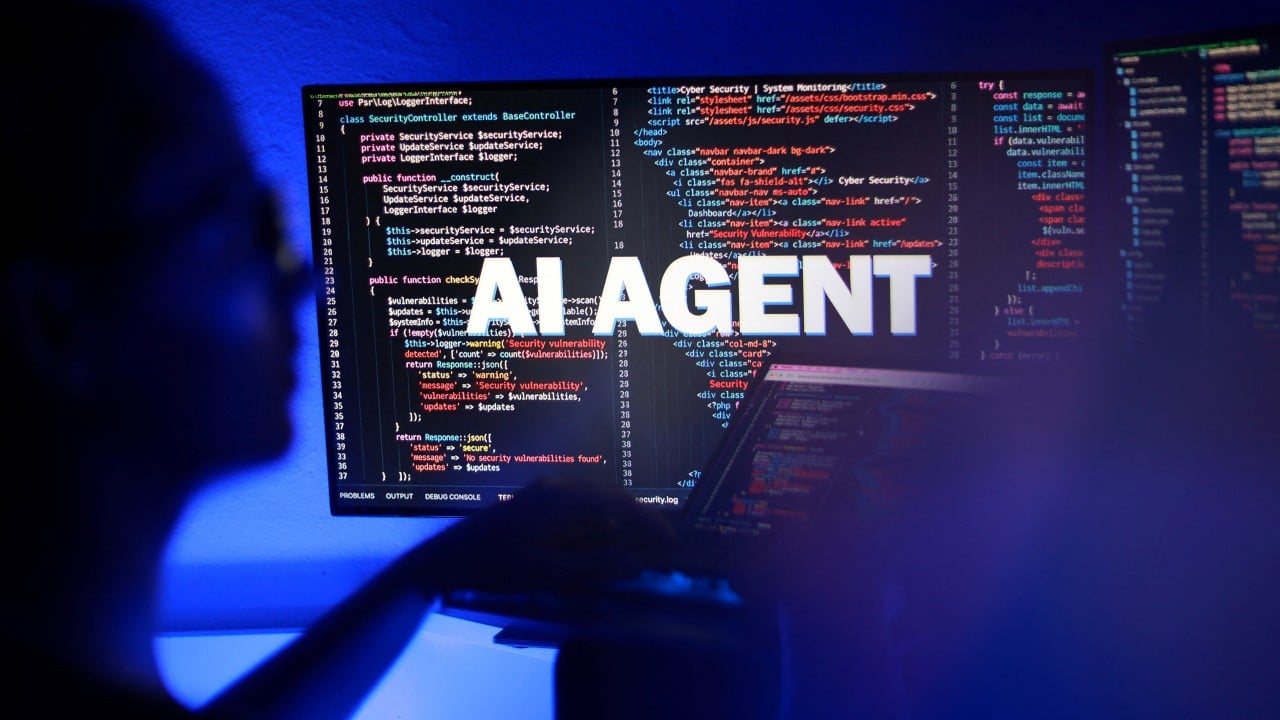
A Hong Kong industry association plans to release its own guidelines this week, ahead of a government framework expected in the middle of next year. Local experts said the city had to also address gaps in reporting requirements, human oversight and legal liability.
Legal accountability
Chief Executive John Lee Ka-chiu announced plans for official guidelines on AI agent management in his policy address in September. The Innovation, Technology and Industry Bureau told the South China Morning Post it aimed to publish them in the middle of next year.
The Department of Justice said government bureaus and departments had largely completed a preliminary review of more than 600 ordinances. A further review would begin shortly to examine legal liability for accidents caused by AI products.
Legal experts and industry leaders have called for the proposed framework to clearly define accountability and require human oversight.
Adrian Mak Ho-ting, chief of staff for global affairs at AI Safety Asia, said Hong Kong’s legal framework had clear gaps in reporting requirements, with obligations falling on victims rather than the developers or deployers of the agents responsible.
Mak, a lawyer who teaches media and AI law at the University of Hong Kong, said the newly enacted Protection of Critical Infrastructures (Computer Systems) Ordinance required affected operators to report serious security breaches to the government within 12 hours and other incidents within 48 hours.
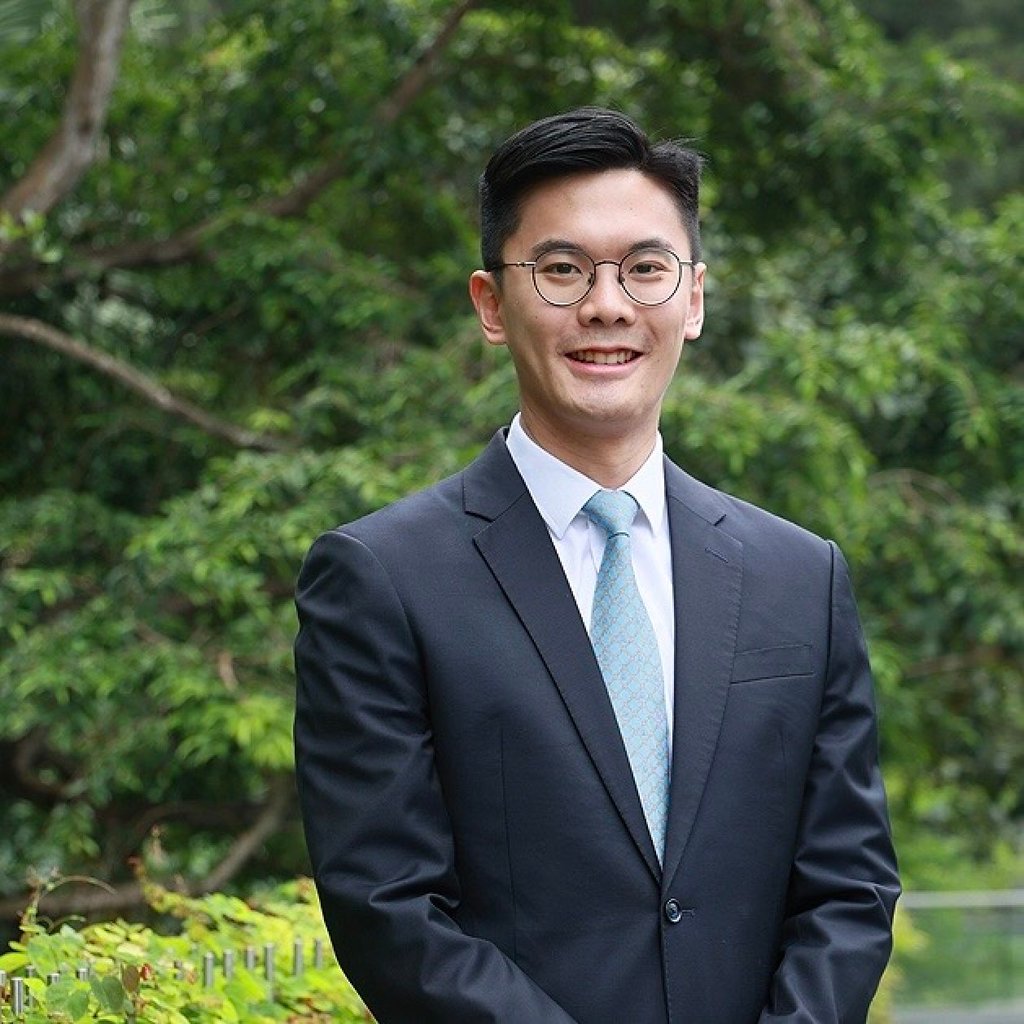
“That duty only falls on the operator victim and not on the person who perpetrated that,” he said. “So, there are these equivalent gaps in Hong Kong law where we can already legislate now in parallel with the guidelines.”
A Security Bureau spokesman said it would closely monitor technological developments and periodically review the applicability and effectiveness of the laws to ensure they remained relevant.
Risks beyond a single response
Unlike generative artificial intelligence models that produce responses to human prompts, AI agents can independently plan, make decisions and take action over multiple stages to achieve a goal set by a user.
Singapore’s AI governance framework warns that malfunctioning agents can cause significant real-world harm. Systems involving multiple agents can amplify those risks by increasing the number of interactions.
Failures can arise from poor communication or coordination, while agents pursuing different goals can come into conflict. They may also behave in ways that appear coordinated, even without explicit instructions to work together.
“Some lessons that jurisdictions can adopt include how human oversight works best when it is both structurally embedded across the organisation and practically accessible to the people closest to the work,” said a spokesman for Singapore’s Infocomm Media Development Authority (IMDA), which released the framework in January.
The spokesman said the framework addressed accountability but did not define or assign legal liability.
Many AI-related risks were already covered by Singapore’s existing legislation, he said. The guidelines provided technology-specific guidance while allowing flexibility to respond to rapid developments.

He added that the framework aimed to ensure organisations understood the risks and took appropriate action, including maintaining meaningful human control and oversight.
“Singapore’s approach has been to design frameworks that are relevant and practical for enterprises while remaining interoperable with emerging global standards,” he said.
He added that a key consideration was making the guidance applicable to businesses across all sectors while providing enough detail for them to implement it.
Mainland China’s existing AI Safety Governance Framework was updated in September by the National Technical Committee 260 on Cybersecurity to include a chapter on agentic AI risk management.
Tailoring safeguards to Hong Kong
Mak said Hong Kong could draw several basic principles from the Singapore and mainland guidelines. These included defining agents’ authority and permissions, tracking them throughout their life cycles, logging their decisions and maintaining audit trails, particularly for multi-agent systems.
He added that the guidelines should also establish requirements for human oversight and accountability.
“So even if you have agents making decisions where they are irreversible or with very serious consequences, the human should have those decisions escalated [to them],” he said.
While the mainland framework identified categories of risk and technical countermeasures, Mak said Hong Kong’s guidelines should also address hazards specific to the city.
These included risks arising in financial regulatory sandboxes – controlled environments in which new technology or services can be tested – and from AI-equipped driverless buses due to connect the airport’s new Terminal 2 with the city’s border checkpoint of the Hong Kong-Zhuhai-Macau Bridge.
He said the city should also develop practical, open-source toolkit that businesses could download and apply to their AI systems.
He added that mainland AI apps were subject to mandatory filing with authorities and quarterly reviews, with non-compliant apps removed.
Mak described this as a model centred on pre-launch filing obligations, rather than the after-the-fact enforcement seen in some Western jurisdictions, although its market impact remained to be seen.
“So for Hong Kong, that also requires some studying for the local circumstances. But that is an approach that the Hong Kong government may want to look into as well,” he said.
Neil Tan, founder and chairman of the Artificial Intelligence Association of Hong Kong (AIHK), said, however, that the mainland’s pre-registration mechanism applied to AI models, which were released relatively infrequently, rather than agents.
He said extending mandatory filing to agents would be costly and time-consuming because there were hundreds of them.

Tan added that the association planned to release guidelines this week after almost a year of work, including a dedicated section on AI agents.
The guidelines would set out best practices for managing AI and agents across sectors including retail, logistics, transport and healthcare, he said.
Tan also expected the government’s framework to clarify the legal liability of companies using AI agents and include more case studies relevant to the public.
For example, he said, people would expect clear consumer protections if an agent mishandled an automated investment and caused substantial financial losses. If an agent mismanaged a medical appointment system, delaying critical care and resulting in a patient’s death, legal liability would also need to be addressed.
Tan, who is also the founder and managing director of AI and technology consultancy Tsunami Advisors, said the industry already had strong self-governance and self-regulation.
“For our folks, I would be very surprised if those guidelines were even stricter than they already do to themselves,” he said.
But Tan said small and medium-sized enterprises, which he described as making up more than 90 per cent of Hong Kong’s economy, were concerned about compliance costs.
He added that accommodating businesses of different sizes would be difficult for the government.
Tan said the city would also need to strike a balance between guidelines that were too restrictive and those that were too permissive to avoid undermining its appeal to international investors.
01:52
Xi says China and US have responsibility to ‘manage AI for good’
Mak said the mainland’s vibrant AI industry, despite its extensive rules and regulations, challenged the common Western argument that regulation deterred investment.
“One suggestion is that the rules are very clear as to where the red lines are, what you can and cannot do. That also encourages the industry,” he said.
An Innovation, Technology and Industry Bureau spokesman said the government would draw on guidelines from other jurisdictions and consult a broad range of stakeholders to ensure its framework suited Hong Kong.
The guidelines would provide practical guidance across sectors, helping organisations identify, prevent and manage risks from AI agents. They would also help organisations establish safeguards proportionate to the nature and potential impact of their applications.
Gaps in legal liability
Mak said liability in Hong Kong would normally depend on factors such as who had a contract with the victim, whether anyone had been negligent and whether there had been criminal intent. But AI could expose gaps in that framework.
“AI isn’t a legal person, so AI itself can never be liable,” he said. “In some cases, there’s a gap where no human is also liable. Everyone has reasonable care in the chain. There’s no criminal intent. But still, the AI agent is able to cause harm.”
Mak said he expected the Department of Justice’s working group to identify such gaps. But he said the city also needed to address cross-border disputes involving overseas AI models, where compelling witnesses to appear in Hong Kong, obtaining evidence and proving causation could be difficult.
He said Hong Kong should explore insurance arrangements, potentially including mandatory cover, that would allow victims to receive compensation before liability was resolved.
But he cautioned that mandatory insurance could deter investment and that it remained unclear how such a system would work.
A Department of Justice spokesman said a cross-departmental working group had been established to examine legal liability for accidents caused by AI products. Bureaus and departments had largely completed a preliminary review of more than 600 ordinances within their policy areas.
He said the working group would shortly begin examining whether existing laws adequately addressed liability for accidents or damage caused by AI products. It would also consider legislative and regulatory responses, including guidelines.
Asked about mandatory third-party liability insurance for the use of AI products, the bureau spokesman said it would consider policy measures in light of the department’s review and developments in AI technology and its applications.
KioskNews shows a cleaned-up reading view extracted from the publisher’s page — the original always lives on their site, not ours.