Japanese firms to pay out after wave of cyberattacks
Japanese companies are moving to pay compensation to users following waves of cyberattacks that have disrupted Internet services and raised concerns about economic stability.
GMO Internet Group Inc, a leading provider of online financial services, said customers would be compensated for losses stemming from unauthorized access following a cyberattack on its foreign exchange trading service, and all customers would receive ¥5,000 (US$32) as a gesture of goodwill, CEO Masatoshi Kumagai said in a blog post on Sunday.
“The Internet itself is now starting to break down,” said Kumagai, whose sprawling group includes Internet infrastructure and cryptocurrency trading.
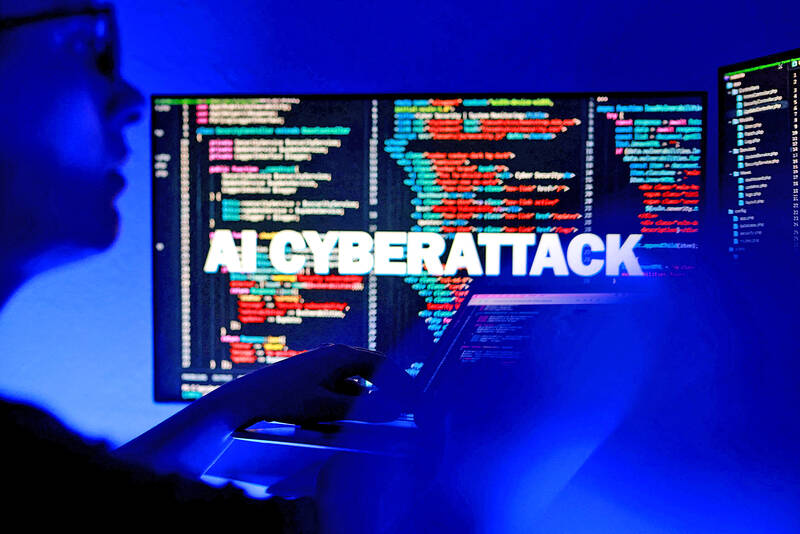
The words “AI Cyberattack” and PHP code are displayed on a screen in an illustration taken on Oct. 22.
Photo: Reuters
Japan said on Friday it would set up a team to simulate cyberattacks using artificial intelligence (AI) to identify weaknesses in technology systems as organizations scrambled to curtail risks from flaws in the PHP programming language that underpins much of the Internet.
More broadly, Japanese companies are being roiled by attacks with experts saying AI is helping automate tasks from scanning for software vulnerabilities to crafting phishing campaigns, making cybercrime faster, cheaper and harder to detect.
“The Internet is increasingly being transformed into a tool that malicious actors use to threaten and rob people,” Kumagai said.
Government and company Web sites in Japan, Europe and elsewhere went offline last week after the disclosure of critical vulnerabilities in the PHP programming language prompted millions of hacking attempts.
Kumagai has urged the Japanese government to apply cyberdefense measures in response to the cyberattack, after the introduction of a cyberdefense system this month.
The system could involve steps such as attacking hostile servers to neutralize threats.
“Now is the time for the public and private sectors to work together to protect Japan,” Kumagai wrote.
GMO said it received a demand for money from a party believed to be behind the attack, along with a threat to disclose company and customer information if it did not comply.
GMO said it would not comply with the demand and would respond to the incident in coordination with police and other authorities. It did not mention any connection to PHP flaws.
The company, which will provide a free alternative service to its customers for six months, said it could not currently calculate the impact on earnings from the goodwill payments and compensation for losses.
White-hat hackers working for the company had identified security issues but the depth and speed of the response were insufficient, Kumagai wrote.
Meanwhile, Park24, which operates the Times car-sharing service, said on Friday it would make ¥3,000 payments to customers following a personal data breach last month.
The company said it would no longer retain identity document images after completing registration verification and expects to book an extraordinary loss of ¥5.5 billion due to responses to the attack and compensation payments.
KioskNews shows a cleaned-up reading view extracted from the publisher’s page — the original always lives on their site, not ours.