India’s space startups are taking off. But can they scale?
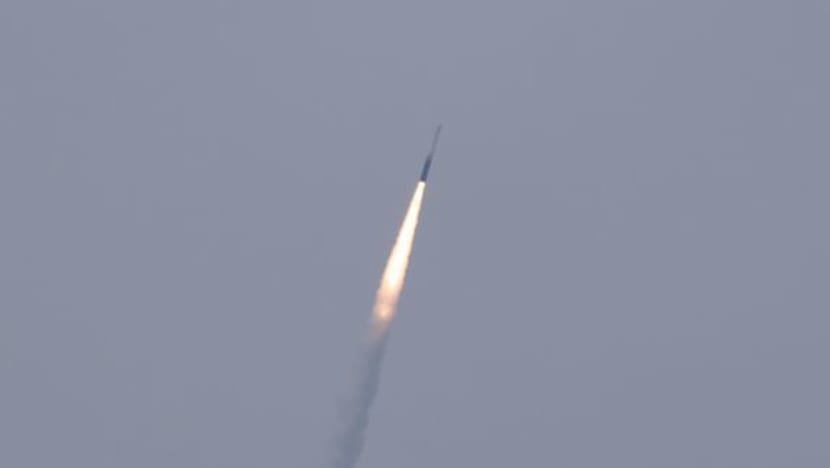
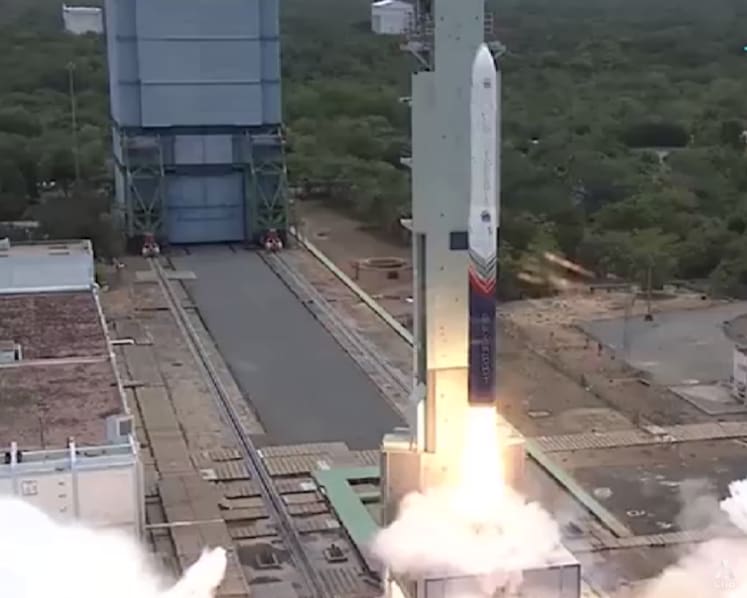
BENGALURU: When Skyroot Aerospace’s Vikram-1 lifted off on Jul 18, it marked a historic breakthrough for India’s commercial space industry.
India is now the third country, after the United States and China, capable of orbital launches through a private enterprise.
Skyroot became India's first space startup to cross a US$1 billion valuation after raising US$60 million in a funding round co-led by Singapore sovereign wealth fund GIC and Sherpalo Ventures in May.
The Vikram-1, a seven-storey, multi-stage launch vehicle, is designed to carry payloads of up to 350kg into low-Earth orbit.
The successful launch demonstrated how far India’s private space sector has come since the government opened the industry to greater private participation in 2020.
But industry players say access to funding remains a hurdle, particularly as companies move beyond proving their technology and require large investments to expand.
OPENING UP INDIA’S SPACE SECTOR
For decades, India’s space programme was dominated by the Indian Space Research Organisation (ISRO), which built the country’s rockets, satellites and supporting infrastructure.
After Indian Prime Minister Narendra Modi’s administration opened the sector to private firms, the Indian National Space Promotion and Authorisation Centre (IN-SPACe) was established to regulate the sector and promote private participation.
Today, more than 400 companies are part of India’s private space ecosystem, according to IN-SPACe.
“We are trying to see what technology transfer can be done with ISRO so they don’t reinvent the wheel,” said IN-SPACe director Rajeev Jyoti.
“We are also trying to create technology adoption funds, different types of schemes, public partnerships, generating demand.”
NEW COMMERCIAL OPPORTUNITIES
In June, the agency selected its first group of startups for funding under its Technology Adoption Fund (TAF) scheme.
Among them was Bengaluru-based SatSure, which uses satellite images of Earth to produce information for decision-making on agriculture, infrastructure, lending and insurance.
The Indian government is backing SatSure to develop Dhaarini, an Earth intelligence system powered by India-specific artificial intelligence capabilities.
SatSure co-founder and chief executive Prateep Basu described the project as a “backbone” for making sense of the huge volume and variety of satellite imagery being generated.
“You can simply interface like what you do on ChatGPT. You can interface over Dhaarini – tell me what happened on this particular piece of land and it will give you the answers,” said Basu.
Systems such as SatSure’s depend on a constant supply of reliable observations, creating another commercial opportunity for Indian companies building and operating satellites.
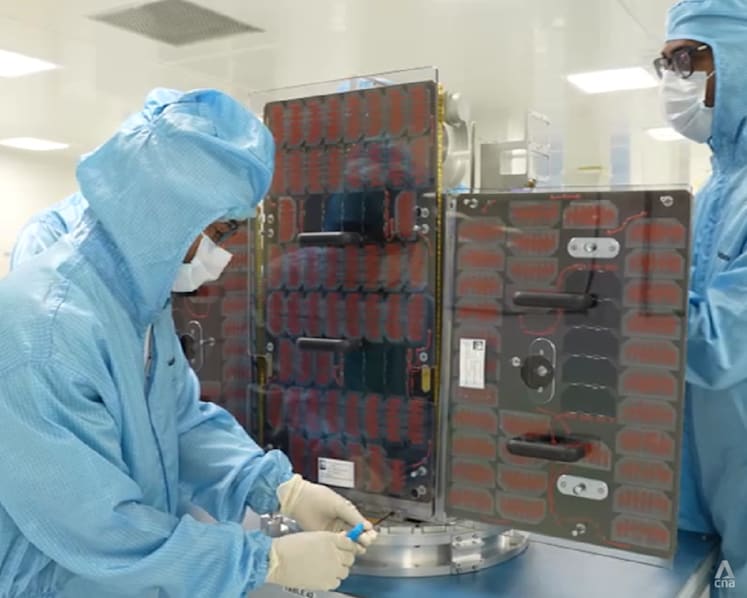
Another Bengaluru-based company, Pixxel, is building what it calls a “health monitor for the planet” using hyperspectral imaging satellites. The start-up is backed by Google.
The technology creates a detailed dataset using information captured across many different wavelengths of light.
“Since no one else was doing it commercially globally, we thought, okay, here's a gap we can build and launch our own constellation of hyperspectral satellites,” said Pixxel founder and chief executive Awais Ahmed.
“That would be our entry point into being something that we can be the best in the world.”
In 2024, Pixxel was selected by NASA to supply commercial hyperspectral Earth-observation data for scientific research.
It now has six satellites in orbit and aims to launch up to 24 more over the next two years.
Pixxel and SatSure are also part of Allied Orbits, a four-company private consortium that plans to invest more than US$130 million in a 12-satellite Earth-observation network.
Backed by IN-SPACe, the goal is to collect data for a wide range of uses – from agriculture to climate change monitoring and disaster response.
THE FUNDING CHALLENGE
But realising these ambitions requires significant investment.
Industry experts say that late-stage domestic capital is still difficult to obtain.
Pixxel’s Ahmed said the problem becomes particularly apparent after companies move beyond their early fundraising rounds.
"You can see this trend across anyone that has raised anything beyond a Series A," he said.
"If the round size, I think, exceeds US$10 million, maybe US$15 million, there aren't many Indian funds willing to take the risk of writing such a large cheque at that stage."
New Delhi has sought to address the problem by rolling out a venture capital fund worth around US$105 million for private space activities.
However, even companies that secure sufficient investment face another challenge: finding enough customers to make those investments commercially viable.
Tapan Misra, a former director of ISRO's Space Applications Centre, said the government should make it easier for startups to sell their products and services to public agencies.
"The government in the nascent market should help them in having liberal procurement policies,” said Misra.
"In any country, the biggest businessman is actually the government," he said.
He also noted that startups have responsibilities of their own, including investing in testing facilities and improving how they recruit specialist talent.
India’s space economy is currently valued at about US$9 billion and is projected to reach US$40 billion to US$45 billion over the next decade.
With India’s private space companies demonstrating their technological capabilities, the challenge now is whether they can secure the capital and customers they need to scale – and compete globally.
KioskNews shows a cleaned-up reading view extracted from the publisher’s page — the original always lives on their site, not ours.