About 1 in 4 mums still leak urine a year after childbirth. When should they see a doctor?
In Singapore, about one in four women experience urinary incontinence that persists for a year after childbirth, according to a Singapore General Hospital study.
The condition involves involuntary urine leakage, which can happen when coughing, sneezing or exercising. For some women, it may also involve a sudden urge to urinate, making it difficult to reach the toilet in time.
Yet many women dismiss these symptoms as a normal consequence of childbirth, says Dr Wendy Teo, consultant obstetrician and gynaecologist at Wendy Women’s Clinic, located at Mount Elizabeth Novena Specialist Centre.
“Women tend to think it’s part of the birthing process, or they dismiss this as normal, so they think, ‘Okay, it’s fine. I can just live with it’,” she observes.
Some only seek help when the leakage begins affecting their daily lives, sometimes five to 10 years later.
Teo encourages women to seek medical advice for persistent symptoms, regardless of when they first appeared.
Urinary incontinence is just one of several intimate health concerns that women may hesitate to discuss. Others, including painful intercourse and menopause-related symptoms, can also affect their daily lives and quality of life.
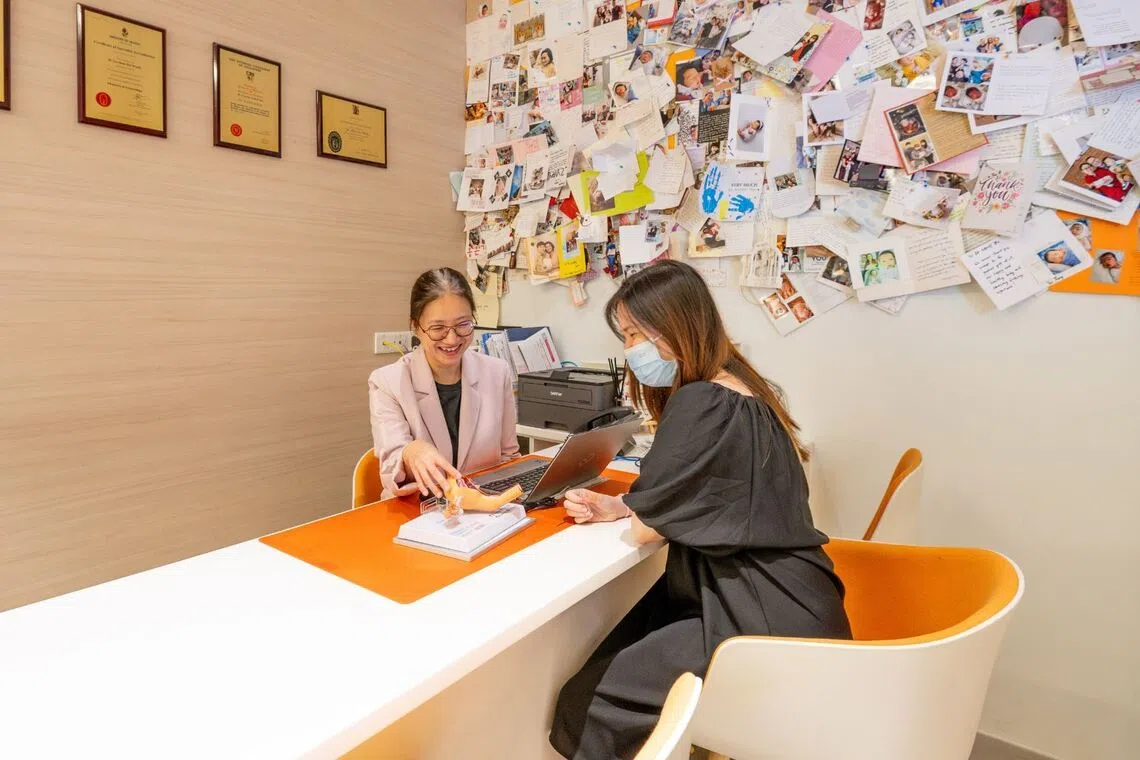
A gynaecological consultation can help women better understand their symptoms and explore suitable care options based on their individual needs.
PHOTO: WENDY WOMEN’S CLINIC
Help for bladder leaks
Leaks after childbirth are often linked to a weakened pelvic floor.
A pelvic floor assessment by a doctor can help determine whether muscle weakness is contributing to bladder leaks.
For women who leak when coughing or exercising, biofeedback therapy, which uses monitoring devices to help you gain conscious control over normally involuntary bodily functions, could be a first treatment option.
A device such as Emsella, which uses electromagnetic energy to stimulate pelvic floor muscle contractions, may be considered in selected cases after assessment.
Frequently Asked Questions
What women can expect when seeking help
Is it normal to leak urine after having a baby?
When should women see a gynaecologist about intimate health concerns?
What happens during a gynaecology consultation for intimate health issues?
Other intimate health concerns women may experience
One possible cause of painful intercourse is vaginismus, a condition where involuntary tightening of the pelvic floor muscles makes vaginal penetration difficult or painful. It can affect intercourse, tampon use and gynaecological examinations.
Teo has encountered women who delayed seeking help for years because of embarrassment, uncertainty about whom to consult or concerns about fertility. One woman with severe vaginismus, for instance, sought help only after the condition began affecting her marriage.
It can be difficult to bring up pain during sex or difficulty with penetration. A gynaecological assessment can help identify the causes. Depending on the findings, care may include pelvic floor physiotherapy to help relax the muscles, psychological support or both.

At different life stages, women may need support for a range of gynaecological concerns, including menstrual problems and menopause symptoms.
PHOTO: GETTY IMAGES
Other sexual health concerns include anorgasmia, or difficulty reaching orgasm, which may involve physical, hormonal or psychological factors.
Some women may also notice vaginal laxity, a perceived loss of vaginal tightness that some women experience after childbirth or with ageing. An assessment can help identify whether pelvic floor rehabilitation may help or whether a surgical opinion is appropriate.
Energy-based procedures, including vaginal laser and radiofrequency treatments, are also offered for this concern, although evidence of their long-term safety and effectiveness remains limited.
As these conditions may have different underlying causes, Teo emphasises the importance of individual assessment.
Women’s healthcare needs change with age
The reasons women seek gynaecological care can vary depending on their age, symptoms and individual health needs.
During the reproductive years: Menstrual problems, vaginal infections, endometriosis and fertility concerns may prompt a gynaecological consultation.
During and after pregnancy: Pelvic floor weakness, urinary leakage and abdominal muscle separation (diastasis recti) may affect physical comfort and function. Emotional well-being is also an important part of postnatal care.
During perimenopause and menopause: Hormonal changes can be associated with hot flushes, sleep disturbances, mood changes, vaginal dryness and discomfort during intercourse. Some women also report brain fog.
Menopause symptoms that affect sleep, work or relationships are worth discussing with a gynaecologist.
“If hot flushes keep waking you up or vaginal dryness makes sex uncomfortable, it’s worth bringing up,” says Teo. “We look at which symptoms affect you most and consider your medical history. Hormone therapy may be an option for hot flushes, while vaginal moisturisers or local oestrogen may help with dryness.”
Depending on individual needs, other management options may include lifestyle changes, physiotherapy or other medical interventions.
Having cared for women through different stages of life, Teo believes gynaecological care should extend beyond pregnancy and childbirth to address women’s changing physical and emotional health needs. This broader approach also guides the care provided at Wendy Women’s Clinic.
Women who feel uncomfortable discussing intimate symptoms with a gynaecologist can begin by speaking with a trusted healthcare professional, who can help direct them to appropriate care.
Recurring urine leakage, pain during intercourse, persistent vaginal discomfort or menopause-related symptoms that affect well-being are all reasons to seek medical advice. Women need not wait until problems become severe, as early assessment can help identify possible causes and suitable care options.
Teo encourages women to speak up about concerns affecting their physical or emotional well-being. “No problem is too small or unimportant. If something bothers you, whether physically, emotionally or mentally, it deserves attention and should not be dismissed.”
For more information on women’s health concerns through different stages of their lives and available care options, visit Wendy Women’s Clinic at or book an appointment via WhatsApp at 9118 9636. The clinic is set to open a new location at Dunearn Village in January 2027, bringing its women’s healthcare services closer to the community.
KioskNews shows a cleaned-up reading view extracted from the publisher’s page — the original always lives on their site, not ours.