Chinese scientists discover thickening ground ice in parts of warming Tibet
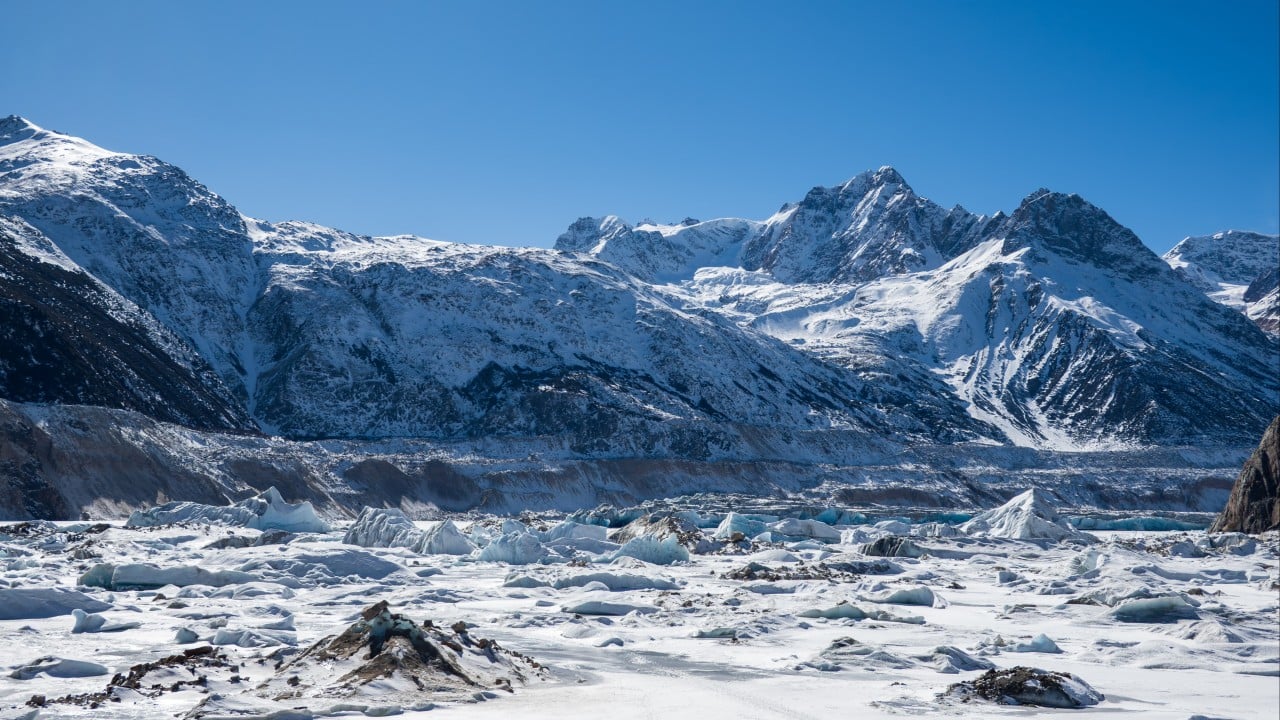
The Tibetan Plateau, home to the world’s largest expanse of alpine permafrost, is warming at about twice the global average but, counter-intuitively,researchers have found that ice in parts of the Tibet autonomous region is actually thickening.
A team from Peking University found that shallow ground ice has unexpectedly increased over the past 20 years, affecting more than a third of the plateau’s permafrost, a phenomenon driven largely by natural climate factors.
The authors noted that the impact of this ice gain on the stability of the underlying permafrost and the broader environment was unclear.
In late August, a catastrophic landslide and flood on the China-Nepal border left thousands of people dead or missing. The mudslide, triggered by a glacier collapse, travelled 22km (13.7 miles) down the valley, reaching the Gyirong Port border crossing in just seven minutes.
Meanwhile, another team of scientists from Gansu province has been building up ice through human intervention. In one experiment on the eastern edge of the plateau, they managed to increase ice thickness by 10cm (4 inches) after covering a glacier with a thermal-insulating reflective fabric, Shanghai-based news outlet The Paper reported in October.
01:45
Gyirong authorities in Tibet held evacuation drills weeks before China-Nepal border disaster
The Peking University team used satellite data and borehole observations to reconstruct 40 years of variations in near-surface ground ice, identifying an unexpected build-up at the bottom of the active layer.
The study, headed by Li Dongfeng from the university’s environmental sciences and engineering collaboration, was a collaboration with institutions including Germany’s Alfred Wegener Institute and Nanjing Normal University.
In a paper published by the peer-reviewed journal Science Advances in July, the research team concluded that the increase, which occurred despite the region’s overall warming since 2000, was mainly driven by rising precipitation.
The study noted that the Tibetan Plateau, a highly sensitive region vulnerable to climate change, had been warming “at a rate of twice the global average” over recent decades, resulting in substantial permafrost degradation.
The thawing threatened local landscape stability, ecosystem functioning and infrastructure safety, ultimately jeopardising “the sustainable development of over two billion people downstream”, the researchers said.
In a statement on October 19, Peking University said the harsh, high-altitude environment had historically limited field observations, leaving scientists with an incomplete picture of ground ice distribution and trends.
To address this, Li’s team compiled records from 369 boreholes across the plateau’s permafrost regions. When the researchers compared those drilled before and after 2000, they found that the newer ones generally contained more ice.
To determine whether this was a widespread trend or a localised anomaly, the scientists used machine learning and permafrost modelling to reconstruct dynamic changes in water content at depths of up to 3.2 metres (10.5 feet) between 1979 and 2018.
According to the study, the anomalous ice increase was concentrated in the region’s northwestern interior, covering roughly 35 per cent of the plateau’s permafrost area, with water determined to be the likely cause.
Meteorological data showed a 60 per cent rise in annual rainfall and snowfall in the westerlies-affected interior since 2000.
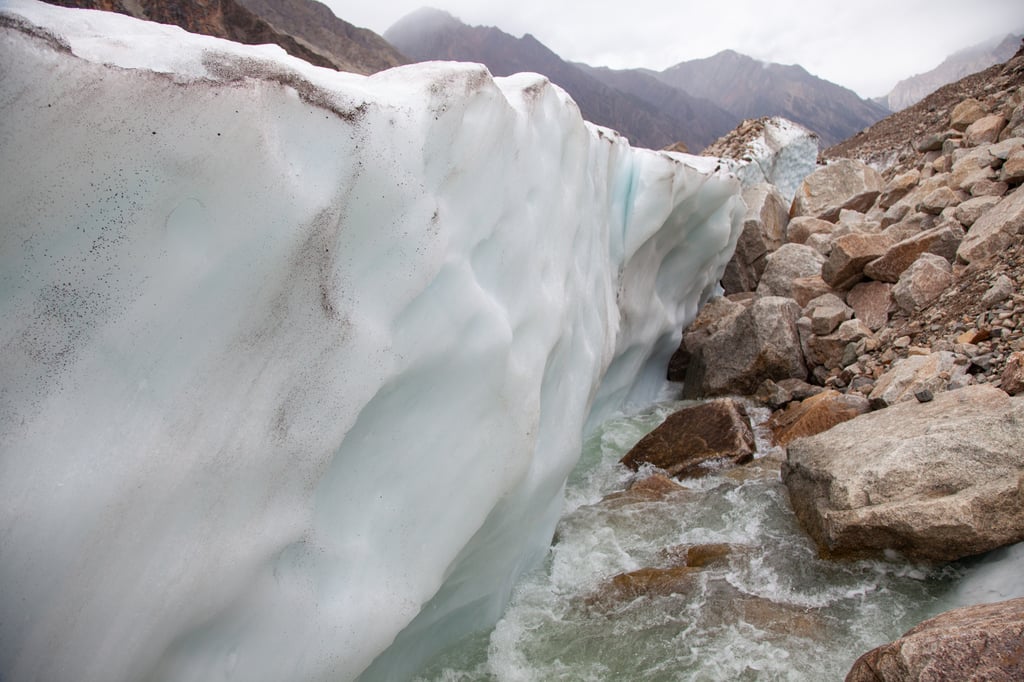
The researchers suggested the additional precipitation was infiltrating the bottom of the active layer of the permafrost and refreezing in the permanently sub-zero environment, gradually adding to the existing ground ice.
They cautioned that this geographical phenomenon must be factored into future engineering projects, environmental security assessments and climate adaptation policies.
“The impacts of this anomalous ice gain on the stability of underlying permafrost and broader environmental and socioeconomic consequences remain open and important questions that warrant further investigation,” the scientists said.
While some researchers are studying the region’s climatic shifts, others are testing technological interventions to shield glaciers from warming-induced degradation – and their efforts appear to be working.
In Lanzhou, Gansu province, a team from the Chinese Academy of Sciences’ Northwest Institute of Eco-Environment and Resources – which specialises in cold and arid regions – has been conducting a glacier protection experiment on the plateau’s eastern edge.
Each year since 2022, the team has covered part of a glacier in Sichuan province with a layer of thermal-insulating, reflective nanofilm to block heat exchange.
By laying the material before May and retrieving it in late September, the researchers found that parts of the glacier have grown by 10cm since the project started. They estimate such interventions could extend the glacier’s lifespan by at least three to four times.
However, the researchers cautioned that the method was not applicable to all glaciers, citing logistical hurdles such as the ease of transporting materials.
They also stressed that it was merely an adaptation measure in a race against time which “cannot reverse the fundamental trend brought about by global warming”.
Passionate about science? Dive deeper with the Dark Matters newsletter, a weekly in-depth analysis on China’s rise in science, technology and military that goes beneath the surface. Sign up for free now.
KioskNews shows a cleaned-up reading view extracted from the publisher’s page — the original always lives on their site, not ours.