‘I feel like a fourth-grade citizen’: Victorian public tenants in private homes fear eviction as the wait for permanent housing drags on

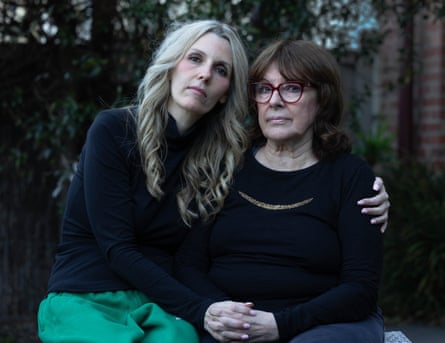
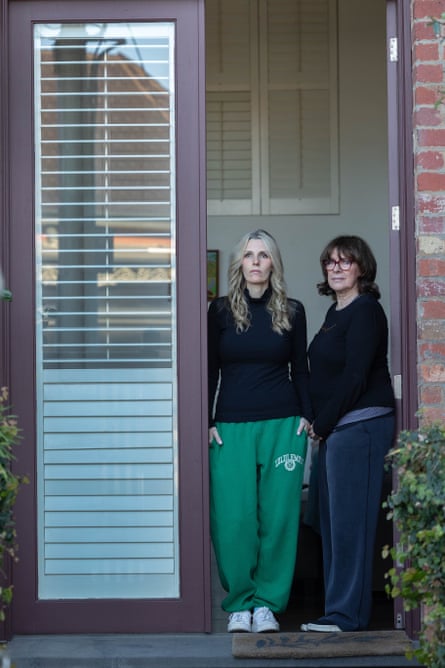
There have been moments of joy during the tough period that Gail and Laura Innes have been public tenants living in a private home leased for them by the Victorian government. The mother and daughter ended up in the somewhat unusual position, known as headleasing, after their Port Melbourne public housing estate was demolished to make way for a replacement in 2022.
Headleasing involves the government paying market rent to a private owner and then on-leasing that property to public tenants, who pay their usual subsidised rent. In the case of the Innes’s home in Albert Park, the difference is $4,000 a month.
One moment of joy occurred when the Victorian civil and administrative tribunal (Vcat) ruled in August that a notice used to justify their eviction from the private rental was invalid.
“That was just wonderful, the best day of my life,” Gail, who is a disability pensioner in her 70s, says.
But the joy soon faded: another notice was issued days later. The order to vacate comes into effect on 25 November – three days before the Victorian election.
“I feel insecure, I’m really, really anxious,” Gail says.
“I feel bullied … like, I’m a fourth-grade citizen.”
The Victorian government says using private homes for public housing tenants does not put those tenants at greater risk of eviction.
Sign up for a weekly email featuring our best reads
The Inneses’ case in part prompted a meeting last week between Homes Victoria executives and community legal centres.
Central to the concerns raised at the meeting was that tenants like the Inneses, who have been issued a notice of eviction from a private rental, may find themselves pushed to the bottom of public housing waiting lists.
While headleasing has been used by the department for years, the sector believes it has become more common.
Victoria is undergoing a large-scale “replenishing” of its public housing stock, which is increasingly being replaced with a mix of social and community housing that is not state-owned but built in partnership with private enterprise.
The largest of these projects is the demolition of 44 decades-old public housing towers to replace them with newer properties, forcing some residents into headleasing arrangements.
When that multibillion-dollar project was announced in 2023, it was described by the then premier, Daniel Andrews, as “Australia’s biggest ever urban renewal project”, with a finish date of 2051.
Andrews is gone, and his Labor government could be too, come 28 November. The Liberals plan to review the project, should they rise to power.
During the Inneses’ August Vcat hearing, one of the owners of the Albert Park property told the tribunal it needed to be sold for as much money as possible. To do this, he argued, the tenants had to move out imminently.
“The duress we’re under … we absolutely need to sell the property in order to meet our financial obligations,” the co-owner said.
“It’s a beautiful property that needs to be marketed in a certain way. We need to stage it, and we need to sell it.”
The other co-owner has an interest in three other properties, according to property records.
Homes Victoria was not present at the hearing, despite previously telling lawyers for the Inneses that a representative would be there, the tribunal heard.
Barrister Emily Clark, acting for the Inneses, told the Vcat member Jillian Bartlett that she had only been told the morning of the hearing that Homes Victoria was not coming.
“That is disappointing and it does leave really a gap in the evidence you will hear,” Clark said. “Because they are really the only ones who can speak to alternatives and what are the timelines [to finding another property].”
after newsletter promotion
Bartlett ruled in the Inneses’ favour, finding the notice to vacate was invalid.
Since the new notice has been issued, the Inneses also heard back from the Victorian ombudsman, who declined to investigate their complaint against Homes Victoria.
In an email to the pair sent on Thursday, a senior complaints resolution officer told them that it had spoken with the Department of Families, Fairness and Housing (DFFH), within which Homes Victoria sits, to understand more about their case.
According to the email, the department told the ombudsman it had considered special accommodation requirements, which included Gail’s accessibility needs, and that other properties it had secured for the pair were deemed unsuitable.
It had also confirmed the pair could return to their previous Port Melbourne estate, Barak Beacon, which Homes Victoria says should be completed by the end of the year.
“[DFFH] continues to explore both housing and headlease opportunities, although it says suitable options remain limited due to the combination of housing availability, location requirements, accommodation requirements and difficulties securing landlords willing to enter into headlease arrangements,” the ombudsman’s officer said in the email.
“DFFH also confirmed it is aware of the recent notices to vacate and recognises the urgency of your housing circumstances.
“I appreciate that, despite these efforts, suitable accommodation has not yet been secured and that this is understandably frustrating and concerning.”
The email went on to outline that the complaint would not be investigated because the officer was “unable to identify any further enquiries that are likely to obtain new information or achieve a different practical outcome”.
“I appreciate that this conclusion does not resolve the uncertainty you continue to face regarding your housing and that this will be disappointing,” the ombudsman’s officer said.
“While I recognise that your housing situation remains unresolved, I am unable to identify any further action the Victorian ombudsman could take that is likely to result in a different housing outcome.”
Homes Victoria said in a statement that headleasing arrangements supplemented its housing stock and such properties could be used for transitional housing, housing while homes are upgraded or redeveloped, and for renters who have specific needs.
“The Big Housing Build has and will continue to significantly contribute to the supply of new social and affordable housing to address unmet housing needs, particularly for those households at risk of homelessness,” a spokesperson said.
The Inneses continue to wait in the Albert Park property, hoping the next moment of joy that comes is news of a new home.
KioskNews shows a cleaned-up reading view extracted from the publisher’s page — the original always lives on their site, not ours.