Cheaper rent, brightest minds: Why Melbourne is about to become Australia’s boom city
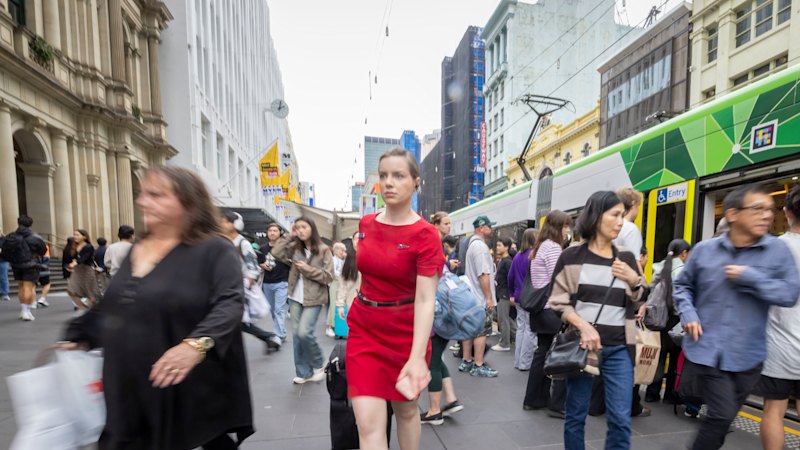
Another day, another bleak assessment of the state of Victoria, and its capital, Melbourne.
Since the pandemic, it has been hard to avoid them. Even walking around the city centre has been a reminder of vibrancy lost. For the city hardest hit by the pandemic, the road back is a long one.
This is clearest in the state’s finances. All budgets (save Western Australia’s) are under pressure. But Victoria has gone from a relatively rich state to a relatively poor state, ahead of only Tasmania and South Australia. And with healthcare spending on the rise, infrastructure investment still at record levels, and the threat of a difficult bushfire season ahead, budget pressures aren’t likely to ease any time soon.
But that is not the full story of Melbourne’s fortunes: the city could be on the cusp of an economic renewal.
Melbourne has long held a strong position in the battle of Australian cities when it comes to quality of life. It has consistently ranked as Australia’s most liveable city, and during much of the 2010s as the most liveable in the world. This year it was voted Time Out’s best city worldwide. Culture, sports, food, trams, and green spaces have made Melbourne marvellous.
But right now, the real ace Melbourne has up its sleeve is its housing market.
The steep – and damaging – climb in the cost of housing seen across Australia since the pandemic has not hit every city evenly. Today, median rents in Melbourne are the second lowest among capitals cities, after only Hobart. In fact, median rents for houses are the lowest of all capital cities.
This makes a material difference to the cost of living for Melburnians. And it is particularly important for young people, and those in the early stages of their careers. In Melbourne, median rents for newly advertised dwellings are around 40 per cent of the median full-time wages of those aged 25-34. This is the lowest of any capital city. In Sydney, median rent chews up half of the equivalent median wage.
Not only does your wage go further in Melbourne, but affordable housing – particularly homes for rent – is a vital support to a healthy labour market. It supports mobility and allows people to take a chance and try new things. If you are a young professional looking to build your career, say in a national firm, there are very good reasons to take a job in the Melbourne office. Liveability and affordability in the one place.
If you are an employer in Melbourne, the wage pressures you face at each salary review are not as acute as Sydney, Brisbane or Perth. If you are creative, or a freelancer, you will have a better shot building your base out of Melbourne. And the more skilled, creative or otherwise entrepreneurial people move to Melbourne, the more the city benefits from “agglomeration”, reaching a critical mass where networks form and exciting things happen.
This has happened in cities down on their luck before: Montreal in the late 1990s, setting the stage for the creative boom in the early 2000s. Austin, Texas, is another recent example.
It’s hard to disentangle how much of weaker house price growth in Melbourne is down to supply growth, a weaker economy or reforms to land taxes. But when it comes to slower growth in rents relative to incomes, the picture is clearer: in Melbourne there has been a steadier supply of housing to meet demands of population growth and smaller households.
Of course, even in Melbourne, housing costs are still punishingly high in many of the city’s most desirable areas. But Victoria’s land use planning reforms are changing that.
These reforms are more substantial than those in NSW, and well ahead of Brisbane, Adelaide and Perth where restrictive low-density zones still cover most residential land. The Grattan Institute estimated last year that Victoria’s reforms will increase zoned capacity equivalent to 70 per cent of the existing housing stock, compared with 40 per cent for NSW. This arises predominantly from the state’s new “Townhouse Code”, but also the much-publicised Activity Centre Program; both examples of measures to boost gentle and medium density in the places people most want to live, and close to jobs.
None of this is cause for complacency: the Victorian government needs to stay the course on reforms to allow more homes in the places Melburnians want to live. Construction productivity desperately needs a shot in the arm. Nor is it only about housing – you also need good transport networks, effective measures to bust congestion, and planning that makes the most of existing infrastructure rather than enabling more sprawl. Institutions like top-tier universities and globally leading firms also play a key role in agglomeration of knowledge workers and innovators, particularly through attracting the world’s best and brightest here.
Melbourne’s story is still being written. And a commitment to remaining the most affordable city to rent in Australia will make it even more marvellous.
Dr Aruna Sathanapally is chief executive of the Grattan Institute.
The Opinion newsletter is a weekly wrap of views that will challenge, champion and inform your own. Sign up here.
More:
KioskNews shows a cleaned-up reading view extracted from the publisher’s page — the original always lives on their site, not ours.