Secret son revelation ignites bitter succession dispute in Ugandan kingdom

A traditional Ugandan kingdom has become engulfed in a bitter succession dispute after the family of a king who recently died rejected the selection of a television news anchor as his successor.
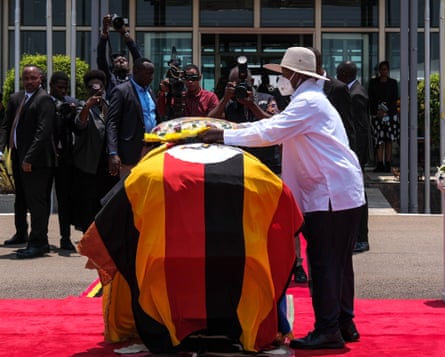
King Oyo Nyimba Kabamba Iguru Rukidi IV, who became the world’s youngest reigning monarch when he took the throne in the kingdom of Tooro in 1995 at the age of three, died on 27 August in the US, where he was receiving cancer treatment.
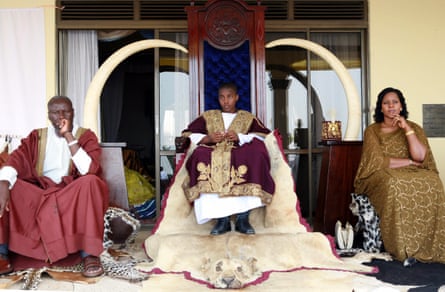
On Wednesday, the royal clan’s succession committee announced it had chosen Oyo’s cousin Prince Edward Rukidi Kijanangoma, a news anchor and editor at the public broadcaster UBC, as crown prince.
However, at a press conference held later the same day, Oyo’s sister, Princess Ruth Nsemere Komuntale, said that according to her brother’s will, a son whose existence had not been publicly known until his death should succeed him.
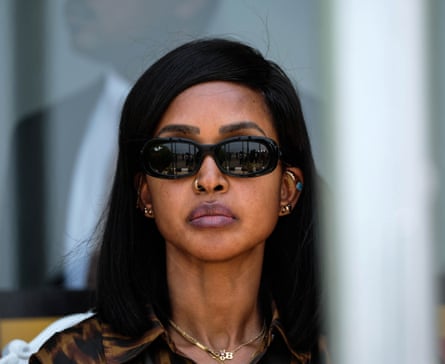
The kingdom’s spokesperson shared a section of the document, which says: “I hereby declare and direct that if, at the date of my death, I am survived by a son lawfully recognised as my biological son, I appoint him as my heir to the throne of the kingdom of Tooro.”
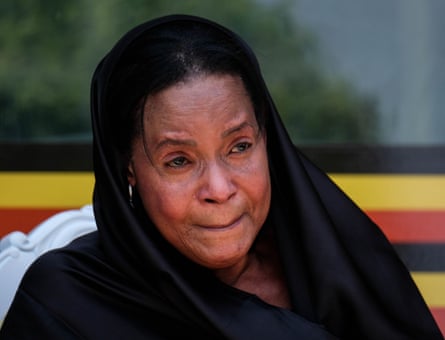
In a statement on Thursday, Oyo’s mother, Queen Mother Best Kemigisa Akiiki, denounced a “self-appointed group of clan members” who had selected a new king despite having had the will read to them hours earlier.
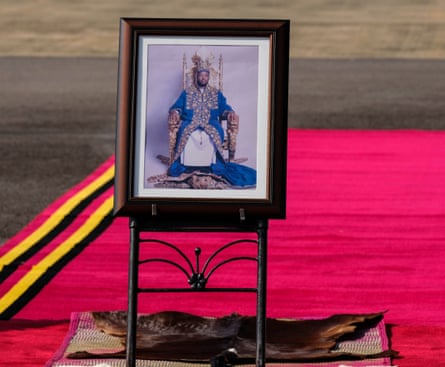
Oyo was unmarried and was not known to have any children. The Tooro kingdom’s prime minister, Calvin Armstrong Rwomiire Akiiki, revealed the existence of a son in a social media post on 27 August when announcing Oyo’s death.
“His majesty leaves behind a prince as his heir, whose identity will be formally revealed at the appropriate time, in accordance with the traditions and customs of Tooro kingdom,” he said.
The Tooro king is selected by a succession committee appointed by the royal clan. A committee member told the local NTV station that a royal child must be officially introduced to elders in order to be considered for leadership.
Andrew Mwenda, a prominent Ugandan journalist and relative of the royal family, wrote on X on Thursday that Oyo’s family had not been able to produce a photo of the purported son, and declined to disclose details about the family of the boy’s mother. He added that, in Tooro, a king’s son could only succeed him if he were born to a queen officially married to the king.
The prime minister called for restraint on Thursday. “There will be time to examine the will, to hear those advancing a different position, and to consider our customs, the applicable law and the proper institutions through which succession should be determined,” he said in a social media post.
“That process should take place calmly and credibly, not through competing announcements, confrontation, or attempts to establish facts on the ground while our king still awaits burial.”
Edward, a popular TV news presenter, is the son of Prince Christopher Paul Kijanangoma and a grandson of the former king George David Rukidi III.
Oyo, who was crowned after his father’s death, will be buried on Saturday at the Karambi royal tombs in the kingdom’s capital of Fort Portal in western Uganda.
Uganda has several ancient kingdoms that lack formal sovereignty, but whose leaders are revered as symbols of tradition and wield vast social influence. Tooro is one of five that are recognised by the government. Their monarchs have no political authority and are legally barred from engaging in partisan politics.
In 1967 Uganda’s then president, Milton Obote, abolished the kingdoms, saying he wanted to unify the country. They were restored by the current president, Yoweri Museveni, in 1993.

The Tooro are the latest African royal family to become mired in a succession dispute. King Misuzulu Sinqobile kaZwelithini, the reigning king of the Zulu people in South Africa, waited 15 months for his coronation after the death of his father because of a bitter feud involving accusations of forgery and poisoning.
KioskNews shows a cleaned-up reading view extracted from the publisher’s page — the original always lives on their site, not ours.