CONGRESS IN THE BALANCE: A blue tsunami, a tide, or chaos as usual — the US midterm election
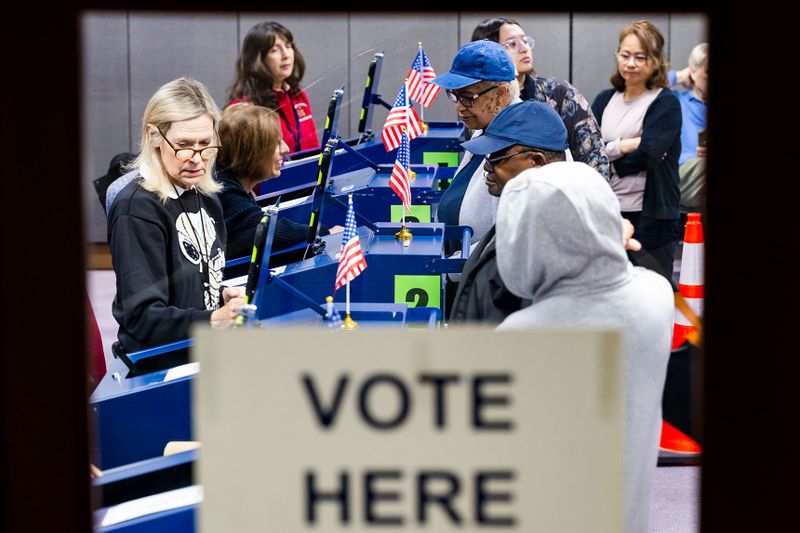
After seemingly endless words of analysis, prognostication, and, increasingly, some growing invective, Americans will, soon enough, learn whether Democrats will succeed in taking control of the House of Representatives — and maybe the Senate as well.

The Democrats only need to gain a net win of three more seats in the House and four in the Senate to gain control of these houses, but with only razor-thin margins. A tsunami of Democratic voting is possible, but given the divided textures of American society these days, that outcome may remain elusive.
Control of a legislative house matters. It means determining what legislative proposals move forward, and whether they have the authority to hold hearings to investigate the executive’s actions or proposals, and to issue subpoenas and summonses for documents and testimony.
An important footnote is that if the Senate ends up in a 50-50 split, the vice president constitutionally has the authority to cast a deciding vote. That would mean JD Vance would be spending a great deal more time in Washington and at the Senate, rather than engaging in his campaign in all but name to become his party’s nominee for president in 2028. In America, the campaign for the parties’ nominations for president effectively begins on 4 November this year.
Energy, emotion and anger
By Sunday morning, it has been reported that more than 52 million Americans had already cast their ballots by mail or via advance voting at polling stations. For comparison’s sake, in the most recent presidential election, a bit more than 152 million voters, in total, voted. Important, too, is the fact that the usual vote totals in midterm elections have always been lower than in presidential election years. There is clearly some energy, emotion and anger out there.
These numbers, in turn, point to two crucial variables: turnout and weather. Turnout, of course, means that a party and all the individual campaigns under its banner must turn their attention to making sure voters either vote before election day or show up on election day itself to vote. A turnout lower than expectations can condemn a candidate to losing due to the lack of a simple organising effort to get voters out of their homes and into the queue at the polling station.
Weather matters as well. Bad weather — snow, sleet, heavy rainstorms — has historically lowered voter turnout, especially among Democrats and lower-income voters who may rely upon public transportation in urban areas. Watch that weather forecast.
As readers of our previous reporting on this electoral cycle know, this election asks voters to pick the winning candidates for all 435 members of the House of Representatives and 35 of the 100 members of the Senate, plus the winners of various gubernatorial races and other state and local offices.

While President Trump is obviously not on the ballot, he has insisted in numerous rallies and public statements that voters should see this election as a referendum on him, his policies, and his record. For many, though, this is a problematic strategy at best, with the incumbent president’s support across almost every poll hovering in the low 30s in percentage terms.
It is important to note that in his campaigning, crisscrossing the nation, most of his speeches have been in congressional districts and states that have heretofore been seen as reliably Republican for years, states such as Iowa and Kansas. (For more background, see:
Affordability
Looked at nationally, the pre-eminent issue in the minds of many — indeed most — voters is “affordability.”
Affordability has come to mean a big collection of issues that includes the rise in the overall cost of living, the especially inciting and angering cost of petrol and diesel fuels that underpin price rises more generally; a realisation that some of this comes from the costs of Trump-initiated tariffs with trading partners; and that also comes from the increase in consumer interest rates affecting credit card charges and the cost of home, automobile and other consumer purchases.
This unease is also being fuelled by the growing realisation on the part of many that business sectors such as energy are making major profits amid the uncertainty and rising cost of petroleum and LNG shipments out of the Middle East, a rise in profits effectively being cheered on by the incumbent president. And that profit boom, in turn, is being driven by an unresolved war of choice with Iran. But there is also the cost of pursuing that conflict in personnel, military materiel and operating costs. Something of a sneaker issue in this campaign has become the popular revulsion over the costs of AI-related large data centres that can affect local power costs and water systems.
The truth and power of the adage, back from the first Bill Clinton campaign, “it’s the economy, stupid,” may well be demonstrated yet again. By contrast, while the old Trumpian tropes about wokeism and the culture wars may yet encourage his loyalists to support Republican candidates, it is not at all clear they have the potency they once had.
Intra-party feuds
At this late date in the electoral cycle, there have been a series of concerning ructions within both parties.

In Michigan, where Democratic Party candidate for the Senate Abdul El-Sayed has been waging a touch-and-go campaign against his Republican opponent, Mike Rogers, the latest issues have been his squabble with his primary opponent Haley Stevens as well as a controversial campaign ad from an outside group asserting US aid to Israel is the cause of high prices and inflation. El-Sayed has disavowed the ad, and long-time Democratic congresswoman Debbie Dingell has urged Stevens to step back from further fisticuffs.

Meanwhile, the Senate race in Alaska has become tangled as the Republican candidate, incumbent Senator Dan S Sullivan, is fighting for re-election against Democrat Mary Peltola, as well as Dan J Sullivan, a relative unknown running as a Republican as well. Here the charge is that a Democratic operative had worked to get the latter Sullivan into the race. Now Trump’s Department of Justice is seeking pre-emptive injunctions against the results — even before they are tabulated.

Given the narrow balance in the Senate, these two races in Michigan and Alaska have become nationally important. The results in both could be crucial to either party in their attempts to win control of the Senate. As a result, controversies like these have become nationalised in their coverage and — potentially — their impact on the minds of voters in other states.
Campaign funding splurge
Not surprisingly, this election has also seen an extraordinary amount of campaign funding, topping more than $11-billion in still-incomplete figures compiled by the Federal Elections Commission. Leading the pack in contributions is Elon Musk, who has poured a vast amount of money into the Texas Senate race between Republican Texas attorney general Ken Paxton and Congressman James Talarico.


Musk has poured hundreds of millions of dollars into that race on behalf of Paxton, a man who clearly is truly morally challenged. While direct contributions to individual campaigns have significant limits, much of this money is an outgrowth of the mushrooming of political action committees (PACs) and super-PACs, in the wake of the “Citizens United” Supreme Court ruling that ruled money was the effective equivalent of free speech. That opened the floodgates.
By Tuesday evening US time, the first exit polls will be available, and the actual verified results will begin rolling in shortly after the polls close. (Counting all those advance and mail-in ballots may take more time.) DM
On Thursday at 5pm SAST, we will host a webinar with knowledgeable observers of this election and its probable policy impacts, bringing together three journalists and academics based in the US. Register here.
KioskNews shows a cleaned-up reading view extracted from the publisher’s page — the original always lives on their site, not ours.