After 8 Seasons, CBS' Longest-Running Sitcom Made One Mistake It Could Never Undo


Amanda M. Castro is a Network TV writer at Collider and a New York–based journalist whose work has appeared in Newsweek, where she is an Associate Editor, and The U.S. Sun, where she previously served as a Senior Consumer Reporter.
She specializes in network television coverage, delivering sharp, thoughtful analysis of long-running procedural hits and ambitious new dramas across broadcast TV. At Collider, Amanda explores character arcs, storytelling trends, and the cultural impact of network series that keep audiences tuning in week after week.
Born and raised in Puerto Rico, Amanda is bilingual and holds a degree in Communication, Film, and Media Studies from the University of New Haven.
For eight seasons, Charlie Harper was the unapologetically terrible heart of Two and a Half Men. Played by Charlie Sheen, the Malibu womanizer could turn practically any bad decision into a punchline, whether he was drinking, gambling, sleeping with women he absolutely shouldn’t have been sleeping with, or finding new ways to torment his younger brother Alan (Jon Cryer). Charlie was selfish, immature and frequently awful, but he was also the character who gave the sitcom its distinctive identity.
This became particularly apparent when Sheen left the series in 2011. Two and a Half Men replaced Charlie with Ashton Kutcher’s Walden Schmidt, but it never completely escaped the shadow of its former leading man. Charlie was supposedly killed after traveling to Paris with Rose (Melanie Lynskey), but even death couldn’t keep him from dominating the show’s storylines. His belongings, relationships, and memories continued shaping the characters long after his funeral.
How Charlie Harper’s Death Changed 'Two and a Half Men'

Charlie and Rose’s relationship had always been one of the show’s strangest recurring stories. After spending one night together, Rose became obsessed with Charlie and eventually became his stalker. Their relationship grew more complicated in Season 8, when Charlie unexpectedly developed genuine feelings for her.
The two eventually left for a romantic getaway to Paris. According to Rose, at Charlie’s funeral, he proposed to her. Unfortunately, their happiness didn’t last. Rose claimed she returned from shopping to discover Charlie showering with another woman. The following day, she said, Charlie fell from a Paris Métro platform and was struck by a train.
His funeral in the Season 9 premiere immediately made it clear that Two and a Half Men wasn’t interested in giving Charlie a dignified farewell. His former girlfriends arrived with stories ranging from embarrassing to horrifying, including revelations about sexually transmitted infections. Even in death, Charlie apparently couldn’t leave people with a good impression.
For Alan, however, losing Charlie was much more complicated. His brother had spent years driving him insane, but Charlie had also allowed Alan and Jake (Angus T. Jones) to live with him for years. Their relationship was dysfunctional and often cruel, yet genuine affection lay beneath the insults.
Charlie Harper’s Shadow Never Left the Malibu Beach House

After Charlie’s supposed death, Alan and the family attempted to sell the beach house. Instead, they met Walden, a billionaire going through a divorce who eventually purchased the property. Walden was fundamentally different from Charlie, but the house itself remained a monument to its former owner. Charlie’s belongings and memories were everywhere, and Alan struggled with the idea that his brother’s home was becoming someone else’s.
That grief eventually manifested in one of the show’s oddest storylines. Alan began behaving like Charlie, wearing his bowling shirts, adopting his mannerisms, and even successfully picking up women. Beneath the absurdity was something surprisingly sad: Alan missed both his brother and the life they’d shared, which became even more apparent when Walden donated Charlie’s piano. The instrument had been one of the most recognizable objects in the house, and losing it made Charlie’s absence feel permanent.
Alan later discovered an even more personal connection to his brother when Evelyn (Holland Taylor) gave him Charlie’s journal from a safe-deposit box. The entries revealed a side of Charlie that Alan had never really known. Charlie had contemplated his own mortality, questioned his behavior toward women and, despite constantly mocking Alan, appeared to genuinely love and miss his brother. Charlie was more complicated than the selfish playboy he presented to everyone around him.
The Series Finale Gave Charlie Harper One Last Terrible Goodbye
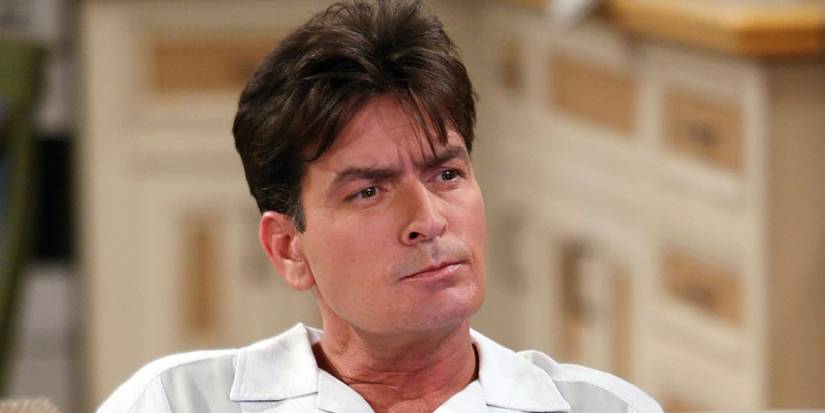
Two and a Half Men eventually brought Charlie back in one of its most bizarre twists. After Alan suffered a mild heart attack, he encountered Charlie’s ghost, played by Kathy Bates. Charlie explained that he was in Hell and had been punished by being forced to spend eternity in the body of an older woman. Naturally, Charlie’s concern for his brother didn’t last very long. He eventually admitted that he hadn’t returned to help Alan at all. He simply wanted to mess with him one last time.
The joke became even more important in the series finale, when the show revealed that Charlie hadn’t actually died in Paris. Rose had kept him captive after catching him cheating, eventually imprisoning him beneath her house. After escaping years later, Charlie returned to Los Angeles and prepared to take revenge on everyone who had moved on without him.
The storyline was deliberately ridiculous, but it also allowed Two and a Half Men to acknowledge the real-life feud between Sheen and creator Chuck Lorre. The finale referenced Sheen’s infamous meltdown, his “tiger blood” comments, and the controversy surrounding his departure. The show even attempted to bring Sheen back, although the actor ultimately did not appear.
After all that buildup, Charlie finally returned to the Malibu beach house, but he never made it through the door as a grand piano being transported by helicopter fell from the sky and crushed him, killing him for real this time. The joke was ridiculous, excessive, and completely fitting for a character whose entire existence revolved around excess.
Two and a Half Men spent years trying to move beyond him, but his presence remained embedded in the show’s DNA. Walden could buy his house, Alan could attempt to move on, and Charlie could supposedly die more than once, but the series never truly escaped his shadow. When Two and a Half Men finally ended, Charlie Harper went out the only way he really could: with a punchline, a piano, and absolutely no dignity.
KioskNews shows a cleaned-up reading view extracted from the publisher’s page — the original always lives on their site, not ours.