How much data does Apple Music use for lossless audio quality?
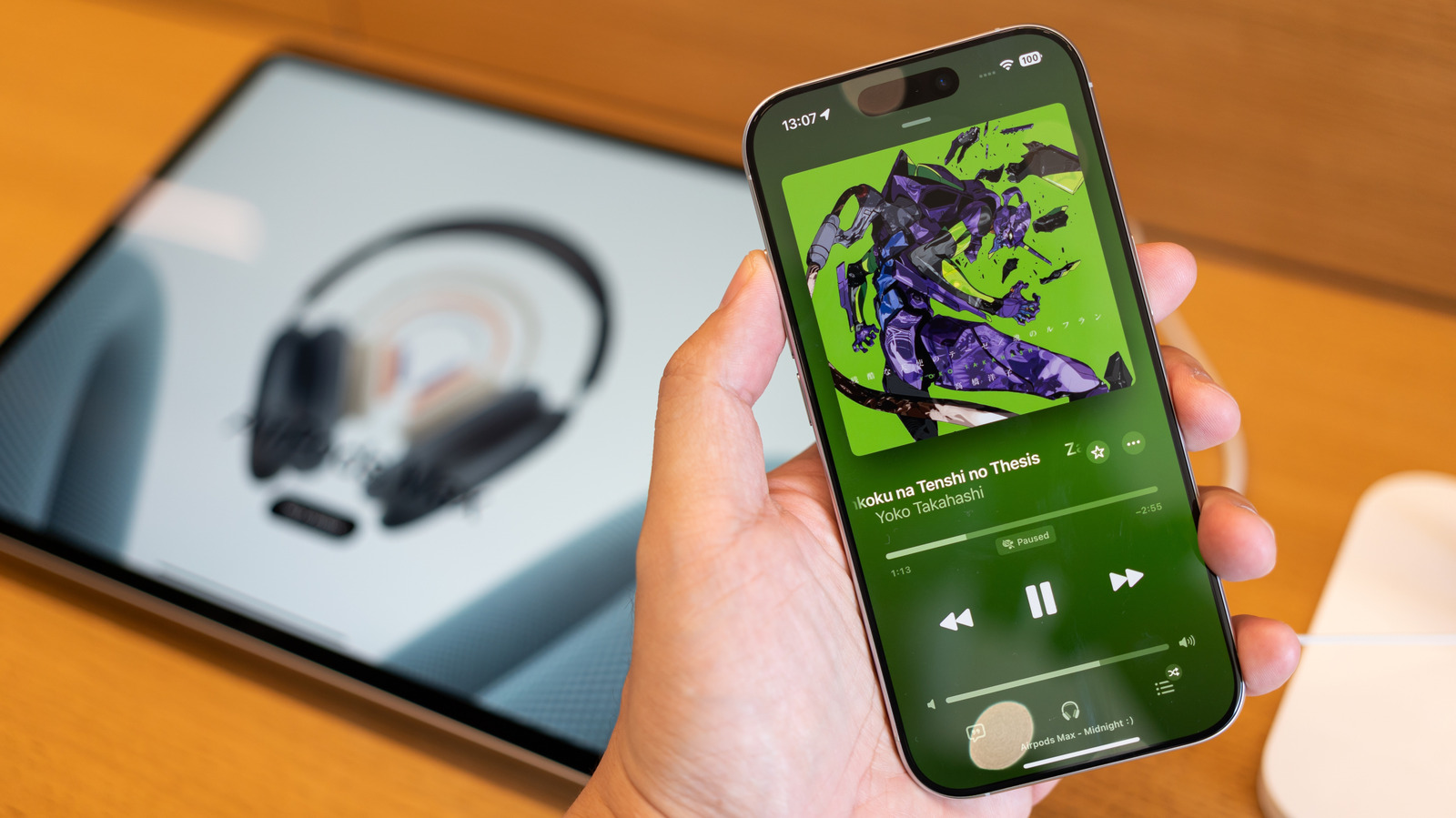
Just a few hours of Apple Music Hi-Res Lossless could exceed your monthly data cap.
Wongsakorn 2468/Shutterstock
Apple Music Lossless can use several times more data than the service's High Quality setting, but there isn't an exact number. Apple's Lossless audio documentation says higher-resolution streams consume more data, while the quality you actually receive also depends on the song, network conditions and equipment you're using. That makes the setting worth checking before you stream over cellular, especially if your plan has a monthly data cap.
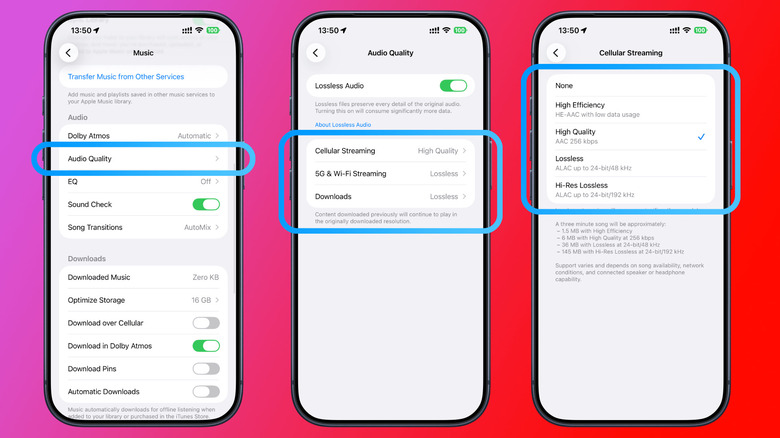
When Apple Music introduced Lossless in 2021, it estimated a three-minute song at about 6MB in High Quality AAC, 36MB in Lossless and 145MB in Hi-Res Lossless. Those figures are useful for planning, but they're estimates rather than guaranteed file sizes. In those estimates, the High Quality setting used 256kbps AAC, while Lossless used Apple Lossless Audio Codec, or ALAC. ALAC reduces the file size while preserving the original audio data, which is why lossless streams require more data than lossy AAC.
How much data does Apple Music use per hour?
Wongsakorn 2468/Shutterstock
Using Apple's three-minute estimates, an hour of continuous playback works out to roughly 120MB in High Quality, 720MB in Lossless and as much as 2.9GB in Hi-Res Lossless. Apple caps standard Lossless at 24-bit/48kHz, while Hi-Res Lossless reaches 24-bit/192kHz.
This difference is quickly noticeable on a capped mobile plan. Listening for one hour a day would work out to about 21.6GB over 30 days at the 720MB-per-hour Lossless estimate. At the upper Hi-Res estimate, the same listening habit would approach 87GB in a month.
Those numbers won't match every listening session exactly. ALAC is lossless compression, so the amount of data needed varies with the recording rather than staying at one fixed bitrate. Streamed quality depends what's available for a given song, plus the conditions of your network and what your headphones or speakers are capable of. That variability is why Apple's figures are best used as planning estimates, rather than a prediction of exactly what every hour will consume.
How to use less data with Apple Music Lossless
Novak Božović for Engadget
If you're concerned about data usage, you don't have to switch Lossless off everywhere. On your iPhone, open Settings > Apps > Music > Audio Quality. Here, you're able to choose separate quality settings for cellular streaming, Wi-Fi streaming and downloads, so you can keep cellular playback at High Quality while enjoying Lossless on Wi-Fi.
Downloading your most-played albums or playlists (while on Wi-Fi) is another option, especially if you have lots of free space on your device but a limited data plan. Lossless downloads take up more storage, but once the files are on your phone, playing them doesn't use cellular data. This is particularly useful for driving, since a USB CarPlay connection supports lossless playback — though your car speakers and road noise could mean you don't get the full experience.
Your listening hardware also matters. Bluetooth connections aren't lossless, so a Lossless stream sent from your iPhone to ordinary Bluetooth headphones will have its quality downgraded. The AirPods Max 2 support lossless audio over USB-C, but not wirelessly. Hi-Res Lossless has another requirement: an iPhone needs an external digital-to-analog converter, or DAC, to play sample rates above 48kHz.
Apple claims that the audible difference between AAC and lossless audio is "virtually indistinguishable." That doesn't make Lossless pointless, but it puts the cellular trade-off in perspective, especially when the final Bluetooth connection isn't at max quality anyway. Lossless is great when you can fully appreciate it, but isn't worth the data usage in other cases.
KioskNews shows a cleaned-up reading view extracted from the publisher’s page — the original always lives on their site, not ours.