6 Forgotten Thrillers That Rival 'Se7en'

William likes watching movies and writing about those movies. Anything else is minutae.
Sign in to your Collider account
David Fincher’s Seven is a 90s serial killer classic. After The Silence of the Lambs made the gruesome exploits of murderers acceptable as prestige entertainment, Fincher’s film took them to the next level with a harsh neo-noir aesthetic, an unrelentingly grim atmosphere, and a devastating downer ending. It became the feel bad blockbuster of 1995, finishing as the seventh highest grossing film of the year. It also resurrected Fincher’s career after the debacle of Alien 3 and set his career on an upward trajectory that has continued for decades.
The success of Seven naturally led to many imitators. Films like The Bone Collector and The Crimson Rivers tried to follow its path, and the entire Saw franchise is indebted to Fincher’s film and his overall aesthetic. None of those films could live up to its dark legacy, but there are other, forgotten films that do rival Seven. Serial killer movies and other thrillers that haven’t enjoyed the same success or had the same influence as Fincher’s film but which are just as worthy of our attention.
6 'Night Moves' (1975)

A 70s neo-noir thriller that’s all vibes, Arthur Penn’s Night Moves stars Gene Hackman as a Los Angeles private investigator searching for a teen girl who gets pulled into a much larger conspiracy. The film takes lots of twists and turns in true noir fashion, but it’s the pessimistic tone and grim atmosphere which it shares with Seven, that makes it such an engrossing watch. Add to that Hackman playing wearied and overwhelmed in the way that only Hackman can, and Night Moves has everything for the cinematic cynic.
Harry Moseby (Hackman) is a former pro football player turned private detective. His wife is having an affair and his professional life has worn him down. When he’s hired to find 16-year-old Delly (Melanie Griffith), the daughter of a former actress, he’s hardly prepared for how complex the case will become. Night Moves has all the characteristics of 70s neo-noirs but hasn’t enjoyed the legacy of many of its contemporaries. Like Seven, it swirls with moral ambiguity and ends in similarly dire circumstances.
5 'Copycat' (1995)

Released the same year as Seven, serial killer thriller Copycat couldn’t help but suffer in comparison to its success and critical acclaim by comparison. The films couldn’t be more different in their approach, however, and while Copycat has carved out its own fine sliver of appreciation, it hasn’t had near the acclaim. It’s an effective, well-acted thriller that also has an effective hook for its serial killer.
As the title implies, the villain of the film is a copycat killer, emulating the murders of the most notorious serial killers in history. In contrast to Seven, the two leads committed to taking this killer down are both female. There's the dedicated homicide detective, M.J. (Holly Hunter), and the criminal psychologist Dr. Helen Hudson (Sigourney Weaver) who’s become an agoraphobic recluse after surviving an attack from another serial killer. Directed by Jon Amiel, Copycat received solid reviews and a had a decent box office return, but has continued to fade under the shadow of Seven when it should be propped up alongside it.
4 'Citizen X' (1995)

Also released in 1995, Citizen X differs from both Copycat and Seven in that it premiered on HBO and also follows a real-life serial killer. Based on the true story of Soviet serial killer Andrei Chikatilo, the film is just as equally focused on the bureaucratic barriers that delayed his capture as it is on his 53 murders. It’s a fascinating, frustrating thriller that transcends its 90s television boundaries thanks to its sharp writing and strong cast.
After multiple bodies are discovered buried in the same vicinity, Viktor Burakov (Stephen Rea) is assigned to investigate. His investigation is continually undermined by the Communist powers that be, who are afraid of how a prolific serial killer will affect the international image of the Soviet Union. Citizen X is a fascinating portrait of the failings of the Soviet Union and a serial killer lesser known to Western audiences.
Collider Exclusive · Villain Personality Quiz Which Criminal Mastermind Would Be Your Nemesis? Lecter · Joker · Moriarty · Chigurh
Four of the finest criminal minds ever put on screen. One of them would look at you and see something worth their time. Eight questions decide which one comes for you, why they picked you, and what they would want when they arrived.
🍷Lecter
🃏Joker
♟️Moriarty
🪙Chigurh
01
What would a criminal mastermind notice about you first? Great villains choose their opponents carefully. Something about you got their attention.
02
How do they make first contact? The introduction tells you everything about what is coming next.
03
What do you actually believe about right and wrong? Every nemesis is really an argument about the thing you believe most.
04
What finally gets under your skin? Everybody has a pressure point. Finding yours is the whole plan.
05
They have made their move. How do you fight back? This is the part of the film where the audience finds out who you are.
06
What would they use against you? A good villain never brings a weapon you have not already handed them.
07
What do they actually want from you? The money is never the point. Something else always is.
08
How does it end between the two of you? Eight questions in, this is the one that decides who comes for you.
The Case File Is Complete Your Nemesis Is…
Four criminal masterminds. One of them was always going to be yours. Here is who comes for you, why they picked you out of everyone available, and what they want from the encounter.
Hannibal Lecter
Your nemesis does not want to beat you. He wants to know you completely, and he is patient enough to wait for it. The frightening part is how good the conversation is.
- Lecter is the most dangerous kind of opponent: the one who finds you interesting. He never raises his voice, because he has never needed to.
- You keep a great deal to yourself and you are careful about what you show. That reserve is exactly the door he would knock on.
- The films understood something other thrillers missed. The horror is not the violence. It is being perfectly understood by the wrong person.
- He would be unfailingly polite about all of it. That is the worst part.
The Joker
Your nemesis is not after money, territory or revenge. He is after a demonstration, and you are the person he has chosen to prove his point on.
- The Joker only picks opponents who believe in something. Your decency is not a defence against him. It is the entire reason he showed up.
- He has no plan you can predict and nothing you can take away, which removes every tool you would normally reach for.
- His whole argument is that you are one bad day away from being him, and you would spend the rest of your life proving him wrong.
- He would call it a magic trick. You would call it the worst night of your life.
Moriarty
Your nemesis respects you, which sounds flattering until you work out what it means. He chose you because nobody else was worth his time.
- Moriarty is the original criminal mastermind, the template every later one borrows from: a mind the equal of the hero's, pointed the wrong way.
- You enjoy being the cleverest person in the room. He is counting on exactly that, and he has already built the room.
- This is the rare nemesis who would be genuinely disappointed if you lost badly. He needs the game to be worth playing.
- It ends the way these things always end. Two people, one problem, and only one way down.
Anton Chigurh
Your nemesis has no personal interest in you whatsoever, and that is precisely what makes him unsurvivable. You are not a rival. You are a stop on the way.
- Chigurh does not negotiate, gloat or explain. He arrives, he asks one question, and the answer was decided long before you opened your mouth.
- You trust yourself to handle things. He is the one problem in the world that has no interest in how capable you are.
- No Country for Old Men rewrote the screen villain by removing the thing audiences quietly rely on: the sense that talking might work.
- Call it. He will wait.
3 'Cure' (1997)
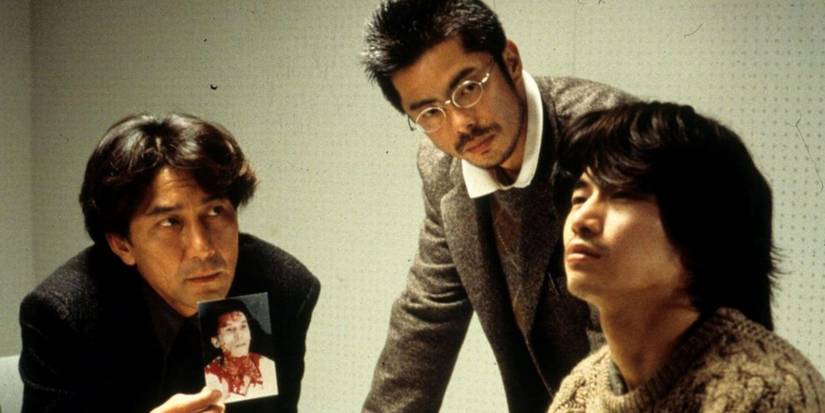
The 1997 Japanese horror thriller Cure, directed by Kiyoshi Kurosawa, differs from Seven in that it features supernatural elements. That puts it in a league with films like Fallen, Longlegs and the many other J-horror films that would follow it. While Cure never had the international influence of films like Ringu or Ju-On, it's a hypnotic serial killer movie that bends the genre around its premise to make something wholly unique.
Detective Takabe (Koji Yakusho) is investigating a series of ritualistic killings that seem connected but have all been committed by different perpetrators who openly confess. Searching for a connection between the murderers, Takabe finds a young man named Kunihiko (Masato Hagiwara) with strange abilities, and suddenly everything becomes far more complicated. Cure is a supernatural thriller whose detached style makes it all the more entrancing.
2 'The Game' (1997)

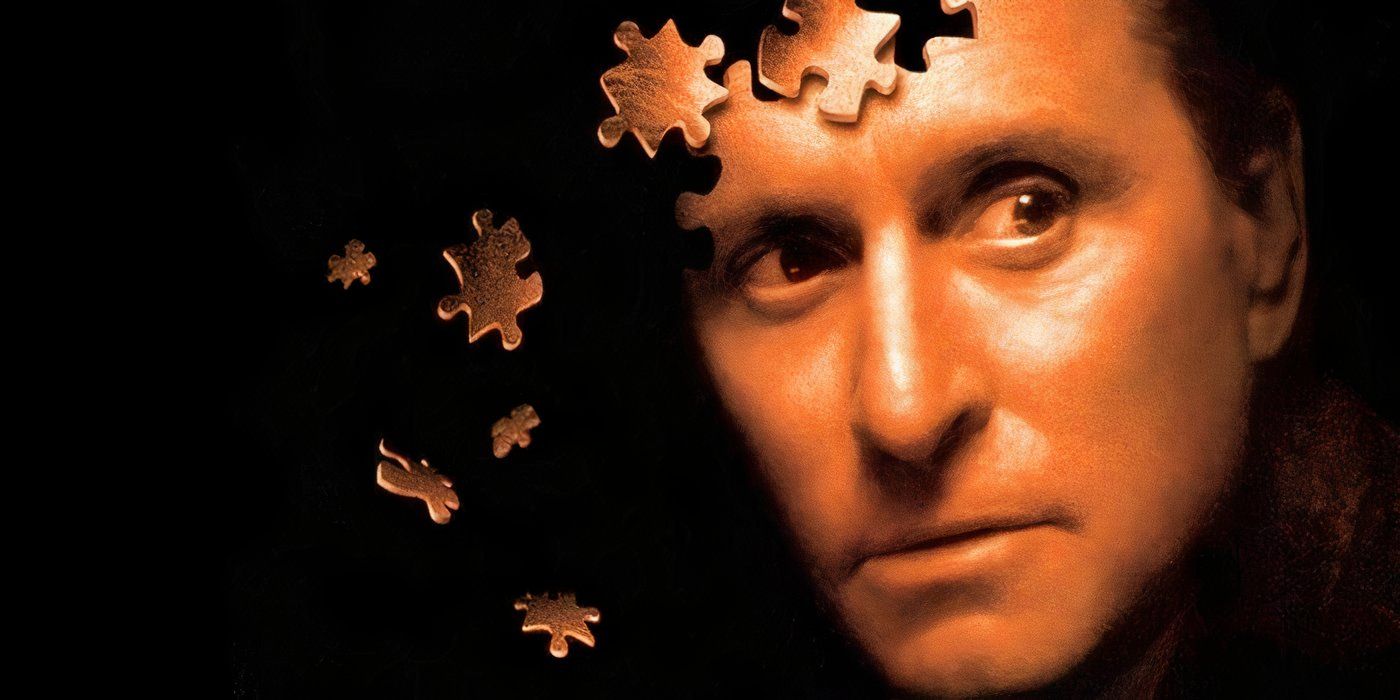
If there's any filmmaker that can rival Fincher, it's Fincher himself. The Game was the director's follow-up to Seven, and while it's also a dark mystery thriller, it's vastly different yet equally intriguing. Fincher described the film as a kind of high-tech modern-day version of A Christmas Carol, featuring a rich man undergoing a reclamation of his soul thanks to the Game. Shot on location in San Francisco, the film uses the scenery of the city to as strong an effect as Alfred Hitchcock in Vertigo, and The Game is just as effective a thriller as Seven.
Nick Van Orton (Michael Douglas) is an investment banker who lives a solitary life. As he approaches the age at which his father committed suicide, he's given a strange birthday present by his brother, enrollment in a mysterious game. Given mysterious clues, Nick quickly finds himself on the run and fearing for his life, which may or may not be the purpose of the game. Twisty and intriguing, the film is less about its final destination and more about the psychological maze that has to be run to get there.
1 'Insomnia' (2002)

Christoper Nolan is a similarly idiosyncratic filmmaker to Fincher, and he's made some major contributions to the thriller genre with modern classics like Memento and The Prestige. Often lost among those films, is his extremely effective neo-noir Insomnia. A remake of a Norwegian noir of the same name, Nolan's film is less bleak but more stylistically distinct thanks to his direction. A thriller that takes place in constant daylight, and featuring Robin Williams giving a dark performance, Insomnia defies expectations and exceeds them.
Det. Will Dormer (Al Pacino) has been called in to assist in a murder investigation in Alaska, in a town where the summer sun never fully sets. After accidentally shooting his partner in the fog, Dormer finds himself in a game of cat-and-mouse with the killer. The killer's identiy is no mystery, as Robin Williams was heavily marketed in the role, and the film is more concerned with the psychological toll taken on Pacino's character. Both actors are effective, with Williams giving a subtle performance that contrasts with his more chilling role in One Hour Photo, which came out the same year as Insomnia, and would make a terrific double feature with it as thrillers that rival Seven.
KioskNews shows a cleaned-up reading view extracted from the publisher’s page — the original always lives on their site, not ours.