Thai Army says Cambodia used Preah Vihear Temple as military base to attack Thailand
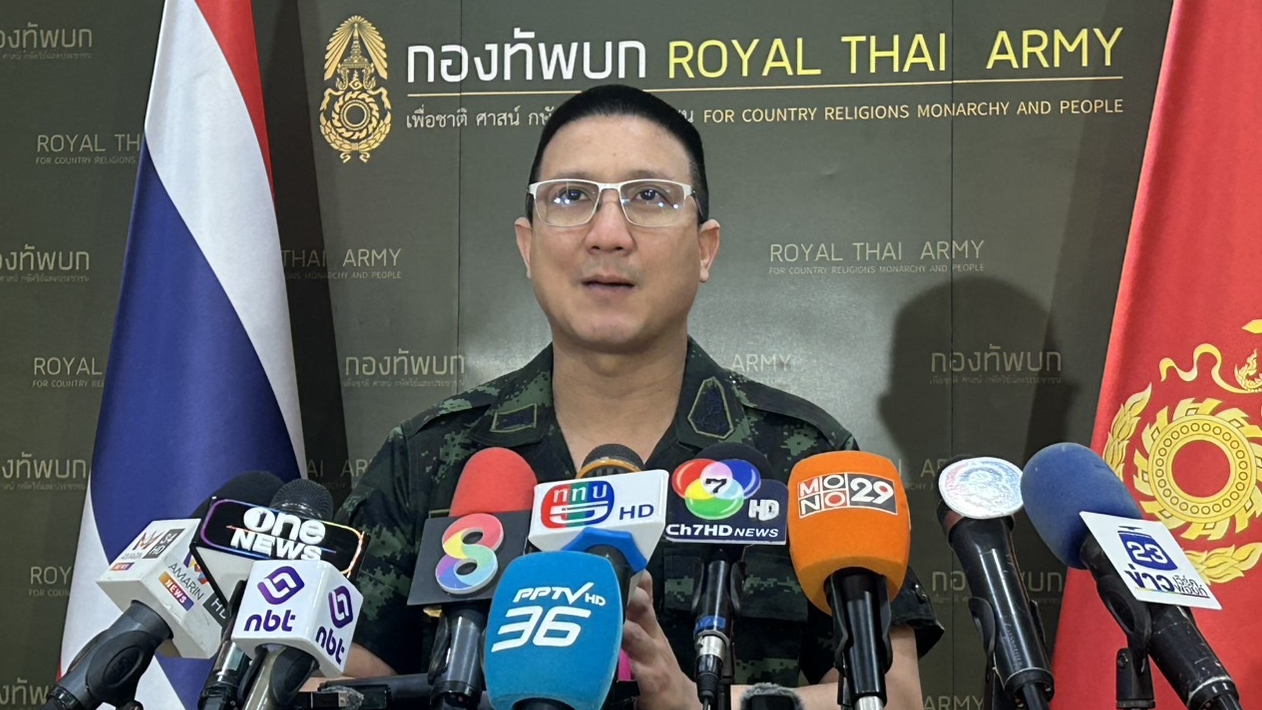
BANGKOK — The Royal Thai Army has accused Cambodia of using Preah Vihear Temple as a military base to launch attacks against Thai troops and civilian communities, rejecting Cambodian allegations that Thailand damaged the UNESCO-listed site.
Army deputy spokesman Col. Ritcha Suksuwanon said on Wednesday, 21 October, that Cambodia had misrepresented the situation and cited a UNESCO-related assessment to accuse Thailand of violating international law.
Army spokesman Maj. Gen. Winthai Suvaree rejected the allegations, saying Cambodia had deployed military equipment and ammunition stockpiles within the temple complex, including grenade launchers, artillery and anti-drone systems, which the Thai military claimed were used to attack Thai forces and civilian communities.
The army argued that the deployment of weapons at the ancient temple constituted military use of a cultural heritage site and undermined its protection under the 1954 Hague Convention for the Protection of Cultural Property in the Event of Armed Conflict.
According to the Thai army, the convention provides for the temporary loss of special protection when cultural property is used for military purposes. It said Thailand’s operations were conducted in self-defence under Article 51 of the United Nations Charter and targeted military threats, not civilians or cultural heritage.
The army also disputed Cambodia’s use of a draft assessment by the World Heritage Centre and the International Council on Monuments and Sites (ICOMOS), saying the damage to the temple’s integrity and outstanding universal value resulted from its use as a military shield.
It said Cambodia’s claims of prioritising conservation were inconsistent with the alleged deployment of troops, weapons and ammunition in and around the temple.
The army called on the international community, UNESCO and the public to consider information from all sides, urging Cambodia to stop using the ancient site for political and diplomatic purposes.
KioskNews shows a cleaned-up reading view extracted from the publisher’s page — the original always lives on their site, not ours.