Eighty one years on, Indonesia's drug war goes on
..Indonesia’s war on drugs is an unending battle requiring close cooperation across society.
Bogor, W Java (ANTARA) - Indonesia has spent 81 years as an independent nation, yet one battle remains unfinished: keeping its people safe from narcotics and the criminal networks that profit from them.
For decades, police, the National Narcotics Agency, the military and customs authorities have pursued drug traffickers, but the threat continues to evolve across Indonesia's vast territory.
The danger stretches from West Papua on the country's eastern frontier with Papua New Guinea to Aceh on Sumatra, Indonesia's westernmost province.
Drug cases show that the threat is not confined to domestic trafficking. International networks continue to exploit Indonesia's borders, airports and transportation systems to move illegal substances.
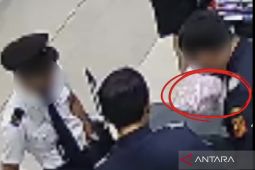
The arrest of a 39-year-old Malaysian pilot, identified as MSBO, on July 29 offered a stark reminder of how sophisticated those networks have become.
The pilot allegedly worked as a courier for an international drug syndicate that smuggled 25 kilograms of ecstasy into Indonesia, drawing attention in Indonesia, Malaysia and beyond.
A report by The Straits Times on Aug. 16 said the suspect was believed to have smuggled drugs into several countries repeatedly since 2024.
Hussein Omar Khan, director of Malaysia's Bukit Aman Narcotics Crime Investigation Department, was quoted by the Straits Times as saying that the information emerged during Malaysian police questioning of the suspect in Jakarta.
According to Hussein, the suspect allegedly transported drugs to various destinations from Malaysia according to the flight schedules of the airline where he worked.
The case began when Indonesian customs officers at Terminal 3 of Soekarno-Hatta International Airport became suspicious of luggage belonging to the Malaysian pilot.
Hengky Tomuan Parlindungan Aritonang, head of Soekarno-Hatta Customs, described the discovery during a news conference in Tangerang, Banten.
On July 29, customs officers were monitoring MSBO as he worked as a pilot on Malaysia Airlines flight MH727 from Kuala Lumpur to Indonesia.
Findings: quite shocking
"Based on intelligence analysis, our team became suspicious of the pilot's luggage. When it was examined, the findings were quite shocking," Hengky said.
After the inspection, customs officers handed the suspect and the evidence to Indonesia's Criminal Investigation Agency, where a urine test produced another startling result.
The test indicated that MSBO had used methamphetamine, ecstasy and cocaine, according to Indonesian authorities investigating the case.
Hengky said the finding raised serious concerns because the suspect allegedly consumed illegal drugs while operating a passenger flight from Kuala Lumpur to Indonesia.
A search of the luggage uncovered 14 large packages of ecstasy and one package containing four grams of crystal methamphetamine.
Authorities said the ecstasy totaled 70,114 tablets, with a net weight of 25,194.83 grams, or about 25.2 kilograms.
Investigators said MSBO received 50,000 Malaysian ringgit, roughly 220 million rupiah, for transporting the drugs on behalf of a person believed to be based in Malaysia.
The case has entered the formal investigation stage, while MSBO is being held at the detention facility of Indonesia's Criminal Investigation Agency.
Indonesian prosecutors are investigating him under Articles 113(2), 114(2) and 132(1) of the country's 2009 Narcotics Law.
Ahmad Sahroni, deputy chairman of the Indonesian parliament's Commission III, praised customs officers for stopping the alleged smuggling attempt at Soekarno-Hatta airport.
He said the case demonstrated the importance of scrutinizing routes commonly used by airline crew members rather than assuming such channels are automatically safe.
Such vigilance, Sahroni said, is crucial to preventing drug trafficking and should remain part of sustained efforts to strengthen airport security and customs monitoring.
Malaysia's government has said it respects Indonesia's legal process and will allow the case to proceed under Indonesian jurisdiction.
The Malaysian Embassy in Jakarta said it had received information from Indonesia's narcotics investigators about the detention of a Malaysian citizen.
Following the case, ANTARA reported from Kuala Lumpur that Malaysia is considering deploying police officers at airports to prevent drug smuggling like that allegedly carried out by the Malaysia Airlines co-pilot arrested in Indonesia.
For aviation security matters, members of the Royal Malaysia Police should be deployed because the personnel currently assigned are auxiliary police, Malaysian Communications Minister and government spokesman Fahmi Fadzil said.
Malaysian authorities are also investigating whether staff at Kuala Lumpur International Airport helped MSBO smuggle ecstasy from Malaysia to Indonesia.
Fahmi said the government had also urged Malaysia Airlines to review the backgrounds of all flight crew and strengthen health-screening protocols, particularly for pilots and co-pilots.
Indonesia's Law Minister Supratman Andi Agtas said the Malaysian pilot's case had been left to law enforcement authorities, urging the public to allow investigators to complete the legal process.
Yet the case is only one episode in a much broader struggle, as Indonesian authorities combine arrests and seizures with prevention efforts aimed at shielding young people from narcotics.
Renew commitment to fighting drugs
In Bogor, West Java, the local regional leadership forum used Indonesia's 81st Independence Day to renew its commitment to fighting drug trafficking.
Bogor Police Chief Wikha Ardilestanto said Monday that authorities demonstrated that commitment by destroying narcotics seized during investigations conducted from June through August 2026.
"The activity represents the commitment of Bogor's regional leadership forum to eradicate illicit drug trafficking that harms Indonesia's younger generation, particularly Bogor residents," Wikha said.
The destruction took place after the Independence Day ceremony at Tegar Beriman Field in Cibinong, attended by regional officials and military and police personnel.
Wikha said Bogor police had uncovered 77 drug cases during the three-month period and named 97 people as suspects.
The destroyed evidence included 1.5 million tablets of controlled prescription drugs, three kilograms of crystal methamphetamine, two kilograms of marijuana and 600 grams of synthetic tobacco.
Authorities also destroyed 1,193 ecstasy tablets, removing another supply of illegal drugs from circulation and demonstrating the scale of the trafficking problem confronting local communities.
Wikha said destroying the seized evidence was also intended to demonstrate accountability and transparency to the public in the continuing fight against illicit narcotics.
But law enforcement alone cannot win that fight. Authorities say communities must also help prevent drug abuse and protect young people from traffickers and their networks.
Wikha urged Bogor's younger generation to become part of that effort, describing participation in the drug fight as one way to give meaning to independence.
"I urge the younger generation to fight alongside the regional leadership forum and all elements of society against every form of illicit drug trafficking," Wikha said.
The Malaysian pilot case and other drug-smuggling and trafficking cases show that Indonesia’s war on drugs is an unending battle requiring close cooperation across society.
Related news: Indonesia warns against becoming hub for transnational crime
Related news: National Narcotics Agency arrests fugitive drug lord in North Jakarta
KioskNews shows a cleaned-up reading view extracted from the publisher’s page — the original always lives on their site, not ours.