11-second handshake: Takaichi adopts more proactive approach with Xi at Apec, experts say
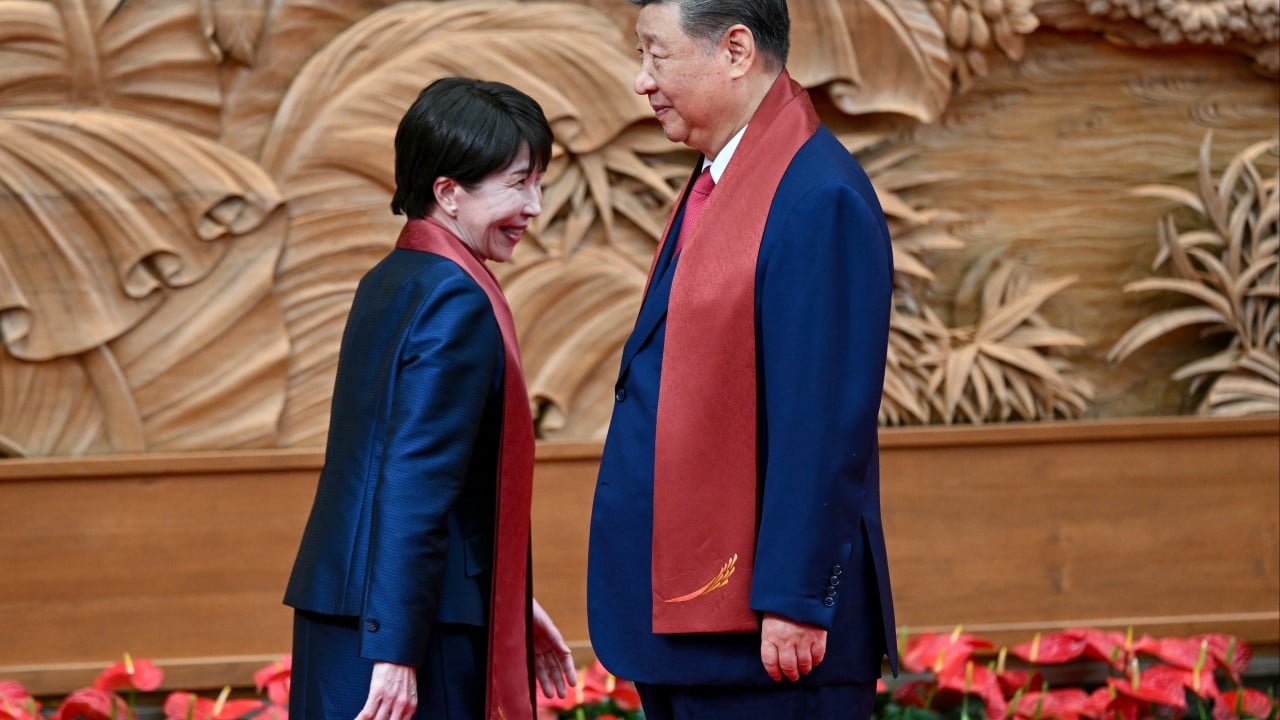
Exchanges between top Chinese and Japanese leaders show Prime Minister Sanae Takaichi adopting a far more proactive approach to assert control and seek direct communication, according to body language experts.
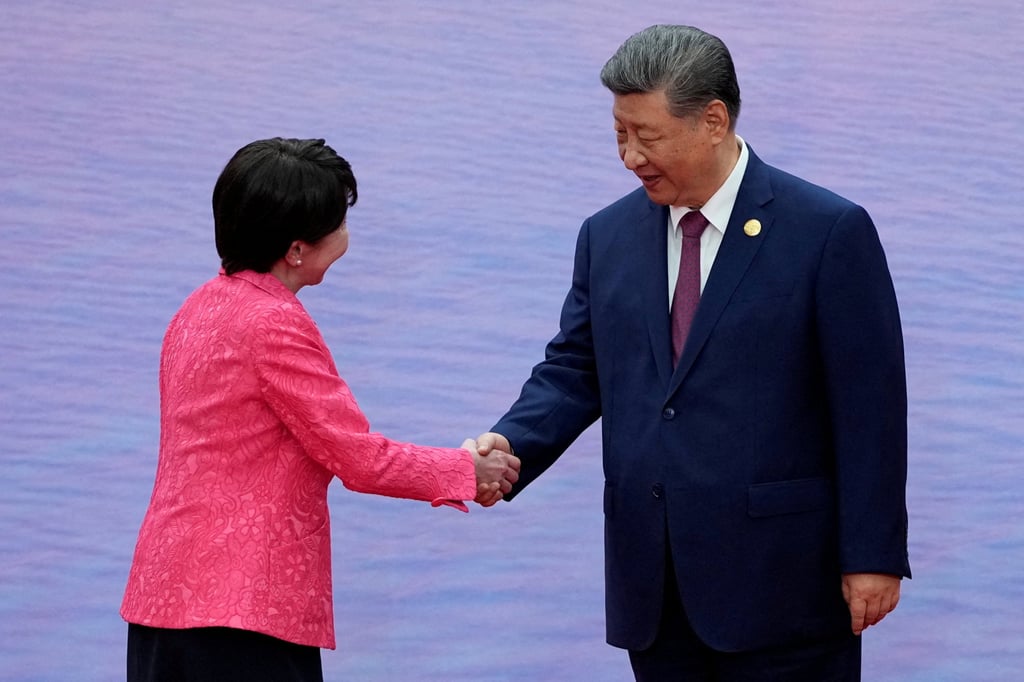
Ahead of the welcome banquet on Wednesday evening, Chinese President Xi Jinping and his wife Peng Liyuan each briefly shook Takaichi’s hand before the three posed for photos.
Takaichi appeared to say a few words to Xi during the handshake, but Xi did not say anything or nod, according to videos online. The handshake between Takaichi and Peng was also brief and without visible verbal communication.
Online footage showed Takaichi spreading both hands near her hips, palms partially upturned, immediately after shaking hands with Xi.
Geoff Beattie, a psychology professor at Edge Hill University in Britain, said Takaichi’s low open-palm gesture indicated the Japanese leader’s “uncertainty and discomfort” after that brief handshake, which he described as “formal and cursory”.
However, body language expert Leow Chee Seng highlighted Takaichi’s bearing, including her already-extended arms as she approached Xi, the slight inclination of her upper body towards the Chinese leader, and the way she faced him directly.
“Open palms do not reliably indicate a person’s status, confidence or true intentions,” said Leow, co-founder of the Malaysia-based behavioural intelligence organisation, Humanology.
“Takaichi’s most distinctive behaviour is her repeated initiative,” he said, adding that the pattern was consistent and became even more explicit during their interactions on the second day of the summit.
Putin says Russia is ‘inseparable’ from Asia-Pacific region and a vital trade partner
The two leaders’ exchange on Thursday – just before world leaders posed for the summit’s family photo – raised even more eyebrows, with Takaichi shaking Xi’s hand for about 11 seconds, significantly longer than other leaders.
During the handshake, Takaichi spoke a few words to Xi, according to online footage. The Chinese leader nodded slightly and smiled, without appearing to say anything in reply.
In a press conference on Thursday afternoon, Takaichi said that on Wednesday she expressed gratitude for the invitation and on Thursday she had “offered my thanks and congratulations on the hosting of last night’s banquet and today’s leaders’ session” to Xi during the encounters.
“Takaichi displays a more proactive communication pattern,” Leow said.
Instead of offering a perfunctory handshake, Takaichi used the moment to speak, which “helped create a visible record of courteous engagement between the two leaders”, he said.
“This can be valuable in diplomacy because a leader may wish to demonstrate willingness to communicate, even when bilateral relations are strained.”
Beattie described Takaichi’s prolonged handshake – something US President Donald Trump is known to do – as essentially a “power play” that signalled “she is taking control”.
“The handshake is both long and vigorous. She is not going to release him until she says so,” he said. “There is a vigorous shake just before the end to say that ‘I’ve decided to let you go’. This is called a ‘pre-closing’.
“She is using her body language to say that ‘I am a serious player capable of surprises’.”
Takaichi received a muted reception upon her arrival in Shenzhen on Wednesday, which marked the first China visit by a Japanese leader in seven years.
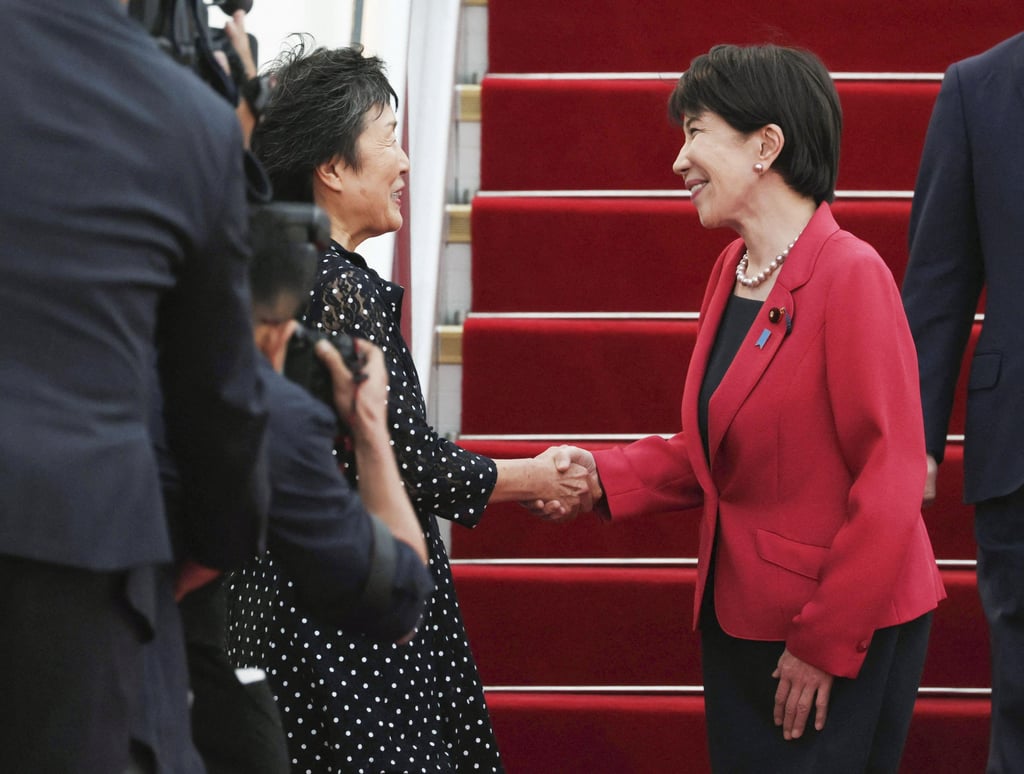
There were no young Chinese greeters waving bouquets or national flags, chanting “welcome”, in stark contrast to the reception given other leaders, including South Korea’s Lee Jae Myung, although she received a red-carpet welcome and honour guard.
Takaichi was greeted by retired Chinese diplomat Zhang Qiyue and Japan’s ambassador to China, Kenji Kanasugi, on the tarmac.
Japanese media have noted the clear differences in Beijing’s protocol, and raised the issue with China’s foreign ministry.
On Thursday, the ministry said that as host, China had made “appropriate” protocol arrangements for all participating parties in accordance with international practice.
Since last November, Beijing has repeatedly rebuked Tokyo and imposed countermeasures over Takaichi’s remarks that a crisis in the Taiwan Strait would be an existential threat to Japan that could trigger military intervention.
Beijing regards Taiwan as part of China and has never renounced the use of force to bring it under its control. Most countries, including Japan and the United States, do not recognise the island as independent but are opposed to any attempt to take it by force, and Washington is committed to supplying it with weapons.
02:48
Xi, Trump and Putin meet for historic trilateral summit at Shenzhen Apec meeting
During a press briefing on Thursday, the Japanese leader said the basis for Tokyo’s relations with Beijing “remains unchanged”.
KioskNews shows a cleaned-up reading view extracted from the publisher’s page — the original always lives on their site, not ours.