iPad mini (A20 Pro) review: Apple's tiny tablet gets a big update
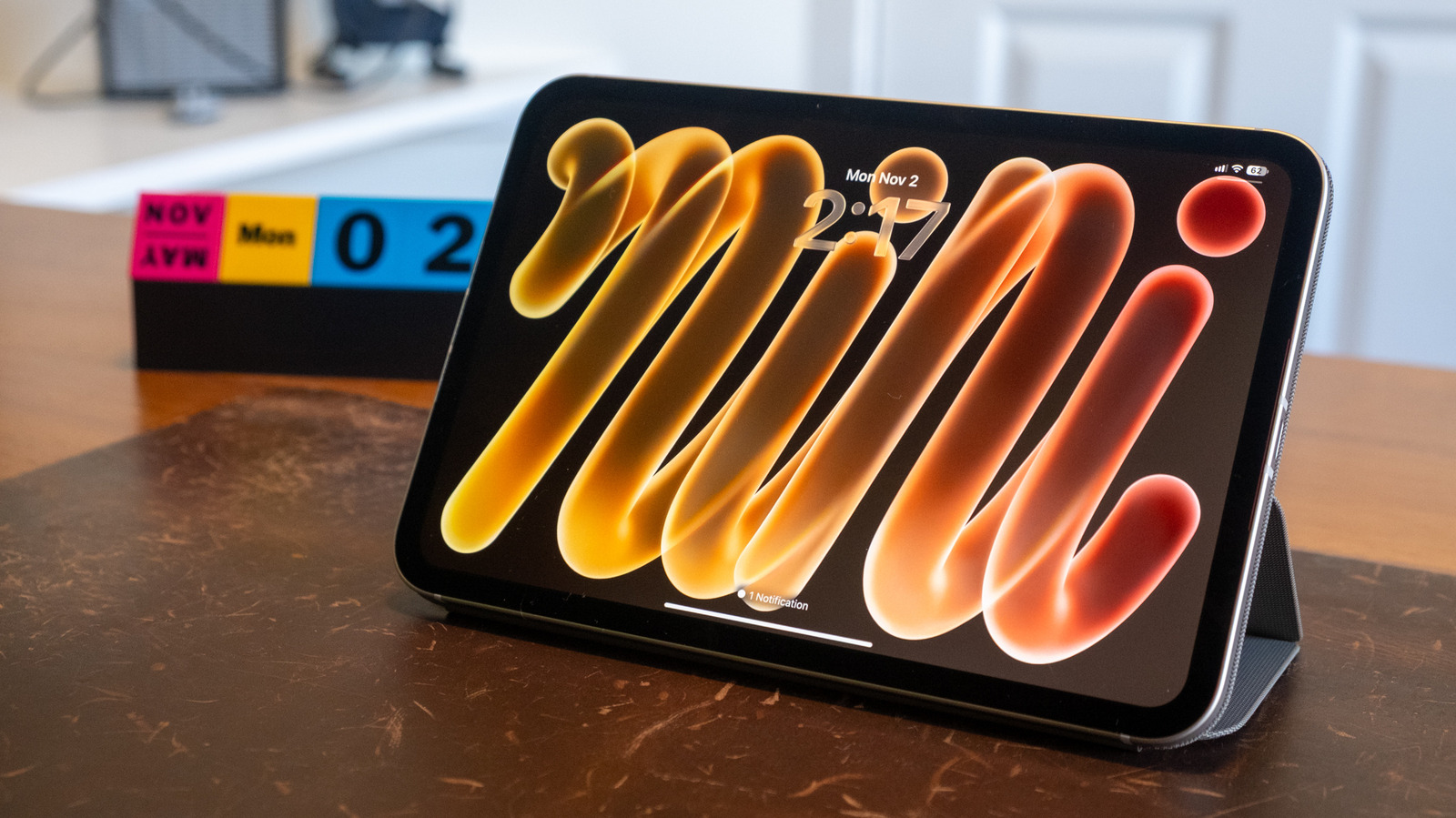
Apple made significant improvements this year, but they don’t come cheap.
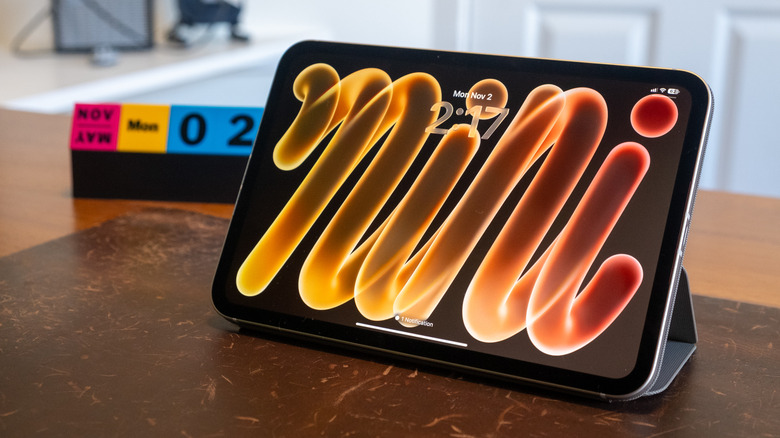
Nathan Ingraham for Engadget
RATING : 8.5 / 10
- Excellent performance
- Lovely OLED display
- Nano-texture glass is a great (but pricey) option
- Thinner and lighter, but with a slightly bigger screen
- Impressive new speakers
- $200 more expensive than the last iPad mini was at launch
- Screen refresh rate is still 60Hz
- No Face ID
The iPad mini has often gone for years without updates, making it feel like a forgotten part of Apple's tablet lineup. But it's often been sneaky powerful despite its size, usually toting specs and features that make it a more compelling option than the basic iPad, even with its smaller screen. And after two versions of the iPad mini without a home button, Apple has given the tiny tablet a compelling update in almost every facet.
The new iPad mini's screen is slightly larger, but the device is thinner and lighter than the one it replaces. It's the first iPad mini with an OLED display, a major step forward from the standard LCD this model has had for years. And for the first time, you can get a nano-texture glass front for reduced glare in bright light. Naturally, its chipset has been upgraded, as well — the A20 Pro inside it is brand new, just released alongside the iPhone 18 Pro and iPhone Duo. The previous iPad mini made do with the A17 Pro, which was first used in 2023's iPhone 15 Pro series. It has a new speaker system and is the first iPad to have an IP67 rating for dust and water resistance. Finally, it's the second iPad to get fast-charging capabilities, following last year's iPad Pro.
All told, it's a major update to a device that doesn't always get a lot of love. But, of course, these improvements come at a cost. The iPad mini now starts at $699 with 128GB of storage, $200 more than the last iPad mini cost when it was released two years ago (but only $100 more than Apple was selling it for after its round of major price increases this past summer). Between the cost and new set of features, it almost feels like an iPad Pro mini. And while technology-wise it's an impressive device, I'm not sure if the price will be worth it for most.
Hardware refinements throughout
Nathan Ingraham for Engadget
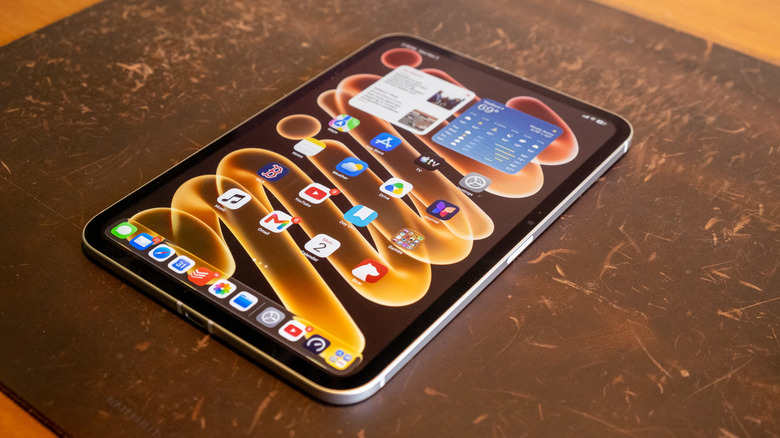
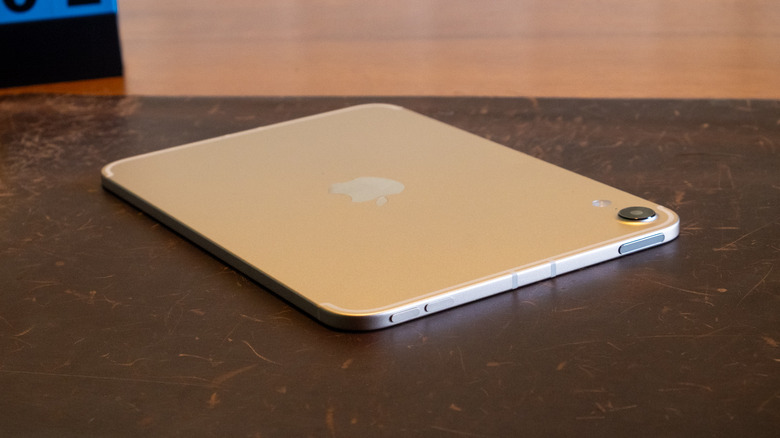
If I handed you the new iPad mini, you might not immediately notice how different it is compared to the 2024 model. At first glance, it has a similar enough physical impression and display, and its aluminum unibody and glass front are just as solid as ever. This year, you can only get the iPad mini in the all-business "midnight" and "starlight" shades, which is a bit of a bummer. But there are nips and tucks throughout that add up to a refreshed experience. While the iPad mini still has relatively large display bezels, they're noticeably thinner than before thanks to the 8.5-inch screen Apple included (compared to the 8.3 inches on the prior mini). Apple also reduced its thickness from 6.3mm to 5.4mm, and its weight from 0.65 pounds to 0.56 pounds (or 0.66 to 0.58 for the cellular-enabled models). More screen in a thinner and lighter package is always a win, and Apple has come the closest it ever has to making an iPad that you can truly carry with you everywhere without thinking about it.
While those physical tweaks are small but welcome, the new display tech is more significant. The iPad mini's OLED screen offers twice the peak brightness when viewing HDR content at 1,200 nits, while SDR brightness has been slightly increased from 500 to 600 nits. It can also go all the way down to 1 nit minimum brightness. And thanks to OLED, blacks look exceptionally black and overall contrast is excellent. It has a 2,000,000:1 contrast ratio, which far surpasses what you'll get on an LCD like the older iPad mini used (Apple doesn't specifically list the contrast ratio for older iPad mini models, but its recent LCD screens are in the 1000:1 range).
 Nathan Ingraham for Engadget
What this means in practice is that the iPad mini is an even better portable cinema than ever. If you're going to use this tablet to watch movies on the plane, it's a notable upgrade. It's not the most technologically advanced OLED screen you've ever seen, but its dark blacks, HDR performance and excellent overall contrast makes even dimly-lit scenes much sharper than what you'll get on an LCD-equipped iPad mini. You'll notice this the most when watching video, but it makes everything you do with the iPad mini, whether that's playing games or just browsing the internet, look much more visually appealing.
One place where I will ding this screen is its refresh rate: Apple stuck with 60Hz here, compared to the 120Hz "ProMotion" screen on the iPad Pro. It's pretty evident at this point that a high refresh rate screen is going to be limited to the iPad Pro, but it's still a bit of a let-down — especially when you consider the fact that the iPhone 17 got a ProMotion screen in 2025. That said, the smartphone market is far more competitive than the tablet market, so while Apple may have felt the pressure to finally put a high refresh rate screen in the standard iPhone, that still isn't the case on the iPad.
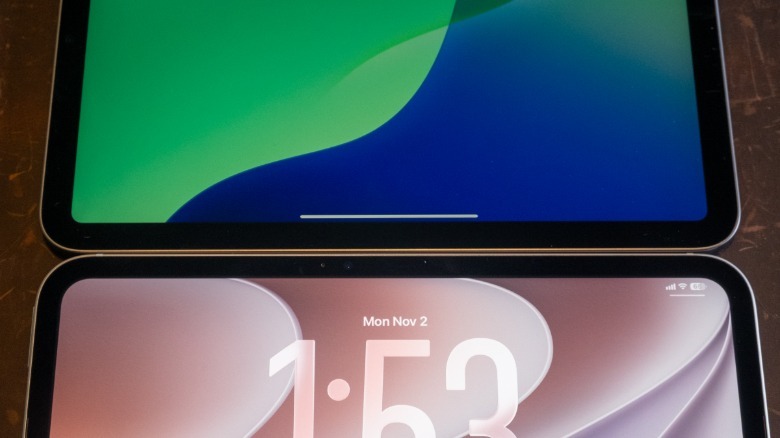
The iPad mini I tested also has a nano-texture glass front. The timing for trying this was impeccable, as I just reviewed Amazon's new Alexa Tablet 12 Pro, which also has a "nanomatte" display that was lovely to use. The etching on the glass front scatters reflections in a way that makes the iPad mini much easier to use when there's a bright light source nearby. And while the Alexa Tablet sticks with an LCD, the combo of OLED and the nano-texture glass made for an exceptional viewing experience here.
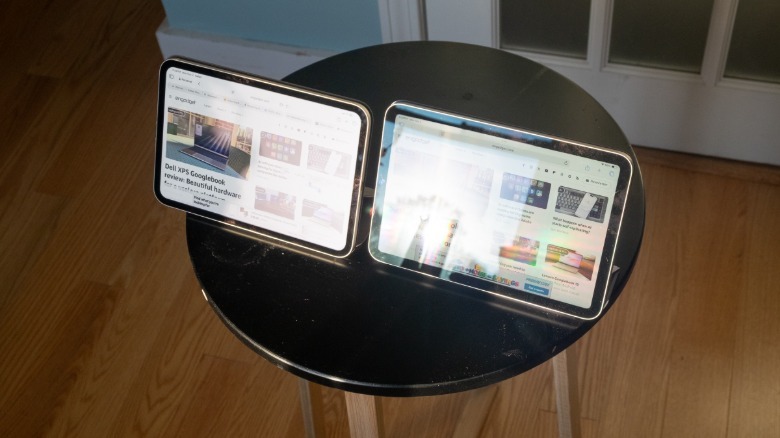
As you can see below, the new iPad mini with its nano-texture glass disperses strong light, while the one on the right with standard glass is a mess of reflections as the sun was setting.
 Nathan Ingraham for Engadget
As is typical, but still unfortunate, the nano-texture option costs a pretty penny. It's not an option on the base iPad mini with 128GB of storage, so you'll need to spend at least $899 to get the 256GB model with the nano-texture glass (or $1,049 for 256GB, nano-texture and 5G connectivity). That's a lot of cash for an iPad mini, no matter how nice it is.
Other subtle tweaks include the new "Acoustic Display," which Apple says places tweeter and woofers beneath the display enclosure for improved audio performance. This also allowed Apple to remove the speaker holes on either side of the iPad mini so that it could achieve that IP67 dust- and water-resistance rating.
I remember being surprised at the iPad mini's audio performance when I reviewed it in 2024 — it wasn't something I wanted to listen to for long periods of time, but it was definitely better than I expected given the small space Apple has to work with. Well, the new Acoustic Display speakers are another step forward, with a much stronger bass presence and overall more pleasing audio profile. The older iPad mini now sounds positively tinny by comparison. It's not the kind of thing that's going to radically change how you use the device, but it's a nice quality of life improvement.
The same can be said for the front-facing camera, which is now located on the landscape edge of the iPad mini. It's the same 12-megapixel Center Stage camera that most iPads use, but at least if you use a case like Apple's Smart Folio, the iPad mini's camera will be properly lined up for a video call. Like all other iPads except the Pro, though, that camera doesn't support Face ID. You'll need to use the Touch ID power button (or a numerical PIN) to unlock the iPad mini.
Power to spare
Nathan Ingraham for Engadget
Given that the iPad mini has a brand-new A20 Pro chip inside, it's unsurprisingly speedy and handled every task I threw at it. Games like the recently-released ports of Control and No Man's Sky ran with no hitches and looked great while doing so. It's not the same fidelity you'll get from playing on a high-end PC rig or even a PS5, but having games of this caliber on an iPad is pretty great. The iPad mini naturally had no problems with lower-stress fare including games from Apple Arcade like Mini Motorways What the Car? and my former iPad mini fav Balatro.
But performance on an iPad hasn't really been an issue unless you're really finding ways to stress the system, and nothing that I wanted to do with the iPad mini made it break a sweat. For me, it's a fairly casual couch computer for browsing and messaging, triaging emails, playing games or watching videos — all lightweight tasks. It definitely has the headroom to do more, though, and if you're paying at least $700 for one now, it's good that it has a chip that'll run well for years to come.
The one bit of higher-load work I did was in the Lightroom app. I loaded up my library, which has a ton of RAW photos, and the iPad mini applied any changes I wanted near-instantly. It took a few seconds for Lightroom's AI-powered Quick Actions tool to analyze a photo, but once that initial scan was done, any adjustments were rendered basically in real time.
It is worth noting that Apple offers a few variants of the A20 Pro chip, depending on how much storage you opt for. The 128GB and 256GB models have a 5-core CPU, 7-core GPU and 16-core Neural Engine for AI processing. However, the 512GB model (which I tested) steps up to a 6-core CPU and, more crucially, a dual 16-core Neural Engine. Apple specifically says this will help speed up on-device AI performance. I wasn't able to compare the two different models, but I'm confident in saying that most iPad mini shoppers will be fine with the standard configuration.
The new iPad mini is the first with Apple's own networking chips on board, as well. The N1 handles Wi-Fi 7, Bluetooth 6 and Thread. It was first introduced last year with the iPhone 17 series and has since arrived in a variety of new iPads and Macs. The model I tested also has the C2, Apple's new cellular modem that first showed up on the iPhone 18 Pro and iPhone Duo in September. It came with Verizon's service activated, and was extremely fast when connected to the carrier's 5G Ultra Wideband network — I routinely got download speeds exceeding 500 Mbps. When you combine that with other refinements like the nano-texture glass and its smaller profile, a cellular-connected iPad mini can really go anywhere without adding any noticeable weight to your bag.
Battery and fast charging
I haven't had time yet to do a full battery test on the iPad mini, but in-use over the last five days it feels very similar to basically every other iPad I've used in recent years. I only got around five or six hours of battery life when I was using it heavily for things like games, but lower-intensity tasks like watching video or internet browsing extended things closer to the 10 hours Apple promises. I played Control for about 30 minutes and the battery dropped by 11 percent, which is pretty good for one of the heavier games you can play on an iPad. I plan to loop video playback on the iPad mini until it dies and will update this review with those full results when it is complete.
In another feature it borrows from the iPad Pro, the new iPad mini has fast charging. Provided you've got the right adapter (like Apple's 40W dynamic power adapter that can hit up to 60W), you can charge to about 50 percent in 30 minutes. That almost matches up with my testing: When I plugged the iPad mini in at 29 percent, it was up to 74 percent in a half-hour.
Wrap-up
Nathan Ingraham for Engadget
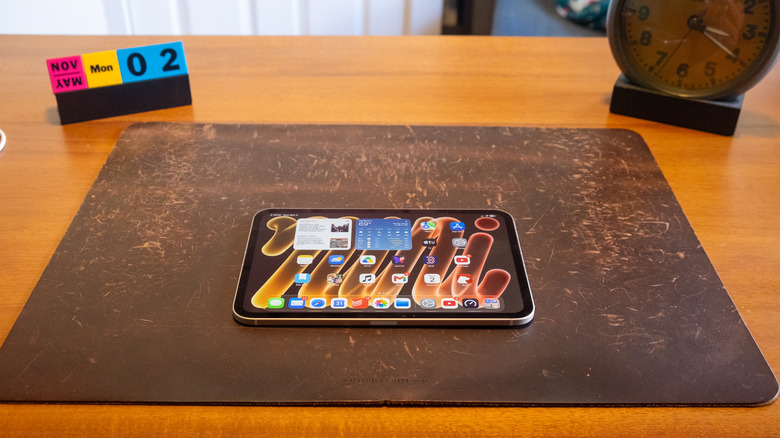
Unlike the 2024 iPad mini update, this model has several significant upgrades beyond a more powerful chip. It now has the second-best display of any iPad available, assuming you're okay with its compact size. The size and weight reductions, the slightly larger screen and the improved speakers weren't necessary, but they are welcome. And the nano-texture glass is a wonderful option that makes it much easier to use the iPad mini in a wide variety of lighting conditions.
But the problem, as is so often the case in 2026, is the price. The 2024 iPad mini cost $599 after the recent increase, and this new one starts at $699. I think all the updates on board here — the screen, the A20 Pro and a tighter design — make a $100 price bump reasonable. But it's fair to wonder if Apple is misreading what people want out of an iPad mini. Would it have been more appealing if they stuck with the older design and screen, put in a new chip and kept the price the same? It's hard to say, as the iPad mini has never been positioned as Apple's most affordable device — instead, it's more of a small iPad Air. From that perspective, the pricing makes sense.
The iPad mini really is a fun and adorable device to use. If I had any talent for visual arts, it would be a perfect digital sketchbook and jack-of-all-trades device for consuming content or doing basic tasks. But in 2026, with consumer electronics prices continuing to surge, a more expensive iPad mini might be an even more niche device than it was before.
KioskNews shows a cleaned-up reading view extracted from the publisher’s page — the original always lives on their site, not ours.