Xi Jinping urges trust-based partnership with Australia in Shenzhen bilateral talks
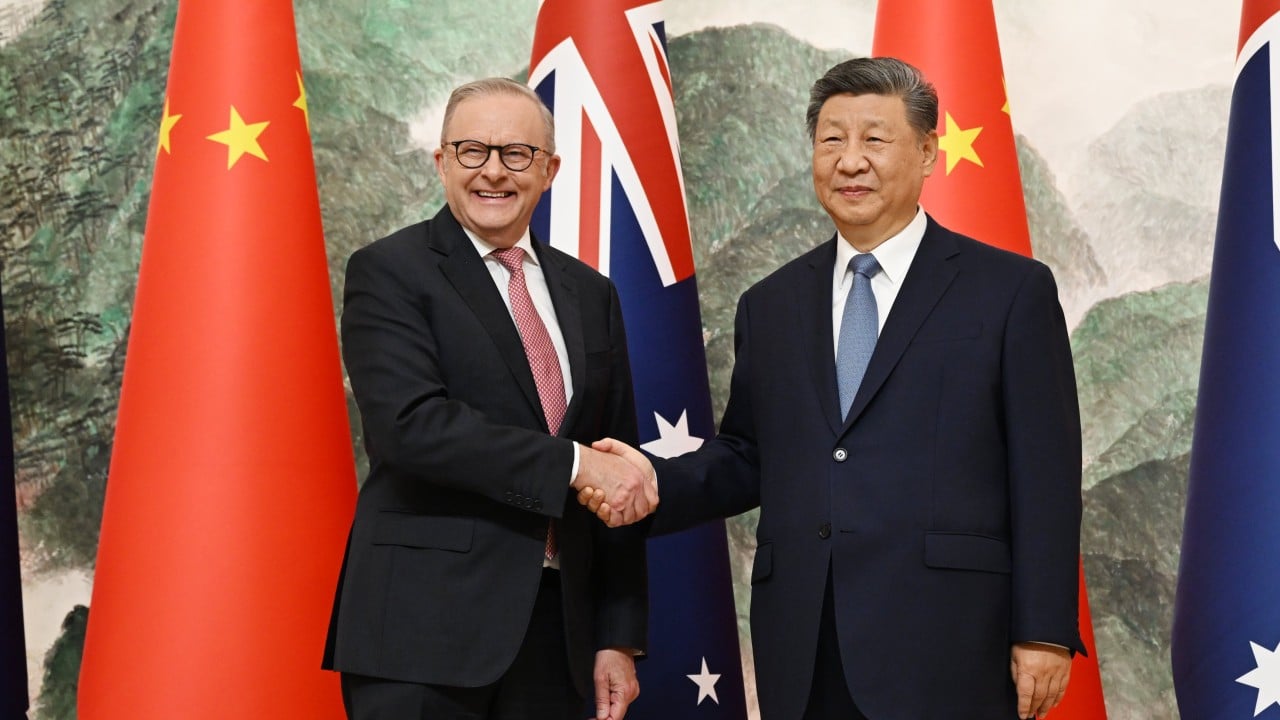
China and Australia should be “partners that trust each other”, President Xi Jinping told Australian Prime Minister Anthony Albanese in Shenzhen on Friday.
Xi struck an upbeat tone on Beijing’s relationship with Canberra, describing it as “developing steadily” now, in the meeting after the Asia-Pacific Economic Cooperation leaders’ summit in the southern Chinese city.
“China and Australia have neither historical grievances nor fundamental conflicts of interest, and should be partners who trust each other and help each other succeed,” the Chinese leader said, according to the official Xinhua news agency.
He called for the two countries to continue working together in agriculture, energy and minerals, while expanding cooperation in the green economy, renewables, digital industries, artificial intelligence and climate change.
Albanese, who was making his third visit to China while in office and sitting down with Xi for the fifth time, echoed that Canberra was ready to deepen high-level exchanges with Beijing while strengthening cooperation in trade, investment and AI.
He also told Xi that Australia was willing to make its relationship with China a model for constructive ties between countries with different political systems, according to the Chinese readout.
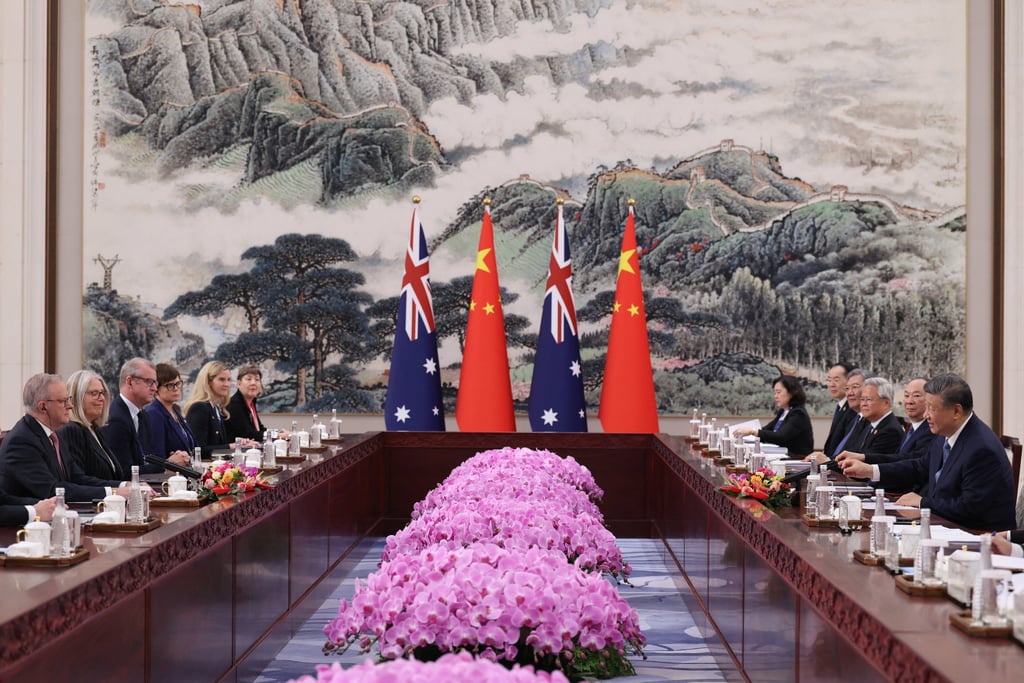
Addressing a press conference on Friday after the bilateral meeting, Albanese characterised his exchange with Xi as “constructive, friendly and engaging in the mutual interests of both Australia and China”.
“It is important that Australia continue to engage in a constructive way with China, manage our differences, but not be defined by them,” he said.
According to Xinhua, Albanese framed China as an important stabilising force in a turbulent world and congratulated Xi on hosting the historic three-way summit with US President Donald Trump and Russian President Vladimir Putin on Thursday.
Speaking to reporters, the Australian leader on Friday described the three countries’ joint declaration towards peace as “positive”, adding that it was “always better to have dialogue than to have conflict”.
This week’s trip to China – his first since July last year – came as Albanese’s Labour government continued its efforts to keep Australia’s ties with its largest trading partner on a stable footing since the end of nearly four and a half years of trade conflict in 2024.
Also on Friday, he will attend the annual bilateral leaders’ meeting with Chinese Premier Li Qiang in Beijing and meet Zhao Leji, China’s third-ranking official who heads the country’s top legislature.
Albanese’s latest encounter with Xi built on a flurry of ministerial engagements between the two countries, including separate visits to China earlier this month by the assistant minister for foreign affairs and trade Matt Thistlethwaite and agriculture minister Julie Collins.
Yet bilateral ties have remained tense in the security and defence domains.
Before heading for the Apec conference, Albanese joined US President Donald Trump, Indian Prime Minister Narendra Modi and Japan’s Sanae Takaichi in Manila on Tuesday for the first Quad summit in more than two years.
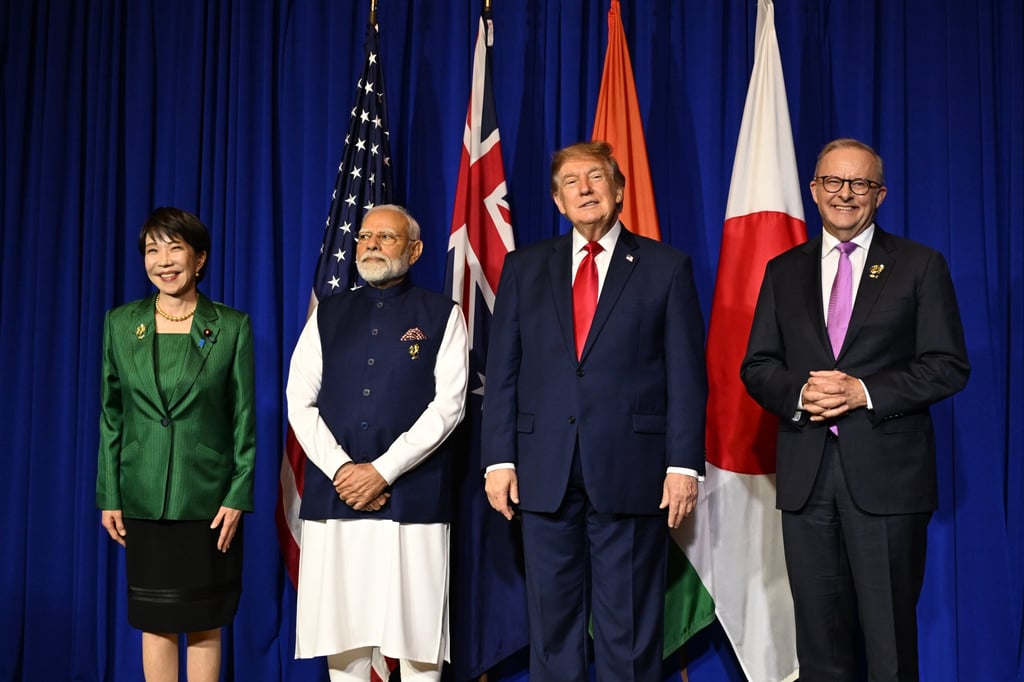
With the Trump administration shifting US foreign-policy priorities and pressing allies for more burden sharing, Australia has stepped up to weave its own security web in the region.
Canberra has strengthened bonds with Japan and the Philippines, signing a defence cooperation arrangement with Manila on November 15 and a warship megadeal with Tokyo in April.
While increasing its presence in the disputed South China Sea in recent years, Canberra is also competing with Beijing for influence across the Pacific nations.
Australian defence minister Richard Marles has repeatedly accused China of undertaking the world’s biggest conventional military build-up since World War II without transparency or strategic reassurance.
He renewed that criticism last month, prompting a rebuke from Beijing.
As Washington pushes to build a critical minerals supply chain less dependent on China, resource-rich Australia’s strategic standing has grown more pronounced, prompting experts in Beijing to warn of mounting competitive pressures over the medium to long term.
Australia on Monday joined the US-led San Francisco Declaration to keep AI supply chains from dependence on China.
Security tensions appear to have been casting a shadow over economic and educational ties, with the Australian government’s repeated intervention in 2026 to force some China-linked investors out of rare earths company Northern Minerals.
The actions, on national security grounds, extend a multi-year saga. The Australian federal government has previously voiced concerns about potential Chinese control over supplies to make military hardware, satellites and electric motors.
03:02
Chinese craft beer brewers delight over return of Australian barley, as China lifts tariffs
Canberra has also signalled that it remains committed to restoring Australian control of Darwin Port, leased to China’s Landbridge Group under a 99-year agreement signed in 2015.
During the press conference on Friday, Albanese was asked about his previous public remarks that China was seeking hegemony, at least over the longer term in the region.
“We have different political systems, different histories, but that doesn’t mean that you can’t have constructive dialogue and that’s what Australia seeks,” he responded.
In an article published on Thursday in The Australian newspaper, China’s top envoy to Canberra, Liu Jinsong, warned that the bilateral relationship was “at a crossroads – pressure to fall back on one side, momentum to move forward on the other”.
Liu called on the two economically “natural partners” to expand “frontier cooperation in artificial intelligence, biotechnology and clean energy”.
China has been Australia’s largest export market and import source for 17 consecutive years.
In US dollar terms, China’s imports from Australia grew by 40.9 per cent from a year earlier in the first 10 months of 2026, while exports to the South Pacific country were up 20.8 per cent, according to Chinese customs data.
KioskNews shows a cleaned-up reading view extracted from the publisher’s page — the original always lives on their site, not ours.