Eyes On Indian Ocean, China Expands Naval Fleet To Over 400 Ships
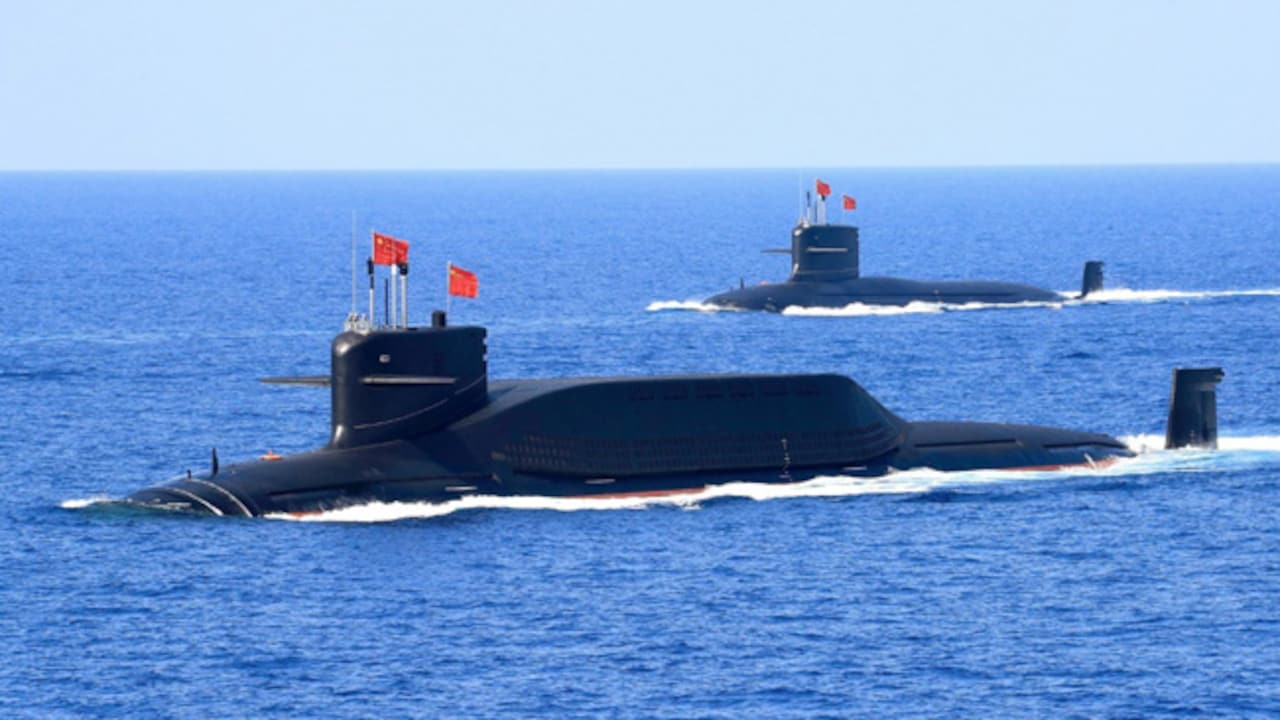
China's navy is no longer staying close to home. Around 100 Chinese naval vessels are believed to be operating every day across some of Asia's busiest shipping and transport routes, from the South China Sea to waters near Japan and Taiwan.
The growing presence has become a major concern for American military planners. China now has more naval ships than the US, and its fleet continues to expand at a pace that Washington is finding difficult to match.
According to official US figures reviewed by The Wall Street Journal, China's navy now has more than 400 battle-force ships and submarines. That is about 35 per cent more than the American fleet by the number of vessels.
China currently operates three aircraft carriers and is building a fourth. Western experts believe the next carrier could be nuclear-powered.
It is one of the biggest peacetime naval expansions in modern history.
China's Warships Are Spreading Across Asia
Chinese naval activity now covers a huge stretch of water. Its ships operate in the South China Sea, around Taiwan, east of the Philippines and off Japan's southern coast. They have also ventured further into the western Pacific and regularly deploy to the Gulf of Aden.
Security officials tracking Chinese naval movements say around six Chinese navy ships are present in waters around Taiwan at any given time. Their numbers increase sharply during military exercises.
In the South China Sea, the presence is roughly three times as large. China has been involved in territorial disputes with both the Philippines and Vietnam in the region.
Beijing's ambitions are not limited to having more ships. It wants to control the waters around its coastline, strengthen its claims over disputed territories and prevent American forces from intervening in a future conflict.
How China Became A Naval Powerhouse
China's rise at sea has been closely linked to its massive shipbuilding industry.
The country is the world's biggest shipbuilding nation and produces more than half of the world's commercial vessels every year. Its shipyards build everything from giant container ships to natural gas carriers.
The same industrial strength is now being used to produce warships at an extraordinary pace.
Much of this change comes from Chinese President Xi Jinping's belief that a country's global standing is closely tied to its control over the seas.
In 2013, shortly after becoming president, Xi told senior Communist Party leaders that China needed to become a "maritime great power".
He pointed to how Western nations had used sea routes to expand trade, establish colonies and build global influence.
Xi also referred to the 15th-century voyages of Chinese admiral Zheng He. His fleet travelled as far as the Strait of Hormuz and the eastern coast of Africa, returning with goods and even giraffes.
China later turned away from overseas expansion and entered a period of isolation. Xi also recalled the Opium Wars of the 19th century, when Western forces attacked China from the sea.
China's navy is still behind the US in total fleet tonnage, meaning American ships are larger on average. But Beijing is building bigger vessels and doing so much faster.
US figures reviewed by The Wall Street Journal show that China added 71 major warships and submarines between 2020 and now, including 19 last year alone.
One Island Is Becoming China's Warship Factory
Much of this expansion can be seen on Changxing Island, near Shanghai.
Two neighbouring shipyards on the island build commercial vessels for customers around the world. But they are also producing some of China's most advanced naval ships.
Satellite images from May showed an extraordinary amount of activity. Two amphibious ships, two cruisers, three destroyers, two frigates and several smaller naval vessels were either being built or undergoing maintenance at the same time.
The scale of the operation is striking. Just five years ago, parts of the area were still open fields.
One of the shipyards was barely finished when workers began building the 40,000-tonne Sichuan in 2023. The vessel, described as a "drone carrier", is among the world's largest amphibious assault ships.
Its size surprised naval experts. It was significantly bigger and more advanced than the amphibious ships China had started receiving just two years earlier.
Then, in June this year, a new class of submarine appeared at the Jiangnan shipyard on Changxing Island. The submarine is believed to be nuclear-powered.
China is also moving away from diesel-electric submarines towards nuclear-powered vessels.
American officials expect Chinese submarines to operate regularly in the Indian Ocean and near the Arctic by 2040. They could potentially reach the Atlantic as well.
A Bigger Fight Over The Seas
At the centre of the growing rivalry is a stretch of water running from the Yellow Sea to the East and South China Seas.
China wants to establish control over this region, which includes some of the world's busiest shipping routes. It also wants to bring Taiwan under its control and make it harder for the US military to intervene in a conflict.
Washington, on the other hand, wants to prevent China from becoming the dominant military power in these waters.
The region is particularly important because it is surrounded by key American allies and partners, including Japan, Taiwan and the Philippines. Together, they form part of what military strategists call the first island chain.
Protecting this chain is a central part of the Pentagon's strategy for dealing with China.
Beijing has steadily increased its military presence across the region. Its ships are now operating in large numbers, while increasingly bigger groups of warships train together.
The growing fleet gives China more options to patrol disputed waters, pressure its neighbours and prepare for a possible confrontation.
KioskNews shows a cleaned-up reading view extracted from the publisher’s page — the original always lives on their site, not ours.