Turning public concern into public support for science — Ahmad Ibrahim
OCTOBER 30 — When the air becomes difficult to breathe and outdoor activities have to be cancelled, science suddenly becomes very real.
Parents worry about health. Businesses worry about productivity. Schools worry. People check the Air Pollutant Index (API), look for face masks and ask when the haze will clear.
Yet when scientists warn about climate change, the public response is often less immediate. The threats may be enormous, but they can seem distant, abstract and disconnected from the routines of daily life.
This contrast presents Malaysia with an important opportunity. Can we turn the public’s haze concern into a lasting commitment to science itself?
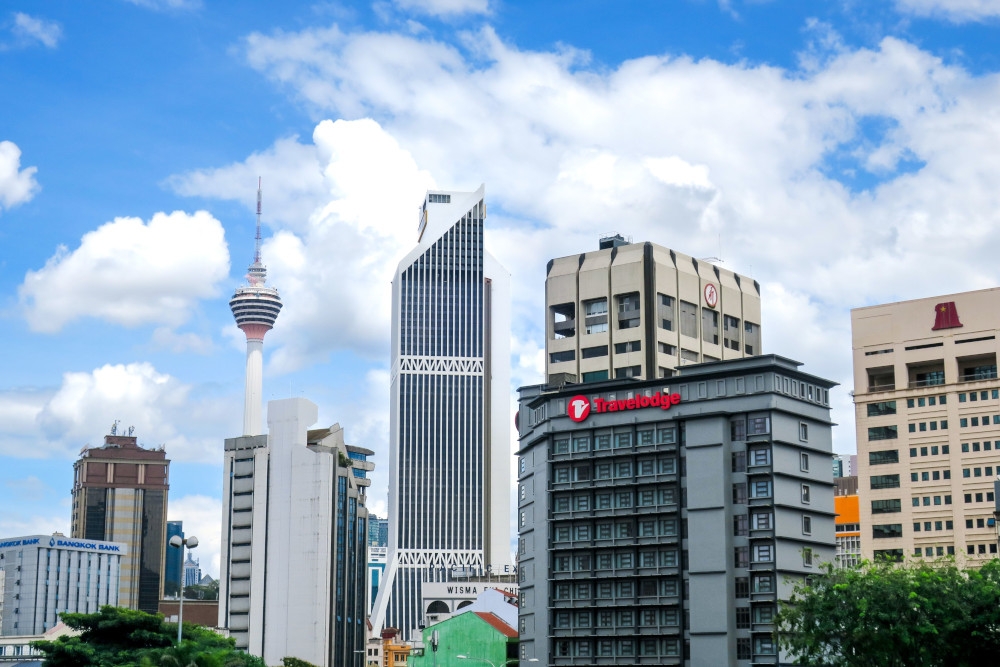
When the air becomes difficult to breathe and outdoor activities have to be cancelled, science suddenly becomes very real. Parents worry about health. Businesses worry about productivity. Schools worry. People check the Air Pollutant Index, look for face masks and ask when the haze will clear. — mytho/Pexels pic
Climate change is a global concern whose consequences unfold over decades. Although its effects are already being experienced in many countries, the connection between an individual action today and a climatic consequence tomorrow is not always obvious to the public.
Haze is different. It is visible, tangible and disruptive. It brings the consequences of environmental problems directly into people’s homes, workplaces and lungs.
Scientific research has documented the health and economic implications of haze in Malaysia. The Academy of Sciences Malaysia (ASM), for example, has examined its causes and potential solutions, including air-quality monitoring, peatland and water management, and the conversion of biomass into useful energy and materials. Its work demonstrates that haze is not merely an environmental inconvenience; it is a complex problem requiring scientific, economic and social solutions.
The public may not immediately appreciate the value of atmospheric modelling, satellite observations, epidemiological studies or research into land management. But when these scientific capabilities help explain where pollution comes from, identify health risks and improve forecasts, their value becomes much easier to understand.
The challenge, therefore, is not simply to communicate science more effectively during a haze episode. It is to use that episode to demonstrate why a scientifically informed society is better equipped to confront problems before they become crises.
In Malaysia, much of the financial responsibility for scientific research rests with the government and publicly funded institutions. Such support remains indispensable. Basic research, long-term environmental monitoring and investigations whose benefits cannot be easily commercialised are unlikely to receive sufficient private investment without public funding.
However, should the government be expected to shoulder almost the entire burden of advancing science?
Science contributes to public health, industrial competitiveness, food security, environmental resilience and national prosperity. Its benefits extend well beyond universities and laboratories. Businesses use scientific discoveries to develop products and improve processes. Communities benefit from better knowledge and technologies. Citizens benefit from improved public services and more informed decisions.
It follows that the responsibility for supporting science should be shared more widely.
The private sector can contribute through research partnerships, corporate donations, endowed research chairs, scholarships, innovation funds and support for scientific institutions. Businesses whose operations depend on natural resources, energy, agriculture, healthcare and manufacturing have particular reasons to invest in scientific knowledge.
But corporate participation should not be limited to funding research that promises immediate commercial returns. Companies can also support independent research into public-interest questions, including environmental risks, occupational health and the long-term sustainability of their industries.
The general public, too, can participate. Individual contributions may be small, but collective support can help finance research, science education, citizen-science initiatives and the communication of scientific findings.
The objective is not to replace government funding with private money. It is to build a broader ecosystem in which public investment is complemented by private-sector commitment and public participation.
There is, however, an important qualification. People cannot reasonably be expected to support science simply because they are told that science is important.
They must be able to see what their contributions achieve.
Scientific institutions need to explain their work in accessible language, demonstrate its relevance to society and communicate both successes and uncertainties honestly. They must also show how research contributes to better decisions, new technologies and improvements in people’s lives.
The haze offers a natural starting point.
Imagine a national initiative in which all parties work together to explain the science of air pollution. How particulate matter affects health, how satellites detect fires, how meteorological conditions influence pollution and how researchers distinguish local pollution sources from transboundary smoke.
Companies could sponsor independent research, support public monitoring initiatives and help develop technologies for pollution prevention and detection. Universities could open their laboratories to the public and invite researchers to explain their findings. Schools could use local air-quality data to introduce students to environmental science.
The initiative should not disappear when the skies clear.
The haze is the immediate concern; the larger objective is to cultivate a society that understands and values scientific inquiry, even when the problem being investigated is less visible.
* The author is affiliated with the Tan Sri Omar Centre for STI Policy Studies at UCSI University and is an Adjunct Professor at the Ungku Aziz Centre for Development Studies, Universiti Malaya. He can be reached at [email protected].
** This is the personal opinion of the writer or publication and does not necessarily represent the views of Malay Mail.
KioskNews shows a cleaned-up reading view extracted from the publisher’s page — the original always lives on their site, not ours.