Southwest monsoon withdraws from entire country: IMD
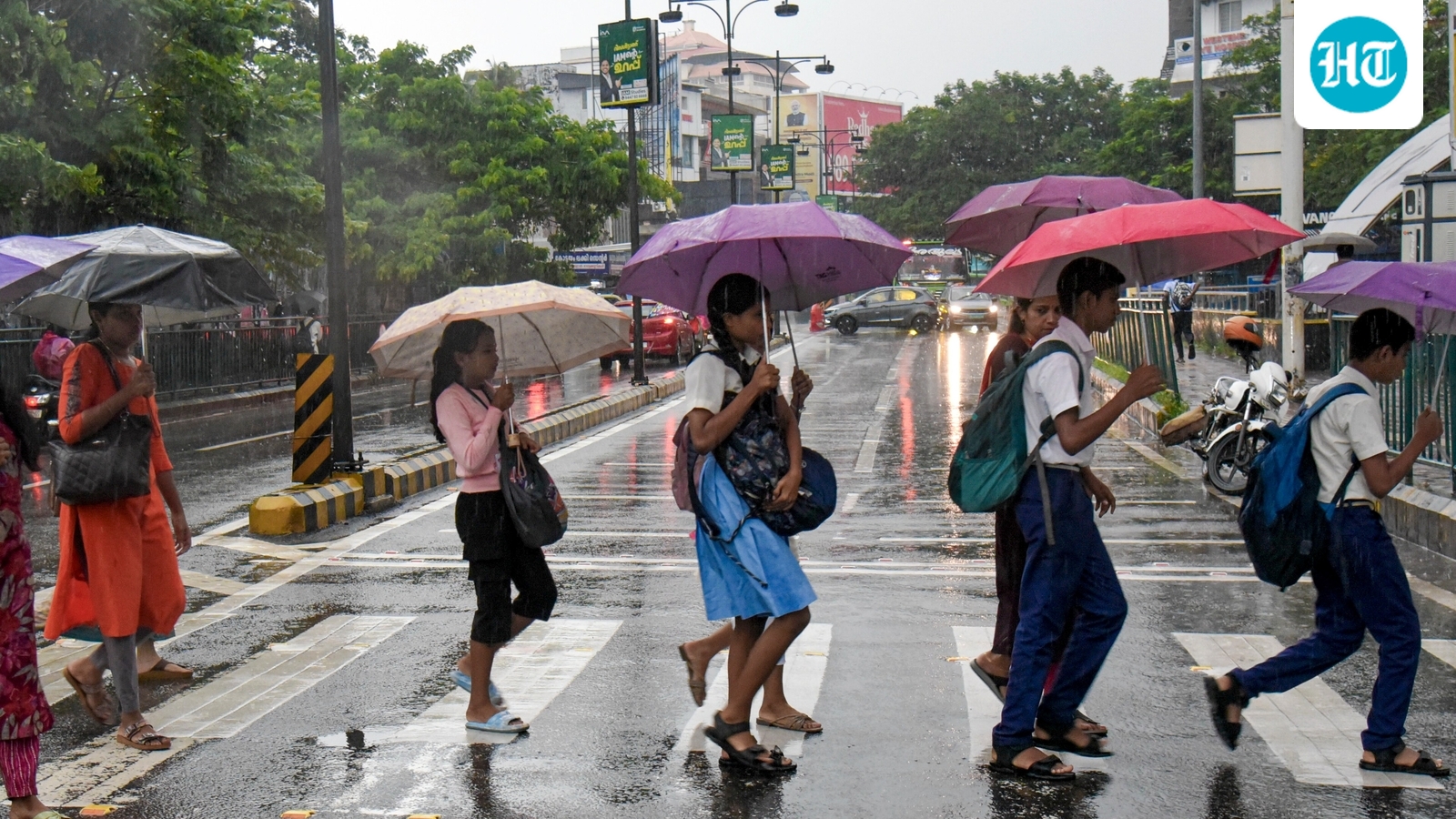
The southwest monsoon withdrew from the entire country on Thursday, the India Meteorological Department (IMD) said, stating simultaneously, northeast monsoon rains had commenced over the southern parts of the country on the same day – bringing widespread showers to Tamil Nadu, Puducherry, Andhra Pradesh, Kerala and Karnataka.
While the IMD records the southwest monsoon season from June 1 until September 30, rains continue until October 15 in parts of the country, which is the normal date for withdrawal for the entire country, as per the long period average (LPA).
Last year, the monsoon withdrew on October 16 from all of India, while it withdrew on October 15 in 2024 too. In 2023, withdrawal was declared on October 19; October 23 in 2022 and October 25 in 2021. Since 2000, the most delayed withdrawal occurred in 2010 – on October 29.
“Typically, the southwest monsoon withdraws from the country on or after October 15 and around the same time, the northeast monsoon gets established over the south Peninsula region,” said an IMD official.
The northeast monsoon only impacts southern India, with rains continuing into December. The IMD said a number of weather systems were already at play in southern India, contributing to rainfall there.
Also Read: Mercury plunges to 7.4°C in Ludhiana after 20.2 mm rain
“An upper air cyclonic circulation lies over south coastal Tamil Nadu…in the lower tropospheric levels. Easterly and /northeasterly winds have set-in over southern peninsular India, south, central and adjoining northwest Bay of Bengal in lower tropospheric levels,” said the IMD in a statement, recording fairly widespread rains over Tamil Nadu, Puducherry, Karaikal and adjoining areas of south coastal Andhra Pradesh and south Rayalaseema in the 24 hours till October 15.
“Heavy rainfall has also occurred at a few places over Tamil Nadu, Puducherry and Karaikal,” it added.
Intense showers were also recorded across northwest India on Thursday, including parts of Punjab, Haryana, Rajasthan and Delhi due to a prevailing western disturbance over the region, alongside two cyclonic circulations.
"The monsoon withdrawal has been on track. The rains we are seeing across northwest India is due to a western disturbance and two cyclonic circulations. The combined effect is bringing widespread showers from Rajasthan and Punjab to Delhi, Haryana and western Uttar Pradesh. We expect this impact to be over by Friday," said Mahesh Palawat, vice president at Skymet.
Also Read: Monsoon withdraws from Maharashtra two days ahead of normal date
This year, the country recorded 759.4 mm of rainfall, which was 13% below the Long Period Average (LPA) of 868.6 mm. This was the fourth-lowest rainfall overall since 2001 – largely driven by a strengthening El Niño. The World Meteorological Organization (WMO) on October 8 said El Niño will continue to intensify in the coming months and is likely to see peak levels in December. This is likely to bring above-average temperatures to much of the globe and shift rainfall patterns, increasing the risk of drought and floods in different regions, it had said. For India, it usually translates into a milder winter in the northern parts of the country.
KioskNews shows a cleaned-up reading view extracted from the publisher’s page — the original always lives on their site, not ours.