England brought back ospreys after 149 years; 300 chicks have now fledged
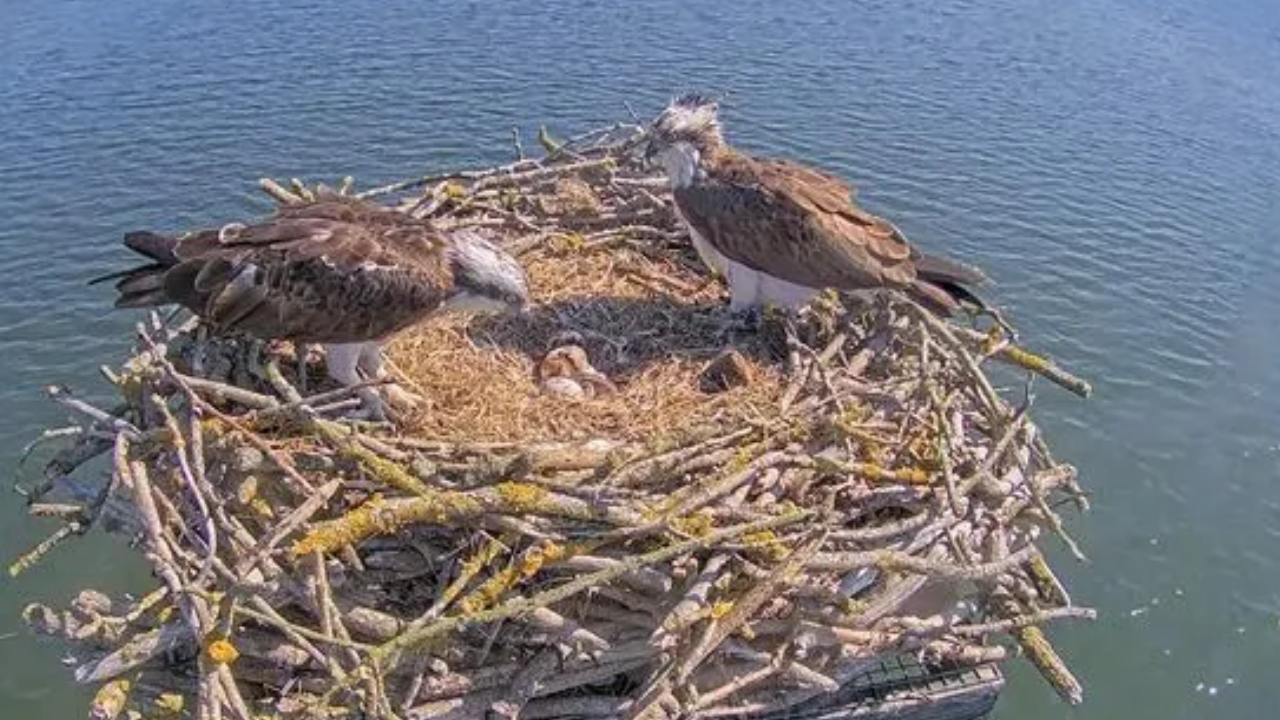
Thirty years ago, conservationists began an experiment at Rutland Water that was intended to bring a vanished bird back to England. Three decades later, the osprey has not only returned, it is breeding, spreading and producing new generations without the need for further translocations.
According to the Leicestershire and Rutland Wildlife Trust (LRWT), which runs the project with partners including Anglian Water, more than 300 young ospreys have now fledged from nests around Rutland Water. The milestone follows a reintroduction programme launched in 1996, when chicks were brought from Scotland to Rutland with the aim of establishing a self-sustaining population. The Guardian has also documented how the project helped accelerate the bird’s return to England after more than a century of absence.
A bird missing from England for generations
The osprey was once a familiar sight across Britain. But intensive persecution and habitat loss during the 18th and 19th centuries drove it to extinction as a breeding bird in England in 1847.A population survived in Scotland, where conservation efforts eventually helped the species recover. But natural expansion southwards was expected to take many decades. Conservationists therefore decided to give the birds a helping hand.
Rutland was an obvious place to try.Ospreys had long used Rutland Water as a stopping point during their migrations between Britain and West Africa. The reservoir, created in 1976, provided a large body of water rich in fish and appeared capable of supporting breeding birds.
Chicks made the journey south
In 1996, the Rutland Osprey Project began moving young birds from Scottish nests to Rutland Water. Between 1996 and 2001, 65 osprey chicks were translocated from Scotland, according to LRWT.
The young birds were around five to six weeks old when they were collected, transported south and placed in specially designed release pens overlooking the reservoir. They were later allowed to fly free and, instinctively, began their migrations to Africa.The crucial part was what happened next. Ospreys tend to return to the area where they fledged when they reach breeding age. In 1999, the first of the translocated males returned to Rutland.
Two years later came the breakthrough conservationists had been waiting for.The first English-born osprey in 150 yearsIn 2001, a translocated male known as 03(97) paired with a female and successfully raised a chick near Rutland Water. It was the first osprey to be born in central England for more than 150 years. The male, later nicknamed “Mr Rutland,” became one of the most important birds in the project’s history.
He continued breeding until 2014 and produced 32 chicks with three different females. Some of his offspring eventually returned to breed themselves, creating the beginnings of a population that no longer depended on birds being brought in from Scotland.
The first Rutland-born osprey to breed followed in 2007, another important indication that the population was beginning to sustain itself.
From one nest to a growing population
The numbers have continued to climb. In 2025, the project celebrated its 300th successfully fledged chick, while 11 breeding pairs across the Rutland area produced 31 fledglings that year, the highest annual total recorded at the time.
The project’s impact has also reached well beyond Rutland.Rutland-born ospreys have gone on to breed elsewhere in Britain, including Wales and Dorset, while some have contributed to populations overseas. The success at Rutland has also helped inspire similar reintroduction projects in other parts of Europe. Today, LRWT describes the Rutland population as self-sustaining, meaning it no longer needs additional Scottish chicks to maintain the breeding population.That is perhaps the most significant measure of the project’s success. What began in 1996 as an ambitious attempt to speed up nature’s timetable has become a functioning population capable of reproducing and expanding on its own. Thirty years ago, conservationists were carrying osprey chicks south in the hope that they would one day return. Today, their descendants are doing exactly that, and raising generations of their own.
KioskNews shows a cleaned-up reading view extracted from the publisher’s page — the original always lives on their site, not ours.