The Case For Halloween: The Curse Of Michael Myers


George is a film critic and journalist with over nine years of experience in the entertainment industry. Beginning as the Co-Creator and Co-Editor of Star Wars Holocron, the most followed Star Wars fan account on Twitter/X, George went on to develop The HoloFiles, a movie and television-focused website with his brother and writing partner Josh.
A member of the Hollywood Creative Alliance, Chicago Indie Critics, Online Film and Television Association, and the Internet Film Critic Society, George has covered major industry events as credentialed media, including D23, CinemaCon, SXSW, Fantastic Fest, Star Wars Celebration, Tribeca Festival, and more. He also regularly writes reviews and contributes articles to ScreenAnarchy, BRWC, Film Obsessive, TV Obsessive, and Under the Radar. George's work has been featured in various esteemed publications, including the BBC, Associated Press, Forbes, and The New York Times.
John Carpenter’s slasher classic Halloween from 1978 remains one of the most beloved and influential horror films in movie history, but its myriad of sequels and reboots have received far less acclaim. While Halloween III: Season of the Witch has solidified its status as a cult classic and David Gordon Green’s 2018 legacy sequel has its fair share of admirers, the vast majority of the Halloween films that followed Carpenter’s original have been met with reception ranging from ridicule to hatred.
Amidst the sorted history of the Halloween franchise, however, there is one installment that is often and, according to this writer, unfairly overlooked. The journey to getting Halloween: The Curse of Michael Myers to the big screen was thorny (pun intended) to say the least. Early drafts toyed with bizarre ideas like virtual reality and a homeless Michael Myers, before the creatives and studio executives arrived upon a more gothic cult approach, which was subsequently altered considerably by Dimension Films heads Bob and Harvey Weinstein.
Upon release, the film was derided for its incoherent editing and messy mythology, effectively concluding the Halloween franchise up until that point and necessitating a full-scale reboot in the form of Halloween H20: 20 Years Later.
But being panned by critics and fans alike, Halloween: The Curse of Michael Myers has quite a bit to admire, especially if one watches the slower and more atmospheric Unrated Producer’s Cut. While clearly nowhere near the same level of quality and craft as Carpenter’s original, The Curse of Michael Myers is certainly one of the better follow-ups to Halloween.
Halloween 6 Bravely Expands The Lore Of Michael Myers
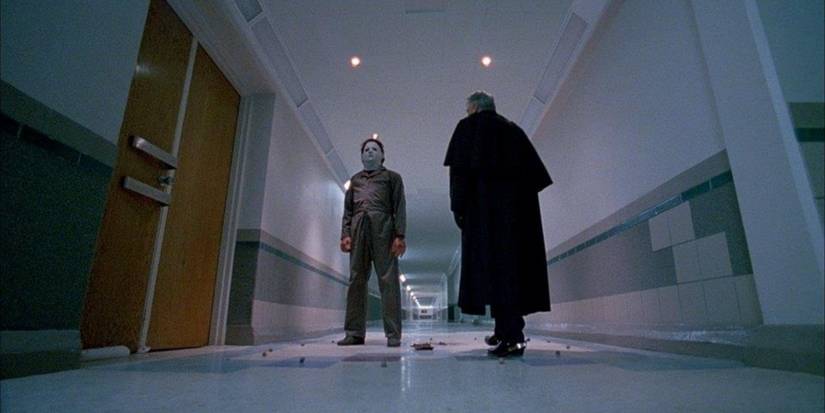
There’s only so many stories with a mute, masked killer one can make before taking a narrative swing. Something that dares to push the boundaries of viewers’ understanding and expectations of a horror movie icon and the world in which they inhabit. Like it or not, Halloween 6 did exactly that, expanding the lore surrounding Michael Myers by transforming him from a random, unmotivated personification of evil into an occult-engineered instrument of an ancient cult.
Admittedly a far cry from what Carpenter was going for in his original film, this pivot toward the occult at least demonstrates a willingness from the filmmakers to do something different with the IP, a statement that arguably can’t be said for the well-made, yet uninspired 2018 reboot from David Gordon Green. Tracing Michael’s powers to an ancient Druid ruins and a constellation named Thorn interestingly ties back to ideas that were toyed with from the very beginning of the franchise, namely in Richard Curtis’ novelization of the 1978 film, which begins in ancient Celtic Ireland and chronicles a folk story about a cursed boy who kills people to appease a dark god.
Halloween 6 finally follows up on the Samhain writing from Halloween II and Curtis’ novelization by leaning heavily into the occult underpinnings of Michael’s powers. Although the explanation demystifies the Boogeyman concept, it punctuates the trilogy that began with Halloween 4: The Return of Michael Myers with some interesting reveals that, in turn, allow Halloween 6 to operate as both a slasher and supernatural horror movie, a relatively rare hybrid.
The Unrated Producer’s Cut Is Atmospheric And Has A Colder Tone Like Carpenter’s Original

Behind the scenes meddling from Dimension Films led to drastic changes to Halloween: The Curse of Michael Myers, both stylistically and narratively. While the Producer’s Cut benefits from more screen time from Donald Pleasence and commits more heavily to the Cult of Thorn and Samhain lore, it is through a number of aesthetic differences in the Producer’s Cut that make Halloween 6 a strangely fitting companion piece to Carpenter’s original.
While the theatrical cut of Halloween 6 was re-scored with heavier rock music, the Producer’s Cut stuck to the traditional ambient synth of the original film, even going so far as to use entire pieces from Carpenter’s score from the 1978 movie. The warmer, richer, and orange aesthetic of the theatrical cut makes Halloween 6 feel too much like a standard, late ‘90s studio horror flick, but the Producer’s Cut has a flatter, more washed out color palette, which gives it a more unsettling and colder atmosphere reminiscent of the original film.
Every sequel after Halloween went bigger and more grotesque with violence, and the theatrical cut of Halloween 6 was no exception. However, the Producer’s Cut went softer and more restrained with its gore, a creative decision that harkens back to Carpenter’s approach to violence in his original film. For how scary and atmospheric as Halloween is, the film features very little blood as Carpenter understood that the horror was more effective if it came from atmosphere more so than violence. As it stands, the Producer’s Cut of Halloween 6 is the only installment in the franchise, other than the original, that understands this key, yet frequently overlooked element of a Michael Myers story.
Michael Myers Finally Looks Cool Again In Halloween 6
.jpg?q=49&fit=crop&w=825&dpr=2)
It shouldn’t be that difficult to nail the appearance of Michael Myers, but virtually every sequel has found a way to make Myers look more silly than scary. Halloween 6: The Curse of Michael Myers, however, is a rare exception to this unfortunate trend.
Compared to the overly bulky and bloated mask Myers wears in the fourth and fifth films, his mask in Halloween 6 harkens back to his mask from the original film. The expressionless face is coupled with deeper contours and dark, unkempt hair, as opposed to the comical visual representations of the character in a number of other installments, namely H20.
On the surface, how Michael Myers looks shouldn’t be that big of a deal, but it has a surprisingly powerful effect on the ultimate film. Nothing takes one out of the horror or immersion of a movie moment more than a ridiculous looking Michael Myers, sporting an alien-like mask with visible eye holes or even strange pink/blond hair at one point. Halloween 6 avoids all of these distractions by adhering more closely to Carpenter’s original vision for the character.
Halloween: The Curse of Michael Myers, especially its theatrical cut, is far from a perfect movie, but it deserves more credit than it receives from most. Its boldness to expand upon the mythology surrounding Michael Myers, ability to evoke the atmosphere of Carpenter’s classic slasher, and a return-to-form for the Myers mask collectively make it an underappreciated Halloween sequel that should be given a second chance.
KioskNews shows a cleaned-up reading view extracted from the publisher’s page — the original always lives on their site, not ours.