Israeli researchers use ancient stone tools to trace hunter-gatherer migrations

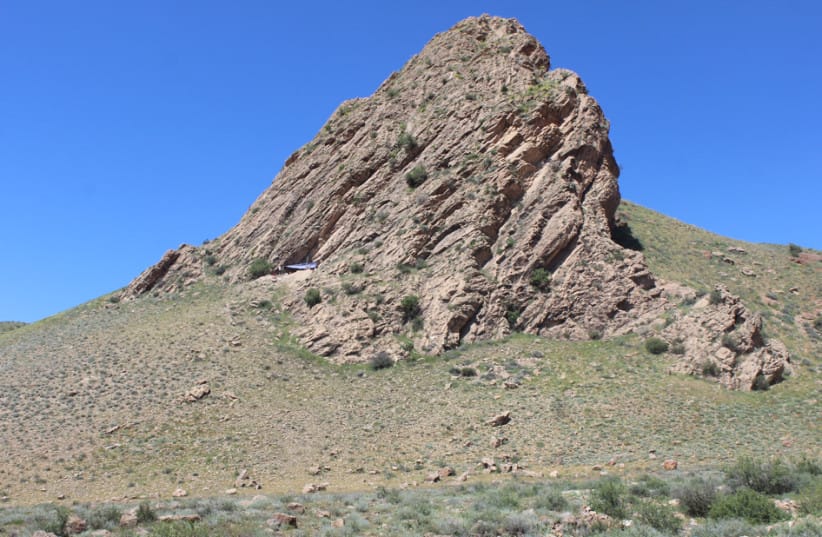
Fragments of ancient stone tools found within a cave in the Armenian Highlands have revealed new insight into the complex nomadic lifestyles of Middle Paleolithic hunter-gatherers, according to a recent study.
The study was conducted by a team of international researchers, headed by Dr. Ariel Malinsky-Buller and PhD students David Nora, Ioannis Oikonomou and Dominik Rogall from the Hebrew University of Jerusalem,
Published in the journal Quaternary Science Reviews, the study analyzed an assemblage of 1,770 stone artifacts spanning five distinct layers in Ararat-1 Cave in Armenia in order to trace how early humans adapted their technology in order to survive harsh and changing environments.
The study focused specifically on the late Middle Paleolithic period, roughly between 33,000 and 52,000 years ago, when ancient hunter-gatherers attempted to navigate intense environmental shifts in the South Caucasus region.
Studying the tool fragments, researchers found a distinct difference in how such prehistoric groups used the stone resources available to them.
Obsidian was transported from afar, local stone used as needed
While high-quality obsidian tools were transported across long distances to be used, some originating from olcanic sources up to 200 kilometers away, tools made from local chert reflecting the hunter-gatherers’ resourcefulness.
Researchers found that the obsidian tool fragments bore evidence of continuous reshaping and maintenance, indicating that they had been specifically designed to survive use by mobile groups moving through areas of extreme altitude.
In contrast, the chert tool shards show signs of benign produced on-site where they were found, pointing to early hunter-gatherers utilizing nearby resources for short-term tasks when staying at a specific location.
By adopting an analytical framework to track tiny fragments smaller than 20 millimetres in size, researchers were able to identify near invisible evidence of tool repair, even when the tools tthemselves had been removed from the site.
The findings challenge traditional methods classifying ancient cultures solely by static tool shapes found in their camps.
Instead, the study showed that Ararat-1 Cave functioned mainly as a maintenance-and-rest station within a network of seasonal migration routes.
"Our study demonstrates that ancient hunter-gatherers were highly flexible and strategic thinkers," said Malinsky-Buller. "They did not rely on a single way of doing things. Instead, they carefully balanced portable, long-distance toolkits with immediate local resources, treating caves like Ararat-1 as critical hubs to rest, repair their gear, and plan their next move across a challenging landscape."
The project received support from the European Research Council and the Fritz Thyssen Foundation.
KioskNews shows a cleaned-up reading view extracted from the publisher’s page — the original always lives on their site, not ours.