Ukraine’s Starlink woes should be a wake-up call for Taiwan, analysts say
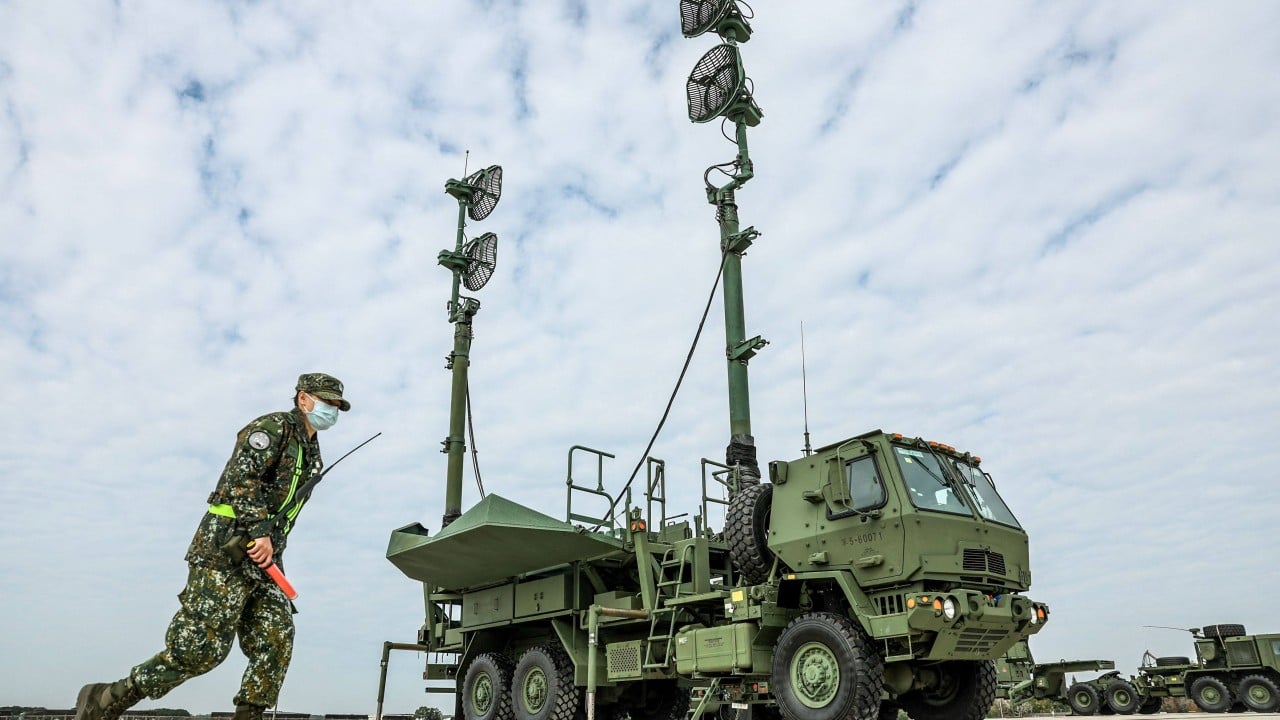
Taiwan should not rely on a single foreign satellite provider for critical wartime communications, analysts have warned, after sudden restrictions on the use of Elon Musk’s Starlink disrupted Ukrainian drone operations.
The episode has renewed debate in Taiwan over the risks of entrusting essential communications to foreign commercial operators whose services could be restricted for political, military or business reasons.
Analysts said this was particularly relevant as Taipei was trying to strengthen the resilience of its communication networks against potential mainland Chinese attacks while simultaneously expanding its use of drones and other unmanned systems.
“The lesson from this incident is that we cannot become overly dependent on satellite navigation services provided by a single company,” said Shu Hsiao-huang, a senior analyst at Taiwan’s government-funded Institute for National Defence and Security Research.
SpaceX this month imposed new speed restrictions on terminals in Ukraine connected to its Starlink satellite internet service, disrupting some Ukrainian drone combat operations.
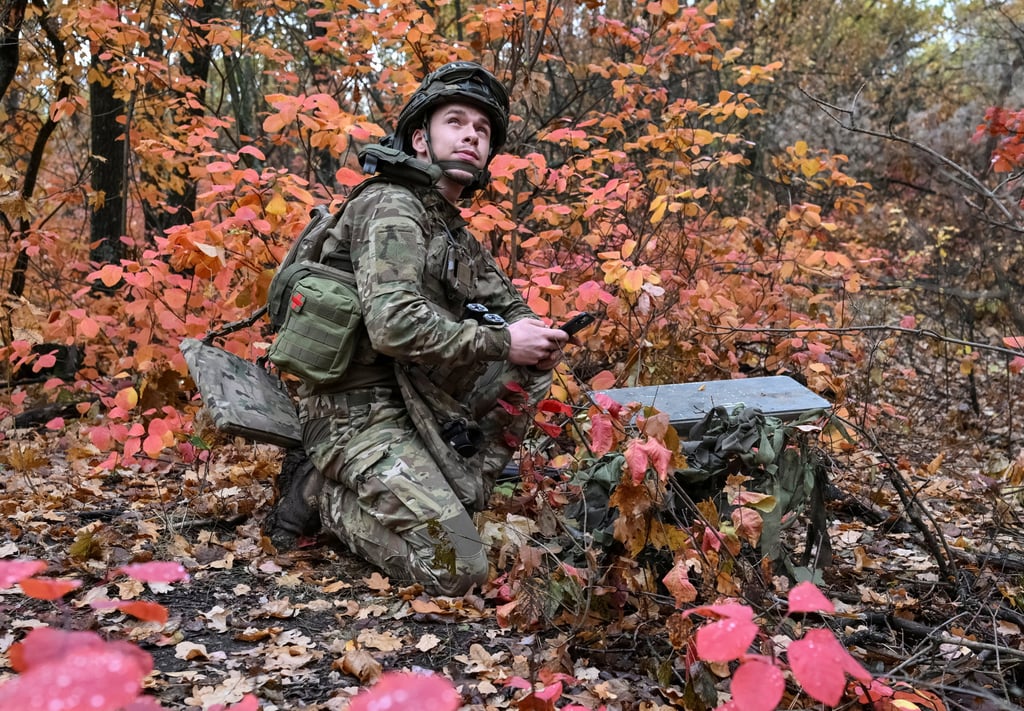
The restrictions cut a terminal’s link to the internet when it travels faster than 160km/h (100mph), a speed often exceeded by Ukrainian drones equipped with Starshield, the military version of Starlink.
The restrictions forced some drones to fly more slowly, making them easier for Russian forces to target or evade and prompting Kyiv to seek changes to the limits.
Conflicting accounts have emerged over who was responsible for the restrictions and why they were introduced.
Musk suggested that US President Donald Trump had decided to implement the limits because the US government owns and controls Starshield. Trump denied this, but said he doubted Musk was responsible, while the Pentagon also denied it was involved.
Regardless of who made the decision, the episode showed the dangers of depending on a system ultimately controlled by an external provider, according to Zivon Wang, a military analyst at the Chinese Council of Advanced Policy Studies in Taipei.
“Even the military-grade Starshield system funded or heavily supported by the US government could still potentially be disconnected or have its speed restricted at a critical moment because of political considerations or commercial interests,” Wang said.
He said the risks could be more complicated for Taiwan because Musk has substantial commercial interests on the Chinese mainland, including Tesla’s Shanghai factory.
While Taiwan’s military does not currently use Starlink, its legislature has eased rules that previously restricted foreign satellite communications companies from entering the local market, although detailed implementation arrangements have yet to be announced.
Taipei has already struck deals with providers willing to work within its restrictions, including Eutelsat OneWeb, while pursuing indigenous low-Earth-orbit satellite capabilities.
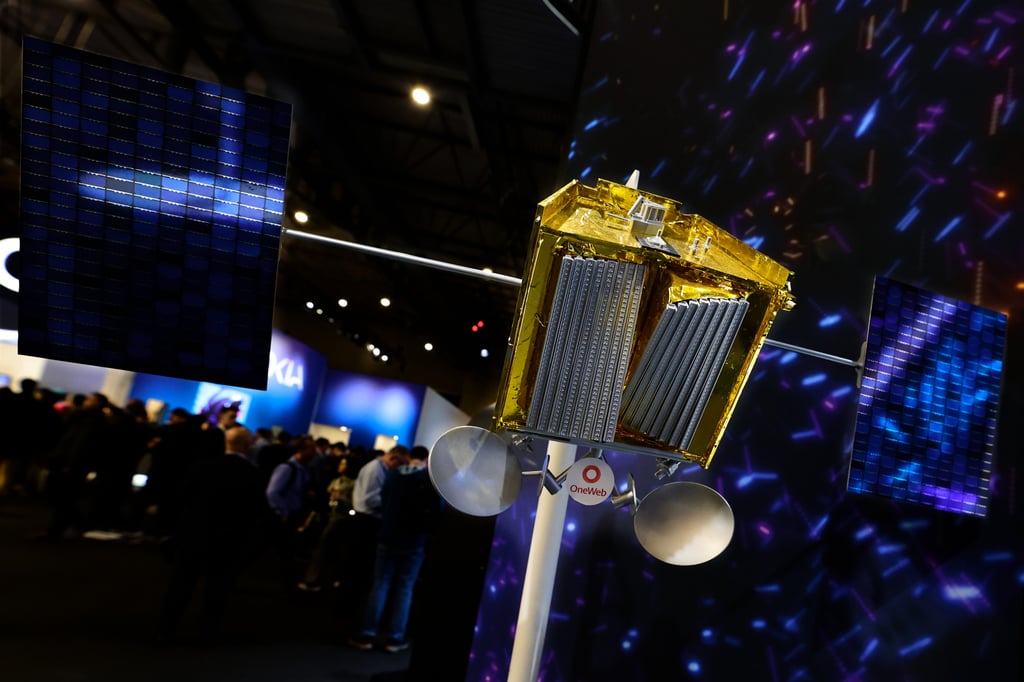
But analysts warned that replacing dependence on terrestrial and submarine networks with a single satellite constellation would merely exchange one vulnerability for another.
Wang called for a “multi-orbit, multi-provider” strategy combining indigenous satellites with commercial constellations from different international suppliers.
Taiwan should accelerate development of what he described as a “Taiwanese version of Starlink” to retain a communications channel beyond the control of foreign companies, while expanding cooperation with alternative operators such as OneWeb and Luxembourg-based SES.
He said the approach could also support Taiwan’s defence industry by encouraging the development of unmanned systems that did not rely on the US government-operated GPS as well as communications links less dependent on satellites.
Shu said redundancy would become increasingly important as Taiwan incorporated more unmanned systems into its armed forces.
Satellite systems support positioning, navigation and timing – or PNT – which are essential to operations ranging from unmanned aircraft and precision weapons to telecommunications and electricity networks.
Taiwan therefore needed alternatives to GPS as well as backup communication networks, Shu said.
The options include inertial navigation systems that can calculate an object’s position without external signals and AI-based visual navigation and terrain matching.
09:58
Will Batanes become the next South China Sea flashpoint?
“The essence of satellite navigation redundancy is not putting all your eggs in the GPS basket,” Shu said, adding that weapons and critical infrastructure needed to remain functional during periods of “digital darkness”.
Developing unmanned systems capable of navigating without GPS would further reduce Taiwan’s dependence on satellite services, he added.
James Yifan Chen, a Taipei-based international relations and strategic studies scholar, said Taiwan’s situation differed from Ukraine’s because Taipei had “chosen not to depend on Starlink or Starshield because of its concerns about Musk’s close business ties with China”.
But that did not eliminate its reliance on foreign technology. Much of Taiwan’s advanced military equipment comes from the United States, meaning Taipei still needed to consider the possibility that externally supplied capabilities could be restricted during a conflict, he said.
Another challenge was whether “Taiwan’s own satellites could eventually provide sufficient connectivity and withstand electronic warfare and jamming by the People’s Liberation Army”, Chen added.
Beijing regards Taiwan as part of China to be reunited by force if necessary. Most countries, including the United States, do not recognise Taiwan as an independent state, but Washington is opposed to any attempt to take the self-ruled island by force and is committed to supplying it with weapons.
Analysts also cautioned against treating Ukraine as a direct template for a Taiwan Strait conflict.
02:55
Taiwan concludes annual war games, including preparing for PLA sea blockade
Wang said Taiwan’s potential battlefield would be much smaller, while drones operating across the strait would face different geographical and weather conditions.
Many Taiwanese drones would probably operate around the island or in coastal areas, where microwave links and other terrestrial communications could provide alternatives if satellite connections failed, he said.
The controversy also raised a broader question about the reliability of US support, according to Huang Huei-hua, director of the Taiwan Global Talk think tank.
“If Taiwan found itself in Ukraine’s predicament during a cross-strait conflict, it could end up the biggest loser,” she said. “Like Ukraine, Taiwan could face the risk of being abandoned.”
Huang said relying too heavily on any single foreign partner, including the United States, carried considerable risks.
“Taiwan needs to prepare a range of contingency plans, or it risks becoming expendable when the interests of larger powers change,” she said.
“The crisis of trust between Ukraine and the United States should serve as a wake-up call: there is no permanent comfort zone, even between allies.”
KioskNews shows a cleaned-up reading view extracted from the publisher’s page — the original always lives on their site, not ours.