The alarm bells of the IMF and World Bank must be heeded — Phar Kim Beng
OCTOBER 18 — The annual meetings of the International Monetary Fund (IMF) and World Bank in Bangkok last week have delivered a message that governments across the world, especially those in Asean, cannot afford to ignore.
When IMF Managing Director Kristalina Georgieva described the atmosphere of the meetings as one of “optimism and worry,” she captured the fundamental contradiction confronting the global economy in 2026.
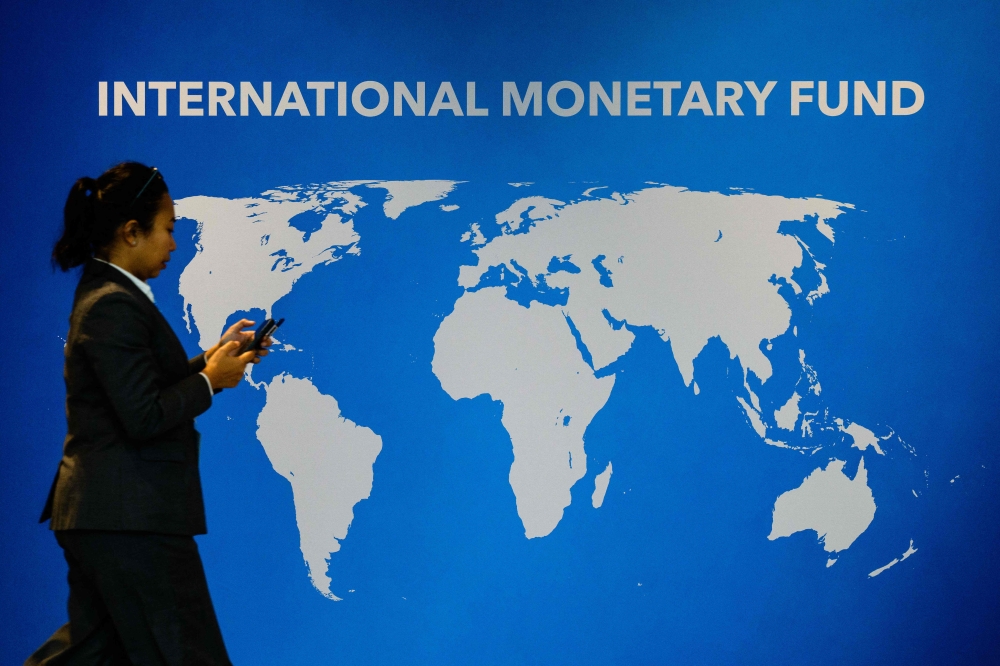
An attendee walks past signage displayed inside the venue for the Annual Meetings of the International Monetary Fund (IMF) and the World Bank Group (WBG) at the Queen Sirikit National Convention Center (QSNCC) in Bangkok October 14, 2026. — AFP pic
There remains optimism because the international economy has demonstrated remarkable resilience despite geopolitical fragmentation, disruptions to global supply chains and the escalating conflict involving Iran.
Yet there is also considerable worry because the foundations of this resilience are becoming increasingly fragile.
The war involving Iran, invariably Gulf Cooperation Council (GCC), disruptions to energy supplies from the Persian Gulf, attacks affecting Saudi Arabia and uncertainty surrounding the Strait of Hormuz have introduced serious vulnerabilities into an already strained international economic system.
The IMF and World Bank are not merely sounding routine warnings. Their concerns reflect the possibility that geopolitical instability could translate into prolonged economic hardship, particularly for developing countries.
For Asean, the implications are profound.
The first consideration is energy security. South-east Asia may be geographically distant from the principal theatres of conflict in West Asia, but it is deeply connected to them through international energy markets, maritime transportation and global trade.
Any sustained disruption to oil and liquefied natural gas supplies through the Strait of Hormuz can increase production costs, transportation expenses and inflationary pressures across Asean.
Even countries that produce petroleum and natural gas are not necessarily insulated from these consequences.
Malaysia, for example, may benefit from higher revenues in certain energy sectors, but Malaysian households and businesses can simultaneously experience increased costs through imported goods, logistics and industrial production.
Indonesia, Thailand, the Philippines and Vietnam face different combinations of these pressures depending on their energy import requirements, exchange rates and domestic subsidy arrangements.
The second consideration is the danger of imported inflation.
Inflation originating from external shocks is particularly difficult to manage because national governments cannot easily control its underlying causes.
Central banks can adjust interest rates.
Governments can provide targeted subsidies. Finance ministries can revise fiscal priorities.
However, none of these measures can independently restore damaged energy infrastructure in West Asia or guarantee the uninterrupted passage of commercial vessels through strategic maritime chokepoints.
This is precisely why the concerns expressed in Bangkok deserve serious attention.
The third consideration is the vulnerability of low-income countries.
Georgieva’s acknowledgement that the IMF has a responsibility to assist countries struggling with price shocks arising from the Iran war highlights an important moral and institutional dimension of international economic governance.
Economic crises are rarely distributed equally.
Wealthier countries generally possess stronger fiscal buffers, deeper financial markets and greater access to international credit.
Poorer countries frequently confront higher borrowing costs, limited foreign exchange reserves and considerable difficulties financing essential imports.
When energy and food costs rise simultaneously, these economies can face a particularly dangerous combination of inflation, currency depreciation and mounting debt.
The World Bank’s development mandate is especially relevant here. Financial assistance must be accompanied by measures that protect food security, strengthen social protection and preserve investment in education, healthcare and essential infrastructure.
The fourth consideration concerns the increasingly inseparable relationship between geopolitics and economics.
For decades, governments frequently treated geopolitical tensions and macroeconomic management as relatively distinct policy domains.
That distinction has become increasingly difficult to sustain.
A missile strike against energy infrastructure can affect international insurance premiums. A disruption in the Red Sea can lengthen shipping routes.
A confrontation in the Taiwan Strait could threaten semiconductor production and international manufacturing networks.
The modern economy is therefore exposed to geopolitical shocks at multiple points simultaneously.
Asean must understand these vulnerabilities not as isolated emergencies but as structural characteristics of an increasingly complex international system.
The fifth consideration is the importance of Asean’s collective economic resilience.
Asean has repeatedly demonstrated that regional cooperation can provide a degree of stability during periods of international uncertainty.
The experience of the Asian Financial Crisis of 1997–1998, the Global Financial Crisis of 2008 and the Covid-19 pandemic offers valuable lessons.
However, the nature of the present challenge is different.
Asean is confronting a combination of energy insecurity, geopolitical fragmentation, technological competition, climate-related disasters and persistent uncertainties surrounding international trade.
No single member state can manage all these challenges independently.
Closer coordination through Asean Plus Three, involving China, Japan and South Korea, would strengthen regional financial preparedness.
The Chiang Mai Initiative Multilateralisation, regional financial surveillance and cooperation among central banks provide existing institutional foundations that can be reinforced.
The sixth consideration is that governments must resist the temptation to interpret temporary economic resilience as evidence of permanent stability.
A country can continue recording positive growth while its households experience declining purchasing power.
Stock markets can remain relatively buoyant while small and medium-sized enterprises struggle with higher operating costs.
Foreign investment commitments can increase even as domestic consumers become more cautious.
Macroeconomic indicators are indispensable, but they do not always capture the immediate pressures confronting ordinary citizens.
This is especially important for Malaysia, where maintaining economic growth must be accompanied by protecting household purchasing power, ensuring fiscal sustainability and improving productivity.
The seventh consideration is that economic preparedness must be linked to strategic diplomacy.
Malaysia and Asean have legitimate interests in maintaining constructive relationships with the Gulf Cooperation Council, China, India, Japan, South Korea, the European Union and the United States.
Such relationships are not merely diplomatic ornaments.
They provide opportunities to diversify energy supplies, attract investment, strengthen technological capabilities and maintain access to international markets.
Asean’s ability to cultivate multiple partnerships without becoming excessively dependent on any single power is increasingly important.
This is a form of strategic versatility that reflects the region’s polytropous approach to international relations.
It allows Asean member states to spread and deepen their options while preserving their respective national interests.
Finally, the warnings from Bangkok should encourage governments to think beyond immediate crisis management.
The international economy cannot remain permanently dependent on emergency subsidies, extraordinary monetary interventions and temporary diplomatic understandings.
Long-term resilience requires investment in renewable energy, stronger food supply chains, infrastructure connectivity, technological upgrading and greater regional financial cooperation.
It also requires institutions capable of responding rapidly when geopolitical shocks threaten economic stability.
The IMF and World Bank cannot prevent wars. Neither can they guarantee that governments will pursue prudent economic policies.
Nevertheless, their warnings provide an important assessment of the vulnerabilities confronting the international economic system.
The significance of the Bangkok meetings lies not merely in their gathering of finance ministers, central bankers and policymakers.
It lies in the recognition that economic optimism must be accompanied by strategic caution.
For Malaysia and Asean, this means strengthening economic resilience before external shocks become domestic crises.
The last quarter of 2026 is unfolding against a backdrop of considerable geopolitical and economic uncertainty.
If the warnings from Bangkok are disregarded, governments may discover that the cost of delayed action is considerably greater than the cost of early preparation.
The alarm bells have been sounded.
The responsibility now rests with governments to respond before economic vulnerabilities become systemic crises.
* Phar Kim Beng, PhD is the Professor of Asean Studies at International Islamic University of Malaysia and Director of Institute of International and Asean Studies (IINTAS).
** This is the personal opinion of the writer or publication and does not necessarily represent the views of Malay Mail.
KioskNews shows a cleaned-up reading view extracted from the publisher’s page — the original always lives on their site, not ours.