Cities impacted by longer, more severe bushfires: study
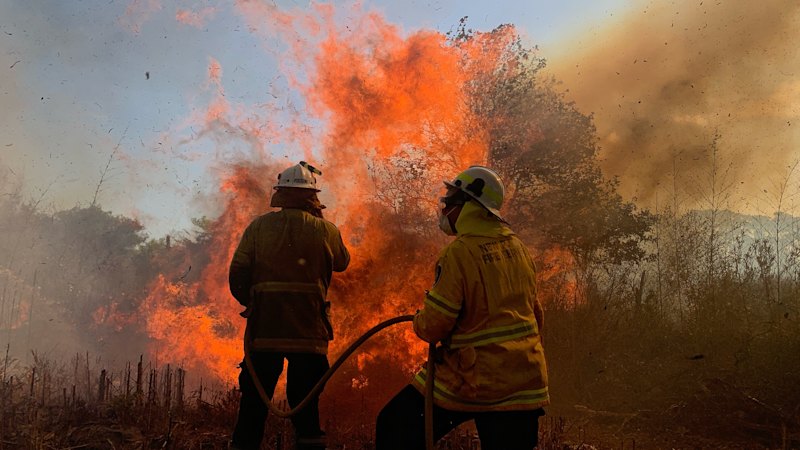
Bushfires are impacting Queensland’s urban air quality more frequently and more severely than previously understood, new research has found, with pollution travelling further across the state, and for longer, increasing public health risks.
The study led by researchers from the Queensland University of Technology analysed air quality data from 22 urban monitoring sites across Queensland between 2008 and 2023.
It found bushfire smoke can increase fine particle pollution (PM2.5) by up to 160.5 per cent during a fire event, and ozone levels by up to 33.2 per cent during fire-active seasons (July to December).
Between 2018 and 2023, bushfire-impacted hours during the fire-active season were approximately three times more frequent, compared with 2008–2017.
Lead researcher Dr Zijun Li said climate change has increased the frequency and ferocity of bushfires, with longer burn times increasing pollution levels.
“Climate change and heatwave conditions are favouring the conditions of the bushfires,” Li said.
“Bushfire smoke is not only a problem for communities located near fires.
“Our research shows emissions can travel hundreds or even thousands of kilometres and significantly affect air quality in urban areas far from the source.
“As climate change increases the frequency and intensity of bushfires in many regions, understanding how smoke affects urban air quality is becoming increasingly important.”
PM2.5 – the fine particle matter emitted during wildfires – is small enough to penetrate deep into the lungs and bloodstream, and is linked to respiratory and cardiovascular health impacts.
Gold Coast University Hospital doctor Yian Zhao has suffered asthma since early childhood, and moved from China to Australia when he was 11 because of the difference in air quality.
“Industrial smoke and allergies are the main [asthma] triggers for me,” Zhao, who grew up in Adelaide, said.
“[In China] we lived in a heavily industrialised area as well. The dust, smoke, air quality … some days you could barely see five metres in front of you because of how bad it was.
“So my parents made the decision to move over to Australia.”
Since moving from South Australia to Queensland, Zhao said his exposure to bushfire events has been minimal. But he can feel changes to air quality, and worries about the impact of longer and more severe bushfire seasons.
“I look at it from both sides, as a doctor and a patient myself,” he said.
“For me, it gets a little bit harder to breathe whenever there’s smoke in the air, to the point where I’ll probably preemptively take some more of my puffers.
“[In the public health system] the number of resources that we do have is finite … so an increase in bushfires would definitely put a stress on both things.”
Li said the research also revealed insights into how bushfire smoke behaves and affects communities, with stronger fires affecting urban pollutants.
“Ozone formation is complex. We found bushfire emissions can interact with local urban emissions, particularly nitrogen oxides from vehicles and industry, to increase ozone concentrations,” Li said.
“This means bushfire smoke can worsen air quality even when the fires are a long way from the city.”
KioskNews shows a cleaned-up reading view extracted from the publisher’s page — the original always lives on their site, not ours.