10 Movies To Watch if You Loved ‘You Can See Everything’

Jeremy has more than 2900 published articles on Collider to his name, and has been writing for the site since February 2022. He's an omnivore when it comes to his movie-watching diet, so will gladly watch and write about almost anything, from old Godzilla films to gangster flicks to samurai movies to classic musicals to the French New Wave to the MCU... well, maybe not the Disney+ shows.
His favorite directors include Martin Scorsese, Sergio Leone, Akira Kurosawa, Quentin Tarantino, Werner Herzog, John Woo, Bob Fosse, Fritz Lang, Guillermo del Toro, and Yoji Yamada. He's also very proud of the fact that he's seen every single Nicolas Cage movie released before 2022, even though doing so often felt like a tremendous waste of time. He's plagued by the question of whether or not The Room is genuinely terrible or some kind of accidental masterpiece, and has been for more than 12 years (and a similar number of viewings).
When he's not writing lists - and the occasional feature article - for Collider, he also likes to upload film reviews to his Letterboxd profile (username: Jeremy Urquhart) and Instagram account.
He has achieved his 2025 goal of reading all 13,467 novels written by Stephen King, and plans to spend the next year or two getting through the author's 82,756 short stories and 105,433 novellas.
Sign in to your Collider account
It’s cool to see how much You Can See Everything has been resonating and achieving popularity-wise, since it doesn’t really scream “hit movie.” It’s a nearly three-hour-long documentary about Elizabeth Holmes, at least at first. It does more beyond that, but in ways that shouldn’t be spoiled. Anyway, it’s long, patiently paced, and not a blockbuster by any means, but it’s been making a ton of money and proving very thought-provoking.
It’s Nathan Fielder at his most Nathan Fielder, which helps (and he does have a following that meant You Can See Everything was always going to get some attention), and then Lance Oppenheim also brings a lot to the film, since he’s also become quite accomplished as a documentarian/filmmaker. You Can See Everything is a documentary of sorts, but a mind-bending one that defies genre in some regards, and similar things can be said about the following films. Some are documentaries, or part-documentaries, while others are films that feel heavily meta and effortlessly thought-provoking, with all being worthwhile watches for anyone who loved and/or can’t stop thinking about You Can See Everything.
10 'F for Fake' (1973)

You hear “Orson Welles,” and you probably think Citizen Kane, first and foremost, and honestly, fair enough. That is about as legendary as movies get, and so it’s the artistic peak of everything Welles did, but it’s far from the only worthwhile project he tackled, and you can venture outside of cinema to see the also-famous radio adaptation of The War of the Worlds, which has a certain legend around it as being convincing enough to make people think it was real, but that's more likely a myth/urban legend.
That sense of it possibly fooling people, though, and Welles’s reputation for being something of a trickster… that feels relevant when looking at F for Fake. It’s Orson Welles making some sort of weird arthouse documentary that isn't wholly a documentary, and maybe more of a feature-length magic trick, and then that’s fitting when it’s also about fakery and deception. Just how deep or layered it is doesn’t feel clear, and that enhances F for Fake, honestly, rather than making it feel frustrating.
9 'Close-Up' (1990)

Close-Up feels odd and proves hard to describe, but largely in a good way. It comes down to it not really committing to being a documentary or a non-documentary, and then it’s all presented in a way that makes it feel hard to tell what might be what. It’s probably safe to say that it blends fact and fiction, and also, it features people playing themselves in a story about a man who was arrested for impersonating a filmmaker.
If that sounds mind-bending, it’s because Close-Up is, since it feels a little like a documentary, except instead of actors re-enacting certain scenes, the subjects themselves do. And then it gets strange in some other regards, but all in service of exploring various interesting subjects surrounding the art of filmmaking and the idea of identity. It’s not a hugely well-known movie, but it is the kind where just about everyone who’s seen it seems willing to praise it, so that makes it a worthy watch for those after something (very, very) different.
8 'Jim & Andy: The Great Beyond' (2017)

There are layers here, just like there are layers in You Can See Everything and a bunch of the other movies here. Basically, Jim & Andy: The Great Beyond is a documentary about a movie that came out almost two decades earlier called Man on the Moon. And Man on the Moon was a movie starring Jim Carrey, where he played Andy Kaufman, and a good chunk of Man on the Moon was set decades earlier, since Kaufman was active as a very unusual comedian/entertainer in the 1970s and some of the 1980s (before his death in 1984).
Jim Carrey famously disappeared into the role, going full method actor for it, and then Kaufman himself was also someone who always seemed like he was playing a character, but it was hard to work out where the character ended and Kaufman began (also, whether he was actually playing multiple characters). So, a documentary about a movie starring an unusual actor (Carrey) that was about an unusual entertainer (Kaufman) is going to be a little different from your average documentary. Go figure.
7 'My Winnipeg' (2007)

Like with a fair few movies here, it’s hard to say what exactly My Winnipeg is. There’s a real blurring of the lines between documentary and feature film here, and regarding the “feature film” side of things, who even knows what genre it belongs to. Parts of the movie are kind of funny, some are sad, and then other parts even get a little haunting, feeling ghostly and fantastical by documentary standards.
So, maybe it’s a fantasy/documentary hybrid, if that’s even possible? Speaking of things maybe not being possible, is there anything that’s really “documentary” here? Again, what is My Winnipeg? There’s nothing else like this, for better or worse, and it’s just about guaranteed to feel unfamiliar no matter how many other movies and/or documentaries you’ve watched throughout your life.
6 'The Five Obstructions' (2003)

Pretty much anything directed by Lars von Trier counts as an arthouse film, so it shouldn’t be too surprising that a documentary co-directed by him gets kind of odd, though this does stand in contrast to most of Lars von Trier’s other movies in the sense that it’s not super depressing. Truth be told, The Five Obstructions is quite funny and decently light-hearted for much of its runtime. It was also directed by Jørgen Leth, and the premise is pretty much Lars von Trier giving Leth a series of increasingly strange and difficult rules he has to stick to while continually remaking a short film he made decades earlier.
There are five challenges all up, and those obstructions do indeed get more obstructive. Von Trier often tortures his audience, so to speak, or puts you, as a viewer, through the wringer, but here, it’s more about seeing him do it to a fellow filmmaker. And because it’s about making short films, and because you get to see the short films, The Five Obstructions does ultimately blur the line between documentary and feature film, all the while being an interesting look at a certain kind of unusual creative process.
5 'Häxan' (1922)

More of a folk horror movie than a documentary, probably, Häxan is cool, whatever it is, especially when you consider its age. The fact it’s more than a century old makes it feel eerier, and the way it doesn’t purport to be wholly a documentary means that you can kind of roll with some of the more outlandish claims it makes in the service of “informing” you about the history of witchcraft and some other supernatural-related topics.
It’s all very fascinating, above all else, and there is a timeless kind of unease to some of the visuals on offer here as well. Häxan is intense for a silent film, and a good one to show people who might be skeptical that films of this age can still get some sort of emotional reaction out of people. It’s definitely easier to recommend as a work of horror than a documentary, though the fact it’s even part-documentary is interesting, and also a big reason why it’s ultimately worth highlighting for present purposes.
4 'Synecdoche, New York' (2008)
It’s hard to know where to start when it comes to summarizing Synecdoche, New York, if a summary is even possible with a movie this ambitious. You can talk about the extent to which it lingers in the mind long after it’s over, being a difficult movie to shake. And then also obvious is the quality of the acting here, with it containing what’s easily one of the best lead performances Philip Seymour Hoffman ever gave, and that’s saying a lot.
In terms of the filmmaking, it’s Charlie Kaufman doing his thing to a particularly overwhelming extent, writing and directing this one while not holding back from making things layered, existentially troubling, and overall despair-filled. It’s a movie about art and existence and struggling to find a meaning in life, and then a whole bunch of other things. You might well only ever scratch the surface of this one, but even so, that’s okay, since there is oh so very much surface to scratch.
3 'Nathan for You: Finding Frances' (2017)
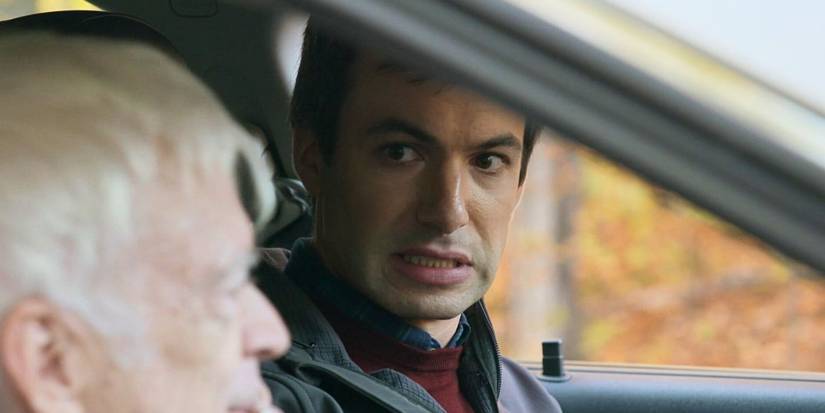
Nathan for You ran for a consistently hilarious four seasons, and is understandably considered one of the funniest shows in relatively recent memory, even if Nathan Fielder has pushed himself further artistically and creatively since it wrapped up. The final episode of the show is also kind of a movie, and so it’s going here, with it also being relevant since it suggested where Fielder was going to go post-Nathan for You.
Namely, he went into slightly more serious territory in The Rehearsal and You Can See Everything, and you get a little more heaviness and tension with Nathan for You: Finding Frances than in the other episodes of the show. It’s about Fielder assisting an unusual old man named William Heath to track down an old love. It’s funny, uncomfortable, sad, and thought-provoking in equal measure, so it made for a great feature-length finale for the whole of Nathan for You, to say the least.
2 'Symbiopsychotaxiplasm: Take One' (1968)

If the title looks intimidating, split it like "Symbio-psycho-taxi-plasm," and then you might be able to say it, should you ever find yourself in a conversation where Symbiopsychotaxiplasm comes up. Fittingly for a movie with such a title, it’s hard to describe what Symbiopsychotaxiplasm: Take One is even about. It does feel in line with some of the stuff Nathan Fielder would go on to do, but with more density, possibly more layers, and also less humor, too.
If you want some kind of description, it’s about making a movie, and then it’s also about the making of the making-of, and maybe some other things.
So, it came earlier, and might've influenced some of Fielder’s work, but it’s a good deal more challenging. If you want some kind of description, it’s about making a movie, and then it’s also about the making of the making-of, and maybe some other things, with people acting and being watched, and those watchers being watched, and maybe those watchers being watched, too. It’s wild. And it’s hard to recommend, but it is at least very interesting… whatever it is.
1 'Real Life' (1979)

Real Life is an easy movie to enjoy, so if you’ve gotten through some of the more intense and intricate films here, then treat yourself with this, as a breather. It’s still layered and remarkably clever, though, not to mention ahead of its time it feels, even while being a parody of a show called An American Family. That show and Real Life pre-dated reality TV as it’s now understood, but reality TV has become unstoppable.
So, what this has to say about human nature, people being curious about others, and people wanting to be in control… yeah, all that can’t help but feel more relevant nowadays. It scratches a similar itch to The Truman Show, though the premises are fairly different, and the mockumentary style of Real Life makes it feel a little more worthy of being considered here than The Truman Show (consider that one honorably mentioned now, though, in any event).

Real Life
- Release Date
- March 2, 1979
- Runtime
- 99 minutes
- Director
- Albert Brooks
- Writers
- Monica Johnson
-

Albert Brooks
-

Charles Grodin
Warren Yeager
-
Frances Lee McCain
Jeannette Yeager
-
Lisa Urette
Lisa Yeager
KioskNews shows a cleaned-up reading view extracted from the publisher’s page — the original always lives on their site, not ours.