San Tin tech hub operator pledges affordable land to attract tenants
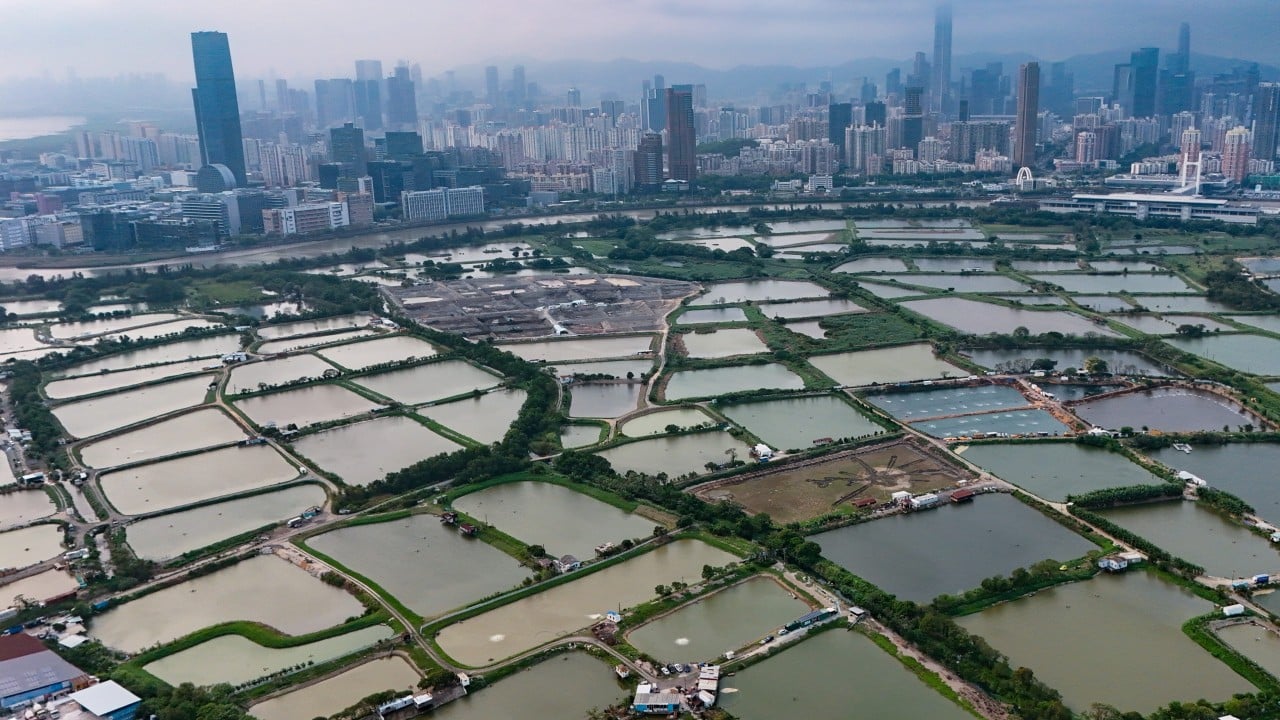
The operator of Hong Kong’s flagship San Tin Technopole has pledged to offer affordable land to attract tenants, while revealing plans to reclaim and redevelop fish ponds near the Shenzhen border to accommodate a client requiring substantial premises.
Sunny Chai Ngai-chiu, chairman of San Tin Technopole Company Limited, the government-owned entity overseeing the technology cluster next to the mainland Chinese border, said on Wednesday that he would follow the land-grant approach used for the Sandy Ridge Data Centre by offering affordable land to future tenants.
Speaking at the LSCM Logistics Summit, organised by the government-backed Logistics and Supply Chain Multi-Tech R&D Centre, Chai recalled that when the government granted land in Tseung Kwan O to the Hong Kong Science and Technology Parks Corporation a few years ago, the premium was 10 times that of an innovation park bordering Shenzhen and Shanwei in Guangdong province.
“For an advanced manufacturing company wanting to come to Hong Kong, this could be an obstacle,” said Chai, who chaired the science park company before taking up his current role in July.
“But the Sandy Ridge project set a very good milestone, because it is less than two times the land cost [on the mainland]. San Tin will follow a similar [approach],” he added.
In March, the government granted an 11.6-hectare site at Sandy Ridge to a mainland company for HK$581 million (US$74 million) under a 50-year lease to develop a large-scale data centre.
Chai said the scale of the San Tin Technopole – with 210 hectares designated for innovation and technology, about 17 times the size of the Hong Kong Science and Technology Park in Tai Po – would make it ideal for companies requiring large areas for manufacturing and research.
In a Legislative Council paper released on Tuesday, the Innovation, Technology and Industry Bureau sought HK$10 billion in funding for the San Tin Technopole.
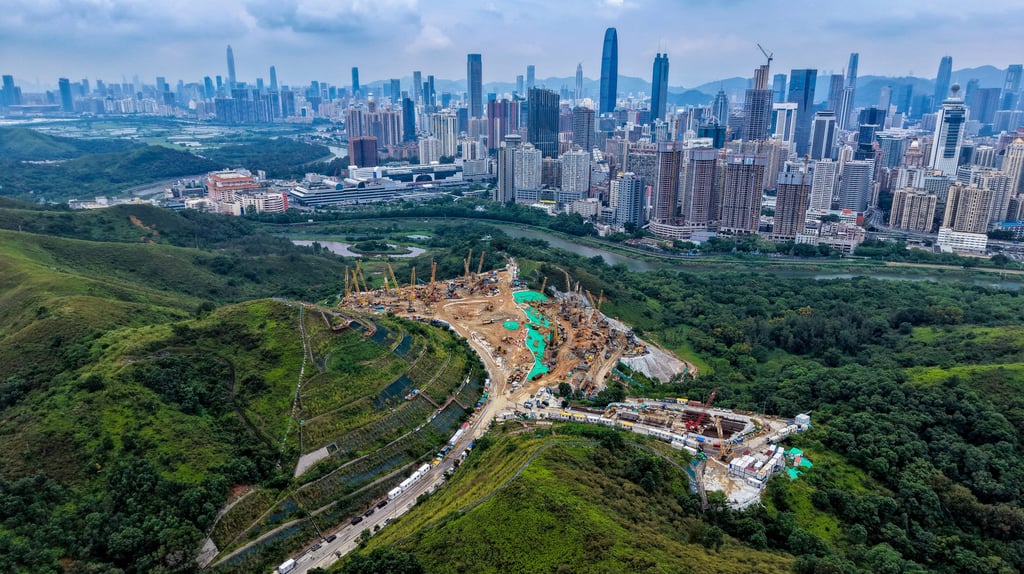
The government would also inject land assets into the company to reduce its start-up costs. The company would be allowed to contribute land as capital when co-developing or co-investing in projects with other firms.
Of the total, HK$3 billion would be earmarked for forming 210 hectares of innovation and technology land, while HK$6 billion would fund infrastructure on an initial 20-hectare batch. The remaining HK$1 billion would cover the technology park’s initial operating expenditure.
Land development at the site would adopt a multipronged approach, under which the company could “flexibly select suitable land parcels to directly participate in land development works”, taking into account its development plans, business and investment attraction efforts, and available resources.
On Wednesday, Chai said this meant San Tin Technopole Company Limited could take the initiative and contract private-sector operators to carry out land development, rather than relying on the Civil Engineering and Development Department.
“We will be comprehensively driving forward all aspects of work to accelerate the construction and early operation of San Tin Technopole, and to kick-start industrial operations as soon as possible,” he said.
He also revealed that the company was considering developing fish ponds near the decommissioned Lok Ma Chau control point to provide land for a client needing an area larger than the 20 hectares in the first phase.
Chai said the Lands Department was working to resume the fish ponds and the company would take the lead in developing the site. He did not disclose the site’s size or a development timeline.
The San Tin Technopole, near the Hong Kong-Shenzhen Innovation and Technology Park in the Lok Ma Chau Loop, will focus on six emerging sectors: health technology, artificial intelligence (AI) and robotics, microelectronics, new materials, new energy and green technology.
It is expected to contribute HK$250 billion annually to Hong Kong’s gross domestic product and create 300,000 jobs when fully operational.
KioskNews shows a cleaned-up reading view extracted from the publisher’s page — the original always lives on their site, not ours.