8 Sci-Fi Shows With Time Travel That Are 10/10 Masterpieces


Sign in to your Collider account
Time travel is one of the trickiest tools a writer can pick up. It's a genre that demands discipline. Every rule you set has to be followed. Get it wrong, and you end up with a tangled mess of plot holes that fans will spend years picking apart. When it comes to movies, filmmakers have gotten it right more times than you can count. Back to the Future basically wrote the rulebook. Then there’s Terminator. Primer. Predestination. Edge of Tomorrow. Avengers: Endgame. Hot Tub Time Machine. The list goes on and on.
Television, however, is a different story. Building a TV series around the concept is an entirely different challenge because writers have to keep their rules consistent across dozens of episodes and multiple seasons. It's no surprise, then, that there are far fewer great time travel shows than there are movies. The ones that do succeed, though, are some of the smartest and most ambitious sci-fi stories ever made. Here are the greatest sci-fi series that deal with time travel.
'Continuum' (2012–2015)

Continuum follows Kiera Cameron (Rachel Nichols), a cop from the year 2077, where the world is run by a corporate governing body called the Corporate Congress. When a group of terrorists known as Liber8 get sent back in time to escape execution, Kiera gets dragged along with them and ends up stranded in 2012 Vancouver. With no way home and no backup, she teams up with a local detective and starts hunting down the Liber8 members one by one, all while hiding the fact that she's from six decades in the future.
What makes Continuum so compelling is that it never lets you fully root for either side. Kiera is fighting to protect a future that is, by almost every measure, a dystopia, and the terrorists she's chasing genuinely believe they're stopping that future from happening. As the show goes on, Kiera slowly starts realizing that every choice she makes to get home might be reshaping the very future she's trying to save. It's a show that trusts its audience to keep up, and it rewards that trust with one of the most underrated sci-fi mysteries of the 2010s.
'The Lazarus Project' (2022–2023)

Paapa Essiedu stars as George, an ordinary app developer whose life gets turned upside down when he suddenly wakes up six months ago, back in July. At first, it plays like a Groundhog Day setup, but the show quickly reveals what's really going on. George gets recruited by the Lazarus Project, a covert agency with the power to roll back time to the most recent checkpoint whenever humanity is on the brink of annihilation.
There's one catch, though. They can only rewind time to the most recent July 1, which means every reset forces them to relive months of their lives from scratch. And things become even more complicated when George's wife dies in a tragic accident. Refusing to accept her fate, he breaks the agency's most important rule and manipulates events to trigger a time reset, which sets off a chain reaction that threatens both the organization and reality itself.
'The Flash' (2014–2023)

When Barry Allen (Grant Gustin) was 11, he watched a yellow blur kill his mother, alongside a mysterious red blur he couldn't explain. His father gets wrongfully convicted for the murder, and that injustice is what pushes Barry to become a crime scene investigator determined to clear his dad's name. Then, a freak particle accelerator explosion gives Barry superhuman speed and unleashes metahumans across Central City, and Barry starts using his powers to protect the city as the Flash.
But once he runs fast enough to break the speed of light, he discovers he can travel through time, and that's when the show really finds its identity. The first season is a genuinely great murder mystery built around uncovering the identity of the man in the yellow suit and how Barry's mom actually died. From there, the later seasons go all in on time travel mechanics. Alternate timelines. Time paradoxes. Time remnants. It’s all here. If you're a fan of superheroes and time travel in equal measure, The Flash should be at the top of your watchlist, even if the later seasons eventually go miserably off the rails.
'Steins;Gate' (2014)

Steins;Gate follows a group of amateur scientists who modify a microwave and accidentally turn it into a device that can text messages into the past. They call them D-Mails, short for DeLorean Mails (if you're reading a list of the best time travel shows, you should get that reference). And the series has a ton of fun with the concept. For example, early on, the group sends one of themselves the winning lottery numbers, and she buys the ticket in the past. In the present, she suddenly becomes incredibly wealthy, and her entire personality changes in an instant.
But the fun doesn't last long. The group's experiments soon attract the attention of SERN, a shadowy organization that has already been experimenting with time travel and has left behind a trail of gelatinized corpses stranded across time from failed attempts. Once SERN figures out that a group of college kids has cracked the one thing their entire organization has been chasing, they begin hunting them down, and what began as a quirky sci-fi comedy gradually turns into one of the most emotionally devastating time travel stories ever told.
Collider Exclusive · Sci-Fi Personality Quiz Which Sci-Fi Hero Are You Most Like? Paul Atreides · Captain Kirk · Princess Leia · Ellen Ripley · Max Rockatansky
Five iconic heroes. Five completely different ways of facing an impossible universe. One of them shares your instincts, your values, and your particular way of refusing to back down. Eight questions will tell you which one.
🏜️Paul Atreides
🖖Capt. Kirk
✊Princess Leia
🔦Ellen Ripley
🔥Max Rockatansky
01
How do you lead when the stakes couldn't be higher? The way you lead under pressure is the most honest thing about you.
02
What is your greatest strength in a crisis? The quality that keeps you alive when everything else fails.
03
What is the thing you'd sacrifice everything else for? Your deepest motivation is your truest compass.
04
How do you relate to the people around you? Who you are to others under pressure is who you really are.
05
You're facing a threat that no one else believes is real. What do you do? How you respond when you're the only one who sees it defines everything.
06
What has your heroism cost you personally? Every hero pays. The question is what — and whether they'd pay it again.
07
How do you feel about the rules of the world you're in? Every hero has a relationship with the system. What's yours?
08
When everything is on the line, what keeps you going? The answer is the most honest thing about you.
Your Hero Has Been Identified Your Sci-Fi Hero Is…
Your answers point to the iconic sci-fi hero who shares your instincts, your values, and your particular way of facing the impossible.
Paul Atreides
You carry a weight most people would crumble under — the knowledge of what you're capable of, and the burden of what you might have to become.
- You see further ahead than others and you plan accordingly, even when the vision frightens you.
- You are driven by loyalty to your people and a sense of destiny you didn't ask for but can't escape.
- Paul Atreides is not simply a hero — he is someone who understands the cost of power and chooses to bear it anyway.
- That gravity, that willingness to carry what others won't, is exactly you.
Captain Kirk
You lead with instinct, warmth, and an absolute refusal to accept a no-win scenario — because you've always believed there's a third option nobody else has thought of yet.
- You take the mission seriously without ever taking yourself too seriously.
- Your crew would follow you anywhere, not because you demand it, but because you've earned it.
- Kirk's genius isn't tactical — it's human. He reads people, bends rules with purpose, and wills outcomes into existence through sheer conviction.
- That combination of warmth, audacity, and relentless optimism is unmistakably yours.
Princess Leia
You are the kind of person who holds the line when everyone else is losing faith — not because you're fearless, but because giving up simply isn't something you're capable of.
- You lead through conviction. Your voice carries because your belief is unshakeable.
- You gave up everything ordinary the moment you chose the cause, and you've never looked back.
- Leia is not a supporting character in her own story — she is the moral centre of the entire rebellion.
- That same fierce, principled, unbreakable core is what defines you.
Ellen Ripley
You are not reckless, not grandiose, and not particularly interested in being anyone's hero — you just refuse to stop when it matters.
- You see threats clearly, you document the truth even when no one listens, and when the time comes you handle it yourself.
- Ripley's heroism is earned, not performed. She doesn't have a speech — she has a flamethrower and a plan.
- You share her composure under the worst possible pressure, and her refusal to pretend the monster isn't there.
- When it counts, you don't flinch. That's everything.
Max Rockatansky
You have been through fire that would break most people — and what came out the other side is something the world underestimates at its peril.
- You don't ask for help, don't need validation, and don't wait for anyone to tell you the rules no longer apply.
- Your loyalty, when it finally arrives, is absolute — but it's earned in silence and tested in action, not in words.
- Max is not a nihilist. He is someone who lost everything and found, against his will, that he still has something worth protecting.
- That bruised, stubborn, ultimately human core is exactly yours.
'Dark' (2017–2020)
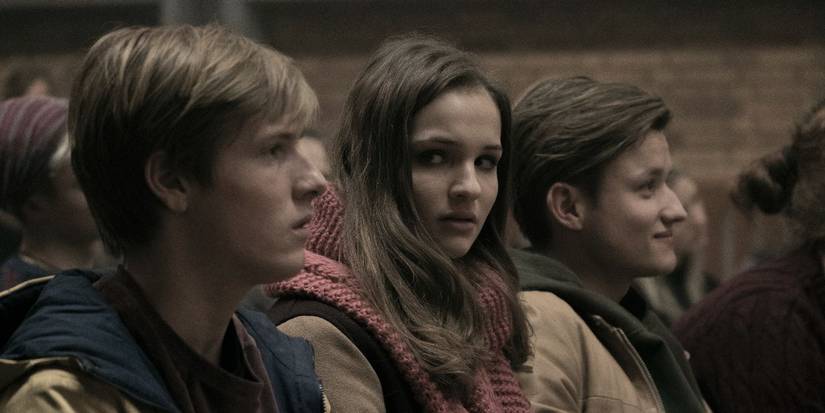
This is undoubtedly the definitive time travel show on TV so far. Dark opens with a voiceover stating that the distinction between past, present, and future is only a stubbornly persistent illusion, and then it wastes no time proving it. On June 21, 2019, Michael Kahnwald (Sebastian Rudolph) hangs himself and leaves behind a sealed letter with one strict instruction: "Do not open before November 4, 10:13 p.m." You flash forward a few months later, and the town of Winden is on edge after a local teenager goes missing. Then the police discover a young boy's corpse in the woods, dressed in distinctly 1980s clothing, carrying a vintage cassette player, with his eyes completely burned and cauterized. Suddenly, the questions start piling up. Who is the boy? How did he end up there? And what does any of this have to do with Michael's suicide? And that's just the first episode.
From there, Dark follows four interconnected families caught in a sprawling, multi-generational time travel conspiracy that stretches across 33-year cycles and different eras. Characters become trapped in a predestined loop where cause and effect blur together, and every attempt to change the past only seems to cause the very events they're trying to prevent. It's complicated as hell, but when all the pieces finally come together, Dark delivers one of the most satisfying payoffs the genre has ever seen.
'Loki' (2021–2023)
Loki picks up right after the 2012 version of Loki (Tom Hiddleston) steals the Tesseract and escapes during Avengers: Endgame, which creates a brand-new branch of the main timeline. But he doesn't get far before the Time Variance Authority catches him. The TVA is a mysterious organization that exists outside of time and is tasked with pruning any timeline that deviates from the so-called Sacred Timeline. But instead of erasing him on the spot, the TVA recruits Loki to help hunt down a dangerous variant of himself. The series takes you through some genuinely wild moments in history. You get to watch the eruption of Pompeii up close, and even get a cheeky answer to the decades-old mystery of who D.B. Cooper really was. For a while, Loki is basically a time-travel road trip through history, and it's a blast.
But once Loki finally catches up to the variant, the real story kicks in. What is the TVA actually protecting? Who's been pulling the strings this whole time? And the biggest question of all: if your timeline is predestined, were you ever really free to begin with? Loki really digs into that question as the story goes on, and the consequences it sets up are considered essential viewing heading into Avengers: Doomsday.
'Rick and Morty' (2013–Present)
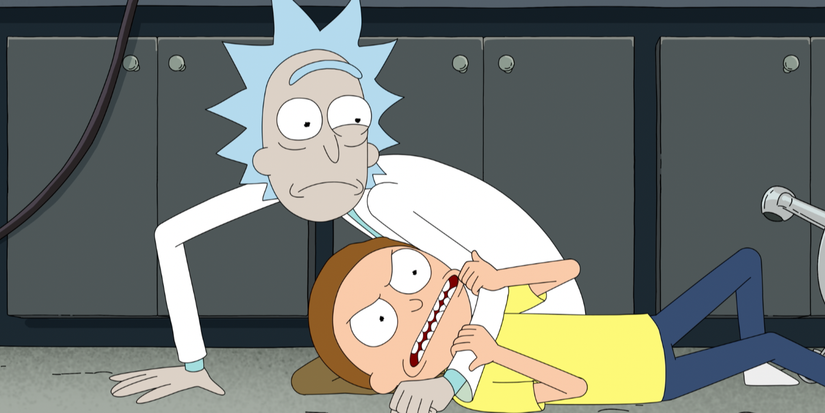
Rick and Morty follows Rick Sanchez (Justin Roiland and Ian Cardoni), a cynical genius who also happens to be the smartest man in the universe, and his painfully naive grandson Morty Smith (Justin Roiland and Harry Belden), as they go from interdimensional adventures to another. If you're into sci-fi at all, this is one of the funniest and most inventive sci-fi comedies ever made. Clones and decoys (yes, there's a difference). Alternate realities. Microverse batteries. Memory-eating parasites. Men in Black-style memory wipes. The show throws all of it at you.
Even though Rick genuinely hates time travel and avoids it whenever he can, the show has produced some of the smartest time travel concepts ever put on TV. Picture a checkpoint device that saves your place in the timeline, similar to what The Lazarus Project does. You save right before asking a girl out; she says yes, and years later you're happily married. Then someone accidentally hits the checkpoint button, sends you back, and this time you completely blow it and get rejected, and end up saving that new disastrous timestamp by mistake. Your entire life, your marriage, all of it wiped away in an instant. What would that do to you? That pretty much sums up what makes the show work so well. It's a comedy built on unhinged jokes and meta humor that makes you laugh out loud, but it has this uncanny ability to flip the switch and get surprisingly dark the second it wants to.
'11.22.63' (2016)
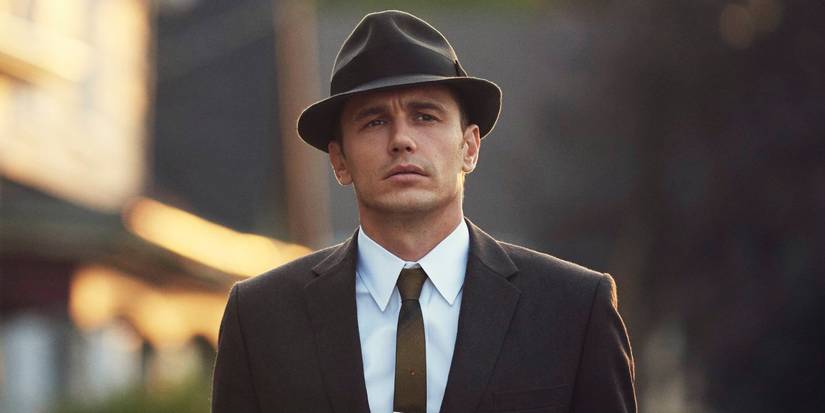
Based on the Stephen King novel of the same name, 11.22.63 kicks off when a local diner owner shows Jake (James Franco) a time portal hidden in his storeroom that leads directly back to 1958. The owner is convinced that stopping the John F. Kennedy assassination will prevent decades of social and global crises from ever happening, and he passes the mission on to Jake before it's too late for him to finish it himself. Jake accepts and spends years living in the past, waiting for the pivotal date to arrive.
But the moment Jake tries to alter events, he learns that history doesn't want to be changed. Time actively protects itself, and the past pushes back the harder he tries to interfere. Save someone who wasn't supposed to be saved, or try to change even a minor event, and the universe responds violently with accidents, fires, and attacks aimed squarely at the people Jake has grown to care about. It's a slow burn, but it earns every bit of its acclaim, and currently holds an 83% critic score on Rotten Tomatoes and an even higher 87% with audiences.
KioskNews shows a cleaned-up reading view extracted from the publisher’s page — the original always lives on their site, not ours.