The one change that worked: I sent myself a letter – and realised what’s missing in this world of WhatsApp

Last January, I received a letter. Most of my post was predictably boring – a statement from the water company, my credit card bill, the occasional update about my pension contributions – but this letter was different. The envelope felt heavier than the run-of-the-mill ones I was used to. It was postmarked Paris, a place I had little connection to, and, most strikingly, it was addressed in messy handwriting – my own.
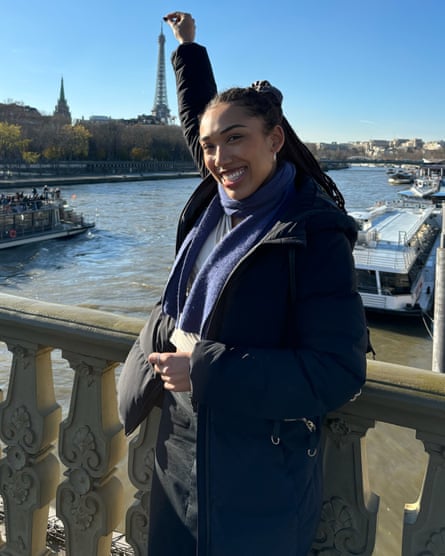
I had completely forgotten I’d written it until it turned up on my doorstep. On a trip to Paris the year before, I had visited a letter-writing cafe. The idea was simple: you wrote a letter (usually to yourself), the cafe kept it safe and sent it a year later. So, alongside trying escargots for the first time, I wrote a letter filled with questions about my not-so-distant future and addressed it to my home, in London. What will you be doing? Where will you be living? Do you have a boyfriend?
The questions weren’t especially profound, but receiving the letter felt strangely comforting. It was from me, but I felt removed from the person who had written it. It was like opening a time capsule of my thoughts and feelings that photos from that time, or even journal entries, hadn’t quite captured.
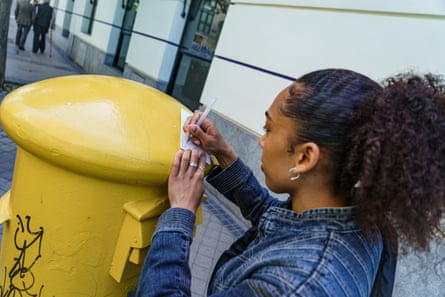
I started writing to other people. At first, it was a monthly letter to my mum in London, updating her on my new life abroad in Madrid. Sometimes I would include a ticket or receipt, explaining which museums or galleries I had been visiting, or proving that I really had found the ripest avocado for 40p. Although we spoke on the phone every week, I loved the space it gave me to say things I wouldn’t otherwise, such as how slowly people walk here, and to reflect.
After a few months, I was writing even more letters. At least once a week, I’d be in the queue at the post office with a letter for my sister, a friend from home, or my little cousins. Not everyone wrote back, but just sending them felt cathartic. It became a ritual I grew to treasure, and one that quietly added up.
The feel of pen on paper, or even the taste of the gummed envelope flap, couldn’t be replicated by a FaceTime call or a message in the family WhatsApp group. More than that, the urge to constantly be in touch started to feel less pressing, because I found I was saying more in those letters than I could ever convey even in person. And while I got a lot out of writing and sending them, much of the joy came from anticipating one in return.
I loved the weight of a letter, my name written out in someone else’s handwriting. I wouldn’t open it straight away. I would let my imagination dance around who it might be from, what it might say, all while making my way up the stairs to my flat. At my desk, I would read it slowly, deliberately, savouring it. Small details would start to stand out – a pen running out, a crossed-out word or phrase. The words people repeated again and again.
We don’t often pay attention in that way any more. Even finishing a book can feel like a stretch. Messages are written quickly, sent in a hurry and forgotten just as rapidly: glanced at, replied to and moved on from. A letter doesn’t work like that. You have to slow down, think about what you’re reading, what you’re saying. That was what I liked about it. So, just as the new commute to work had become part of my life away from Britain, so, before long, had checking the letterbox in the entrance to the apartment building on the way out.
I haven’t stopped messaging or suddenly sworn off my phone, but it does feel less urgent. I’ve muted some group chats, archived others, and no longer get that sinking feeling if I forget to reply straight away. I have found myself slowing down in other ways too – thinking a little more before replying, choosing my words more carefully, calling when a planned catch-up has drifted into text.
This routine has given me something stable to return to, wherever I am living. This January, I sent another letter to myself, back to my childhood home in London, where it will be waiting for me. I wonder if I’ll still recognise the person who wrote it.
KioskNews shows a cleaned-up reading view extracted from the publisher’s page — the original always lives on their site, not ours.