Anwar says Malaysia has done ‘everything we can’ against haze. Critics say it can do more
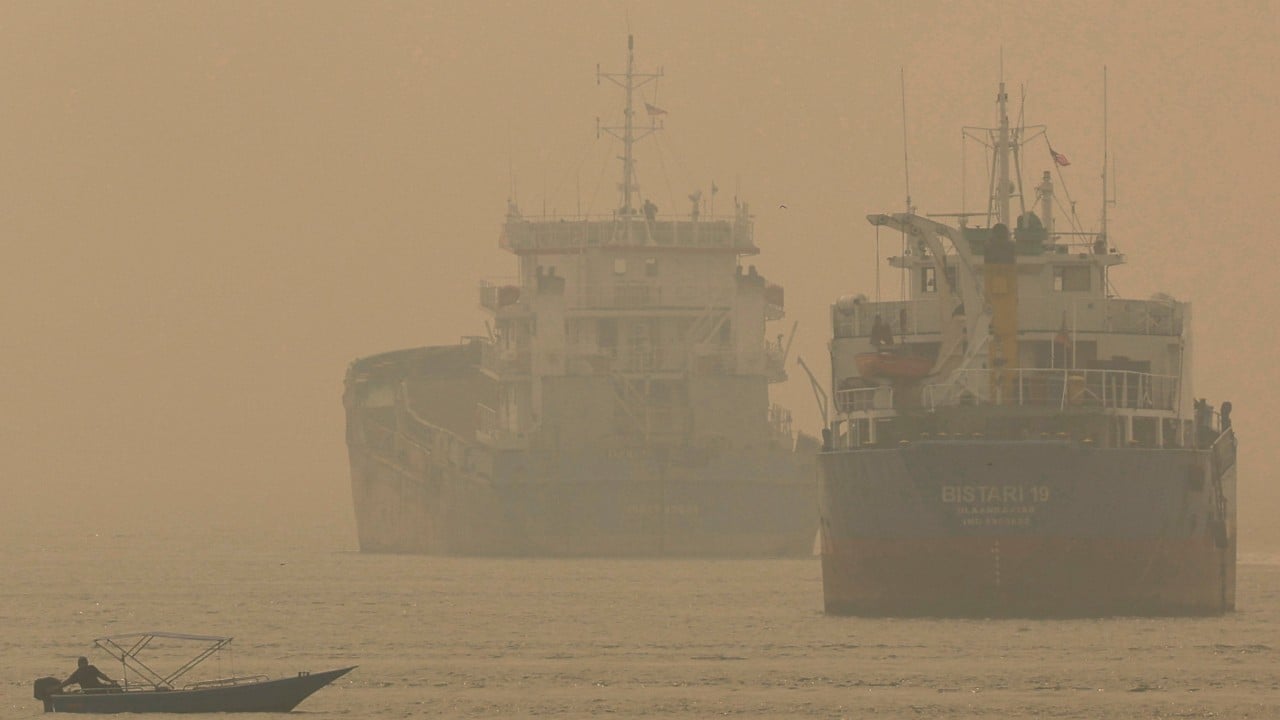
Malaysia has ruled out taking stronger measures against Indonesia over the worsening regional haze, even as widespread school closures and mounting public frustration fuel calls to punish those responsible for forest fires in the neighbouring country.
“We need to safeguard the close relationship between the two countries. So, we are not going as far as sending a diplomatic note or taking legal action,” Foreign Minister Mohamad Hasan told local media on Thursday.
Prime Minister Anwar Ibrahim said the government had done its most to engage Indonesia to address the issue. “We have done everything we can,” he said on Thursday.
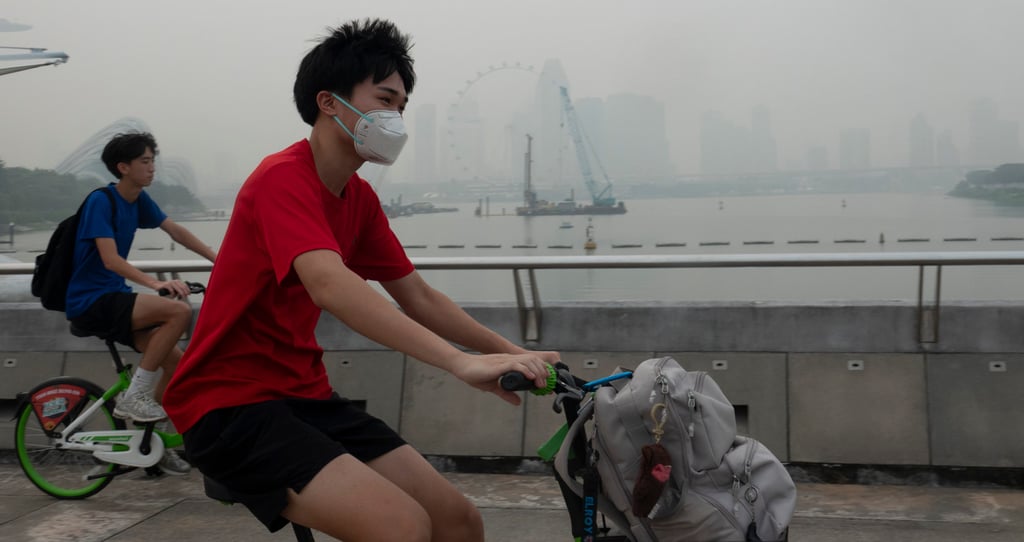
Thick smog has blanketed large parts of southern and central Peninsular Malaysia, with Johor and Selangor among the worst affected states. The latest wave of school closures includes eight education districts in Selangor on Friday, keeping hundreds of thousands of students out of classrooms.
As of 10am on Friday, Pasir Gudang in Johor recorded an Air Pollutant Index (API) reading of 209 while 30 other monitoring stations, including those in Kuala Lumpur and Selangor, registered readings of above 100. The API scale classifies anything above 300 as hazardous; readings of 201-300 are “very unhealthy”, 101-200 “unhealthy”, 51-100 “moderate” and 0-50 “good”.
07:39
What’s behind Indonesia’s decades-long wildfire problem?
The mounting problem has sparked scrutiny of Indonesia’s efforts to contain forest and peatland fires, as well as raised questions over the effectiveness of regional cooperation in addressing the decades-old problem.
In Singapore, where air quality has also hit unhealthy levels several days this week, Prime Minister Lawrence Wong said authorities could pursue local companies linked to the Indonesian fires. “Where warranted, we will take action under Singapore’s Transboundary Haze Pollution Act, and also explore joint action with other countries,” he said in a social media post late on Thursday.
The city state’s haze act came into force in September 2014, allowing authorities to take legal action against companies responsible for causing or contributing to haze pollution in Singapore, even if their activities take place overseas.
Singapore had offered help to Indonesia and would continue working closely with the country and other Asean partners to address the issue, Wong said.
Malaysian Member of Parliament Syed Saddiq Syed Abdul Rahman on Tuesday called for a coordinated diplomatic protest across Southeast Asia. In his parliamentary debate, Syed Saddiq proposed restrictions on financing for companies implicated in slash-and-burn practices that have caused prolonged air pollution across the region.
He argued that major regional banks, including Malaysia’s Maybank, CIMB Bank and Singapore’s DBS, could exert their influence by cutting off financing for companies found to be involved. “We need to hit them where they hurt the most,” he said.
He also called for the government to issue a clear diplomatic note with the support of other affected Association of Southeast Asian Nations members, particularly Singapore.
‘Louder than before’
Syed Saddiq’s remarks drew praise from Malaysian social media users. “We need to be louder than before for our children, please,” one user said. Another user thanked the lawmaker for his remarks, saying: “We need more politicians to voice out.”
The government faced further criticism from former health minister Khairy Jamaluddin, who said Malaysia was being “too soft” in dealing with Indonesia. While acknowledging the need for diplomatic engagement to resolve the issue, he called for a firmer stance against Jakarta.
Environmental group Greenpeace Malaysia on Thursday challenged Anwar’s claim, arguing that diplomatic engagement was insufficient to tackle a crisis that had persisted for more than three decades. “If Malaysia has truly done everything possible, why are communities across the region still suffering from the same crisis, year after year?” it said in a statement.
The group urged Putrajaya to introduce a Clean Air Act with provisions to hold Malaysian-linked companies accountable for environmental damage abroad, investigate corporate links to fires in Indonesia, and strengthen regional enforcement cooperation.
“The government does not lack recommendations. What remains missing is the political commitment to translate them into enforceable laws, stronger institutions and meaningful corporate accountability,” it said.
Earlier this month, the group, along with its Indonesian counterpart and non-governmental organisation Pantau Gambut, identified Kuala Lumpur Kepong as one of 20 entities associated with fire-burning activities in Indonesia. The Malaysian plantation firm rejected the accusation, saying most fires originated outside its concession area, and reaffirmed its zero-burning policy.
Indonesia is grappling with its worst fire season in more than a decade, with blazes across Sumatra and Kalimantan sending thick smoke across Southeast Asia.
Greenpeace Indonesia identified 5,540 smoke source points between August and September, including hundreds within oil palm and forestry concessions.
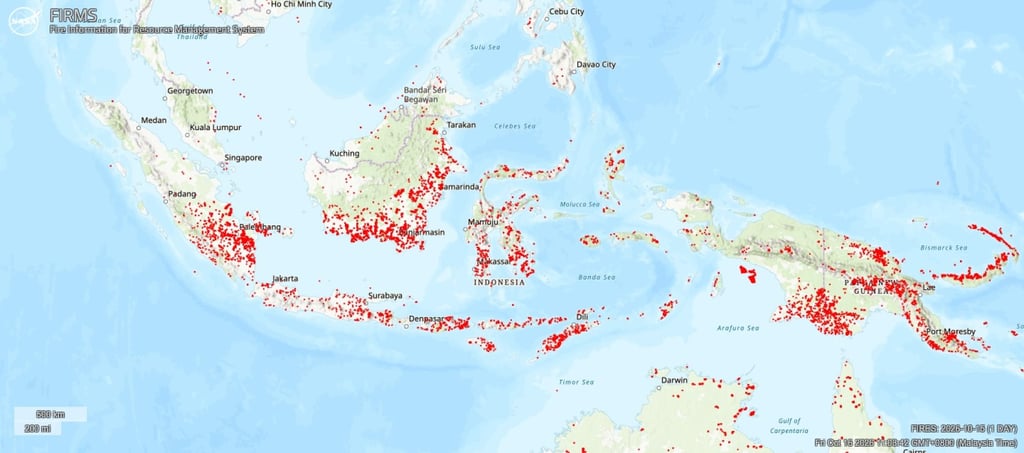
Fires continue to rage across the archipelago with satellite data from Nasa’s Fire Information for Resource Management System on Thursday showing dense clusters of active fire detections across Sumatra and parts of Kalimantan.
President Prabowo Subianto had approved aid from other countries, the foreign ministry said on Thursday, and discussions were under way to determine how foreign resources could be used for firefighting. Last month, Malaysia offered three helicopters, an aircraft and 52 personnel to help contain the fires.
KioskNews shows a cleaned-up reading view extracted from the publisher’s page — the original always lives on their site, not ours.