Why People Queue Overnight For iPhone That Is Delivered Home In 10 Minutes
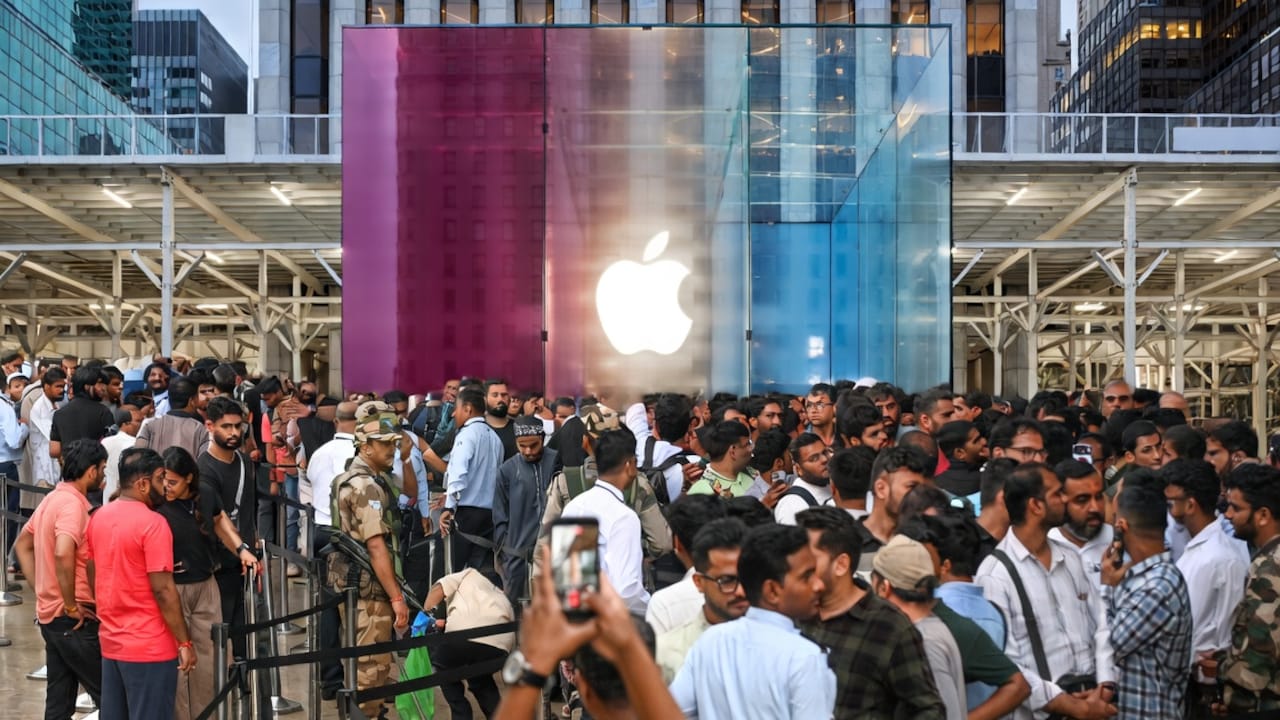
At 5 am on a Bengaluru pavement, a man named Rahul told a reporter that this is his "festival". He had reached the Apple store before dawn, along with enthusiasts from Haryana, Delhi and Mumbai -- all of them describing the iPhone launch as a festival that they try to be part of every year.
A few hundred kilometres away in Mumbai, a man who travelled from Nashik has been standing since 10 pm the previous night, determined to be first in a line for a slot he already knows he'll get. He had queued to secure the first delivery slot of the morning, noting that he upgrades his phone every year and was moving from a 17 Pro Max to an 18 Pro Max.
Advertisement - Scroll to continue
This is September 18, 2026. You can buy an iPhone 18 Pro from Apple's website in about 90 seconds, have it couriered to your door, and never leave your couch. Platforms like BigBasket and BlinkIt are even offering a 10-minute delivery for iPhone 18. And yet, this morning, that same phone had people sleeping on pavements in Delhi, Mumbai and Bengaluru.
The Queue Scene, Repeated Across Continents
It's not just India. Pre-dawn crowds outside Apple Stores are seen in all major economies -- China, Australia, Europe, the US -- on the launch day.
Advertisement - Scroll to continue
In Shanghai, the choreography turns darker and more transactional. When Apple's retail doors opened, the presale had already sold out within a minute of going live on JD.com, Taobao and Apple's own site the week before, with the company's servers briefly buckling under the traffic. The people lined up outside physical stores on launch morning couldn't actually buy a phone in-store; they could only book appointments for future pickup. Scalper networks had gotten there first -- some using automated scripts to place bulk orders, charging service fees of 299 to 599 yuan just to place an order for someone else, with resale prices for the Burgundy Pro Max eventually running 16 to 27 per cent above retail.
It's tempting to read all this as pure consumer irrationality. It isn't, entirely. Some of it is manufactured, deliberately. Apple discontinued the standard iPhone 18 this year, funnelling nearly all upgrade demand onto the Pro line alone, while keeping initial stock of popular colours and high-capacity models deliberately thin.
Analysts note supply typically loosens noticeably three to four weeks after launch -- which means the scarcity driving today's chaos is less a production bottleneck than a pacing strategy. The pattern that emerges looks like a coordinated performance: Apple controls the release rhythm to build buzz, scalpers intercept supply through technology and channel access, resale markets push prices further up, and ordinary buyers end up paying a premium simply to be first.
This isn't new, and it isn't only Apple. It's a textbook move in what economists studying queues call "signaling quality via queues" -- the idea that a visible line outside a store does marketing work a billboard cannot. Academic research on the psychology of waiting has found queuing itself increases the perceived value of what's at the end of it -- the wait becomes proof the object was worth wanting.
- The queue gives it buzz.
- The countdown gives it drama.
- The applause give it a climax.
- And the unboxing give it a social media ending.
Why People Still Want To Be Seen Waiting
This is where the story stops being about supply chains and starts being about people.
"Thorstein Veblen wrote in 1899 about the "leisure class" signalling wealth not through what they bought, but through their evident ability to waste time and money on things that served no practical purpose beyond display. Economists call the resulting products "Veblen goods" -- items whose demand can rise with price, because the price is the point. A modern gloss on that theory has a name now: "conspicuous waiting." One recent analysis of the phenomenon argued that Gen Z's habit of posting their place in a line is essentially democratised snobbery -- the same instinct that once required inherited wealth to display, now available to anyone with a phone and some spare time," Dr Abhinav P Tripathi, Associate Professor, Christ University, Delhi NCR Campus, told NDTV.
This reframes the entire spectacle outside Apple Stores. The queue isn't an inconvenience the customer tolerates to get the phone. Increasingly, for a subset of buyers, the queue is part of the product. It photographs well. It generates a story to tell. It converts an act of consumption into a piece of content, and content is currency in a way plain ownership no longer is. Owning an iPhone signals nothing distinctive anymore -- over a billion people have one. Owning it from launch day, having queued for it, having posted the queue -- that still signals something, however small.
#WATCH | Maharashtra: Apple begins the official sale of the iPhone 18 Pro and iPhone 18 Pro Max; a large number of people throng the company's store at Jio World Drive in Mumbai pic.twitter.com/PyFjeG24ag
— ANI (@ANI) September 18, 2026
Then there's the harder-to-verify but persistent claim about brand devotion itself. "A widely cited (if methodologically thin - it examined the brain of a single self-described fanatic) BBC-commissioned experiment years ago found that images of Apple products lit up areas of an Apple enthusiast's brain in patterns resembling those seen in religious believers viewing symbols of their faith. Whatever one makes of the neuroscience, the retention numbers back the underlying instinct: iPhone owners are reported to have loyalty and repurchase rates that dwarf almost any other consumer category, with surveys finding a majority of iPhone owners describing themselves as unable to imagine switching, regardless of how impressed they actually are by the product itself. That's not really brand preference anymore. It's identity," added Dr Tripathi.
Why Upgrade Every Year?
Globally, people are keeping their phones longer, not shorter. Industry analysis shows smartphone replacement cycles extending toward four years worldwide, a trend expected to continue through 2026 and 2027 as rising memory and component costs push device prices higher. The average worldwide phone replacement cycle peaked in 2013-2015 at 2.4 years per upgrade; by the mid-2020s it had stretched to roughly 3.6 years -- 50 per cent longer than that peak.
Apple and Samsung have responded not by making phones more disposable but by launching leasing and subscription models -- Apple's own Klarna-backed leasing programme and Samsung's Galaxy Forever plan in India are explicit bets that if customers won't organically want to upgrade every year, the industry will need to finance the desire into existence.
So the people camping outside Apple Stores are not a representative sample of smartphone owners. They are a shrinking, highly self-selected core -- superfans, resellers, content creators, and a genuine subset of upper-middle-class buyers for whom the phone functions as a personal ritual -- inside a much larger population that is upgrading less often than ever. The "iPhone launch is like a festival" sentiment from the Bengaluru queue is real, but it belongs to the diminishing group of people who still treat the phone as an annual sacrament, not the norm.
The "why upgrade every year" question, then, has two honest answers depending on who's asking it. For most owners, the rational answer is: you shouldn't, and increasingly, people don't -- the phone in your pocket is good enough for three or four years, and financially that's the wiser call. For the queue itself, the answer is different, and less about the phone: it's about ritual, identity, community, and the dopamine of being first -- reasons that have nothing to do with whether the A20 Pro chip meaningfully changes anyone's life.
VIDEO | Delhi: iPhone 18 Series sale begins. Visuals from Apple Store, Select City Walk Mall, Saket. A customer says, "It is just a phone... rest we will use it and know how it performs. I just need to upgrade from my (iPhone) 15 plus. It (iPhone 18) has many upgraded feature and… pic.twitter.com/XJheLkUcio
— Press Trust of India (@PTI_News) September 18, 2026
The Money Question Nobody Standing in Line Wants To Hear
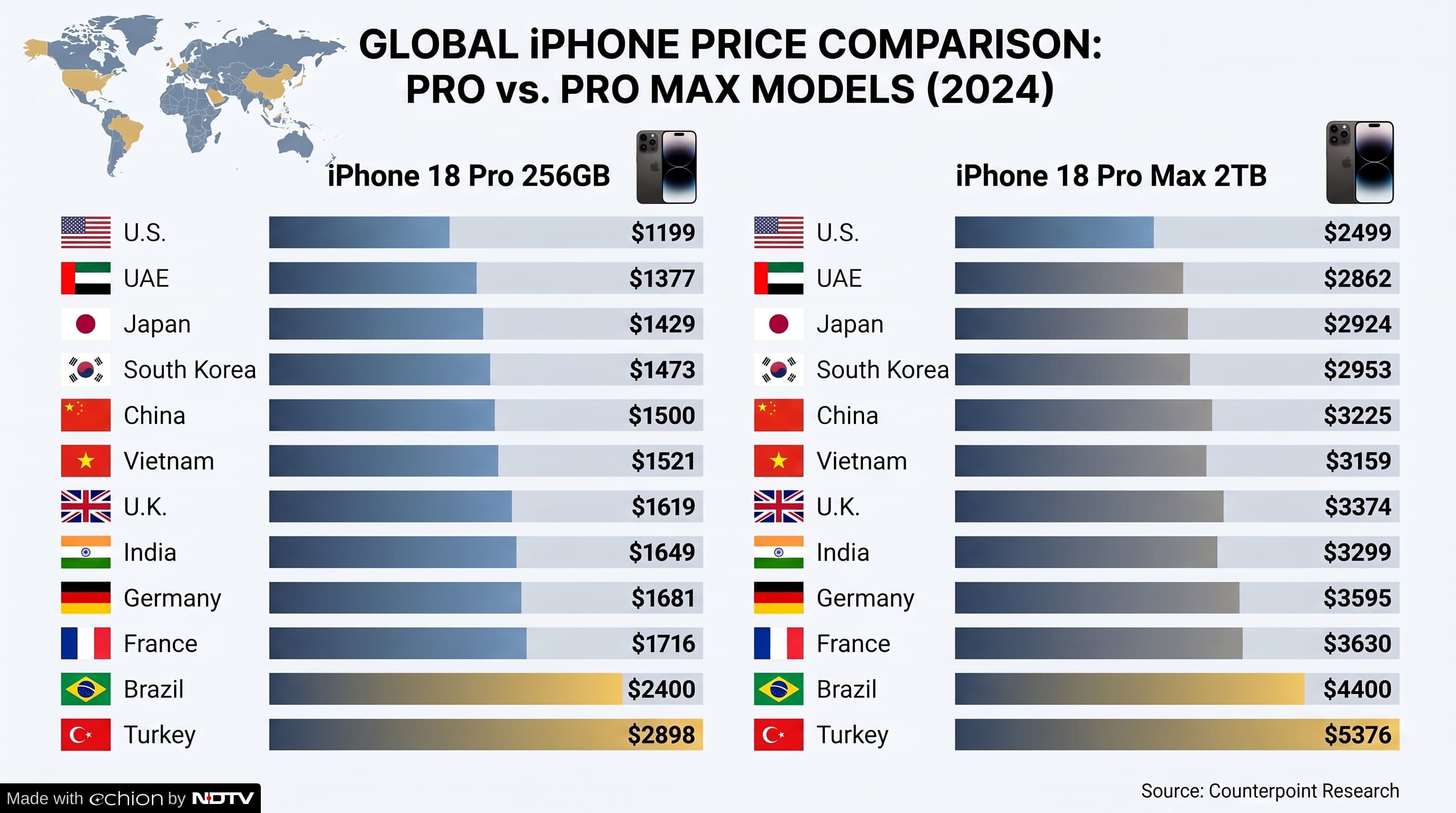
The iPhone 18 Pro starts at Rs 1,64,900 in India and rises to Rs 3,14,900 for the top 2TB Pro Max variant -- a price that, for someone earning Rs 1 lakh a month, represents more than three months of gross salary. "EMIs applies almost everywhere the same launch-day scenes play out: breaking a large expense into smaller monthly instalments doesn't reduce its underlying cost, it only changes when you pay it," Sunisa Arinta, a financier, told NDTV.
That's the uncomfortable subtext behind every triumphant "I got mine!" video from a launch-day queue. Some of the people in that line have the financial cushion to treat a three-lakh-rupee phone as a discretionary indulgence. Others are financing a purchase that will quietly reshape their next 12-18 months of cash flow.
KioskNews shows a cleaned-up reading view extracted from the publisher’s page — the original always lives on their site, not ours.