Get in the bin! UK Space Agency wants public to name its debris removal mission
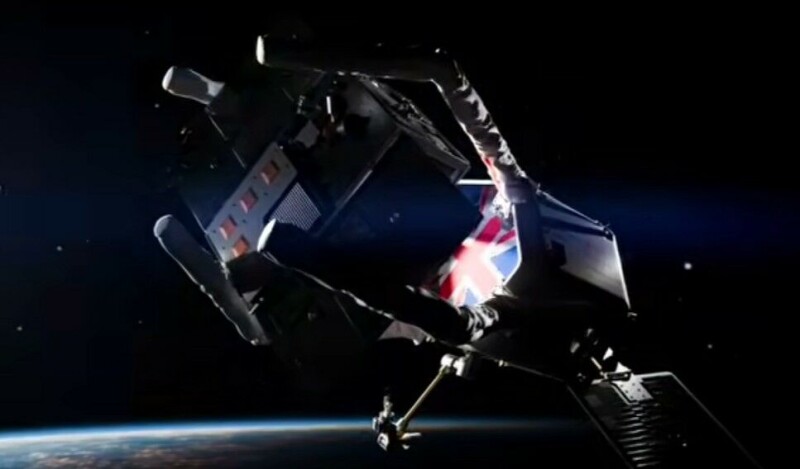
ClearSpace UK aims to be operational in 2029 with public's suggestion etched on the side of the spacecraft
The UK Space Agency needs a name for its Active Debris Removal Mission and has decided that the great British public are the people for the job.
The agency confirmed the operation earlier this week and selected ClearSpace UK to lead it. The plan is to remove two UK-registered satellites from Low Earth Orbit, with the clean-up due to begin in 2029.
The UK government is backing the effort with more than £60 million, and it expects the disposal to be completed by 2032.
REG AD
The spacecraft will grab each satellite, drop it into a lower orbit for disposal by burning up in the Earth's atmosphe, then climb to a higher one to await its next job. Less suicide dive, more cosmic bin round. And because it’s refuellable, the UK government says it "can help make a difference and sweep space for years to come."
REG AD
Launch is planned from SaxaVord Spaceport in Scotland.
But first, the quest needs a name. The Active Debris Removal Mission hardly trips off the tongue, and the UK Space Agency gave inspirational examples of other project names, such as NASA's Mercury program (named after the Roman god) or Tim Peake's Principia mission (inspired by Sir Isaac Newton's Philosophiæ Naturalis Principia Mathematica).
Oddly, the agency didn't mention the poll to brand a scientific research ship, which was eventually named Sir David Attenborough rather than Boaty McBoatface, the most popular suggestion.
The tag must consist of two words – so no "Itsy bitsy teeny weeny orbit debris clear machiney" – and 150 words to explain the name and how it reflects the theme. So no backronyms, for example Broom (British Robotic Orbital Object Manipulator). Starry McBinface?
Obviously, swear words are not allowed, nor is anything deemed "potentially offensive" or political. Using anything that might attract copyright or intellectual property lawyers is also out.
Letting the public suggest a name feels potentially riskier than the mission itself, though it should generate some engagement. It's a high-risk, high-reward campaign; there are plenty of dead satellites cluttering orbit, and the ability to remove them is becoming increasingly important.
Rob Atchison, Managing Director of ClearSpace UK, said, "Our next step is to design, build and test a spacecraft that can get close, safely, to an object never designed to be caught, and take control of it."
If you're getting a sense of déjà vu about this expedition, you're probably right. The European Space Agency (ESA) announced ClearSpace-1 in 2019, which the agency called "the first space mission to remove an item of debris from orbit" with a launch set for 2025. At the time, ClearSpace founder and CEO Luc Piguet said: "This is the right time for such a mission."
REG AD
In latest announcement, Piguet called the UKSA's selection "an important milestone."
This is far from the first mission to grapple an object in orbit. Most recently, Katalyst Space sent its LINK spacecraft to rescue NASA's Swift observatory. That was intended to capture the Swift spacecraft and raise its altitude, but failures with LINK doomed it.
Perhaps things might have gone better if the public had been given an opportunity to name the spacecraft? ®
KioskNews shows a cleaned-up reading view extracted from the publisher’s page — the original always lives on their site, not ours.