Carney eyes ‘unique alliance’ with EU, but there are legal limits to his plan
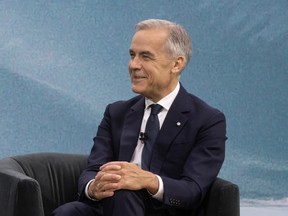
OTTAWA — Prime Minister Mark Carney has suggested that deeper integration and a “unique alliance” between Canada and the European Union (EU) could be the answer to the souring of the Canada-U.S. relationship amid the trade war with U.S. President Donald Trump.
Sign In or Create an Account
“We’re not looking to become a member of the European Union,” he said on Sunday.
“What we are looking — and will begin discussions for — [is] a unique alliance with the European Union. We share the same values, we have the same priorities, and we have very complementary strengths.”
Strategically, Canada offers Europe a like-minded G7 partner with natural resources, defence capacity, and similar values — as well as a shared interest in being less dependent upon an increasingly unpredictable Washington. But the policy content of Carney’s proposal remains undefined — and scholars on EU law say that the EU has no ready-made legal route for granting Canada a membership-like status.

Get a dash of perspective along with the trending news of the day in a very readable format.
By signing up you consent to receive the above newsletter from Postmedia Network Inc.
A welcome email is on its way. If you don't see it, please check your junk folder.
The next issue of NP Posted will soon be in your inbox.
We encountered an issue signing you up. Please try again
Under Carney especially, Canada is a “key player” and “highly respected,” said Cambridge professor Catherine Barnard, who specializes in EU law.
But trade watchers are also skeptical that Carney’s gambit for a “unique alliance” will lead to a new formal, membership-like arrangement anytime soon. The first hurdle is that no such EU category currently exists.
When asked what a “unique alliance” might look like, Barnard said nobody knows and pointed to the difference between the political and legal dimensions.
“The EU wants to be close to Canada and supportive of Canada — that’s the political side,” she said.
Legally, however, “there is just no possibility (of that) as the EU stands,” she said, pointing to the Michel Barnier staircase of the available models. At the top is full membership, followed by looser forms of economic integration — European Economic Area (EEA) participation, Swiss-style bilateral accords, customs-union arrangements, and free-trade agreements. Canada is already on the bottom step with the Comprehensive Economic and Trade Agreement (CETA), an EU-Canada free-trade agreement provisionally in place since 2017.
Simon Usherwood, professor of politics and international studies at The Open University, also pointed to the lack of “off-the-shelf relationships with other countries.”
While Carney has said he’s not seeking it, full membership would simply not be feasible under the EU treaties as they stand.
“People jokingly say, ‘Oh, yes, Canada could join, join the EU,’” Barnard said. “Well, legally that’s impossible because Article 49 of the treaty says you’ve got to be a European state, and Canada is not that.”
Even if the focus is just on a bespoke partnership, the political room for this remains uncertain as it’s not just a question of what Canada hopes to obtain but also what privileges — and demands — the EU is willing to extend to Ottawa.
The EU could, in theory, devise a new arrangement for a country it wants to draw closer. But Barnard said Brussels would be wary of creating a precedent because any generous concession to Canada could prompt Britain, Switzerland, the EEA states, Ukraine and other countries outside the bloc to demand comparable treatment.
Grégoire Roos, director of the Europe and Russia and Eurasia Programmes at Chatham House, was more enthusiastic about institutional innovation and said the debate about Canada comes at an interesting time — when the EU is considering whether to create more flexible, intermediate forms of association.
“Europe is asking itself where it wants to go in terms of enlargement,” he said, noting that it will depend on whether the EU is willing to create a broader set of intermediate relationships between full membership and outsider status.
While a bigger relationship with Canada could upset other countries, Roos argued that the risks of institutional innovation should not deter Europe.
“In the realm of politics and policymaking, any kind of audacity is risky. But this is exactly what Europe needs,” he said.
But if a new formal status is unlikely anytime soon, what exactly can Ottawa and Brussels achieve?
On that point, the experts agree that the clearest — and least legally questionable — way forward is on defence, Ukraine support, and industrial cooperation.
Usherwood, for example, expects Canada’s support for Ukraine to continue to expand and believes its participation in Security Action for Europe (SAFE), the EU’s defence financing programme, could “bear some fruit pretty quickly on defence procurements.”
Both the EU and Canada have incentives given U.S. unpredictability and the need to diversify their defence supply chains.
Other areas for strategic cooperation could include critical minerals, energy security — including potential undersea electricity interconnections — and technology.
Carney has also suggested that a deal could include greater mobility for Canadians, specifically “enhanced labour mobility… enhanced educational opportunities, enhanced research co-operation.”
Usherwood said a youth-mobility scheme would be more realistic than unrestricted free movement. But Barnard cautioned that EU member states would retain control over admission numbers and could, in principle, set Canadian quotas at zero.
Roos was more optimistic and said freer movement for Canadians to work and live in the EU would not be difficult in practical or political terms. He even believes Canada’s positive image in Europe could help mute populist opposition to such mobility arrangements, at least for now.
When it comes to deeper trade integration between Canada and the EU, however, the experts were more cautious.
Usherwood said CETA itself illustrates how difficult deeper integration can be.
“CETA … is still not fully in effect because we’ve still got 10 member states that haven’t done the ratification because they’re worried about access of Canadian agricultural imports into the EU,” he said.
The EU can readily make separate agreements with Canada on defence and security, Barnard said. But WTO rules generally prevent Brussels from offering Canada selective preferential access to parts of the EU market without extending the same treatment to other WTO members. The principal exception is a free-trade agreement or customs union under GATT Article XXIV, which must cover “substantially all” trade between the parties — not a narrow, Canada-specific economic arrangement.
Even if a more generous arrangement were legally feasible, Barnard said, the politics would remain difficult. If Brussels devised a new Canada-specific relationship, countries with stronger geographic or accession claims could demand comparable treatment.
“It’s difficult to see quite what cozy relationship the EU might have with Canada unless they invent something new,” Barnard said. “And if they invent something new, then Ukraine, Bosnia, Serbia, the U.K. all will say, ‘Well, we want some of that, and we have much greater claim than Canada does because we’re on the EU borders.’”
For that reason, Barnard and Usherwood see the “unique alliance” language as more rhetorical than immediately realistic.
Our website is the place for the latest breaking news, exclusive scoops, longreads and provocative commentary. Please bookmark nationalpost.com and sign up for our daily newsletter, Posted, here.
Join the Conversation
This website uses cookies to personalize your content (including ads), and allows us to analyze our traffic. Read more about cookies here. By continuing to use our site, you agree to our Terms of Use and Privacy Policy.
KioskNews shows a cleaned-up reading view extracted from the publisher’s page — the original always lives on their site, not ours.