China’s EV industry faces double blow from EU export quota, VAT rebate cut
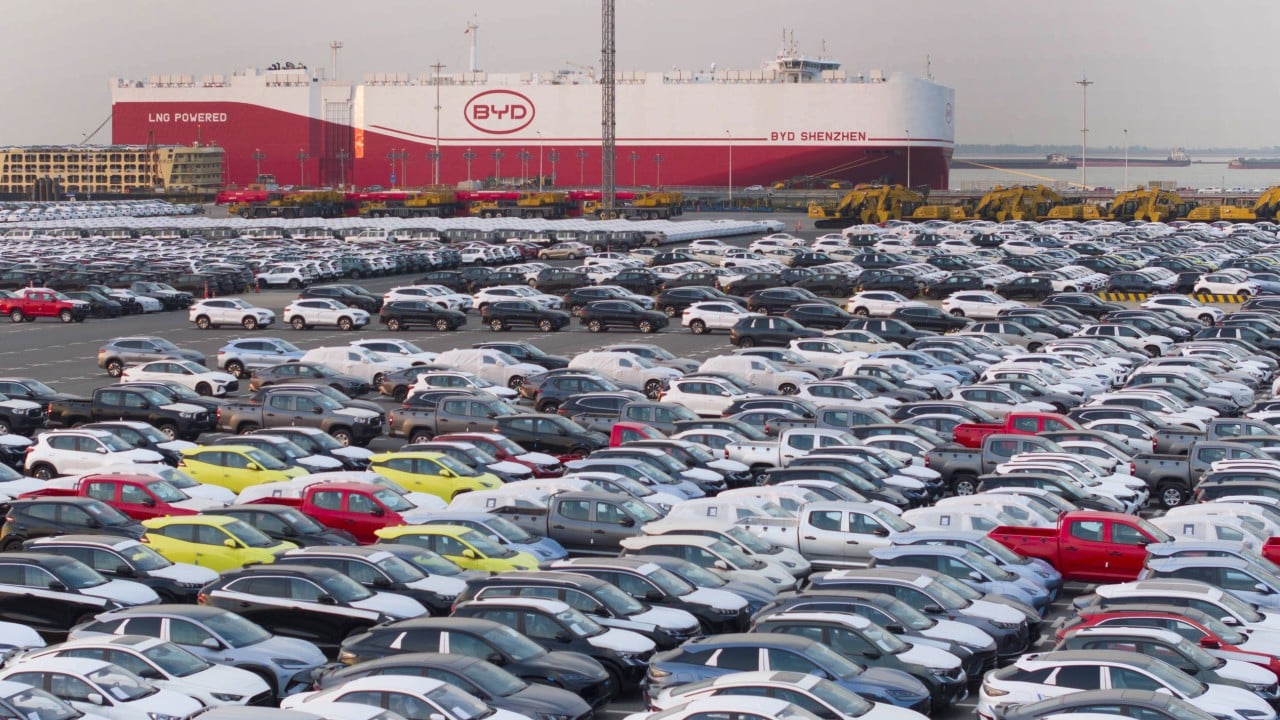
China’s electric vehicle (EV) makers have been hit with a double blow as both Beijing and Brussels introduce measures that will affect their exports, leading analysts to revise down their earnings forecasts for the industry.
The twin measures – combined with a sales decline in China’s domestic market – could create a “do-or-die moment” for some of the country’s 50-odd EV makers, ramping up financial pressure on the companies, according to industry officials.
On Friday, China and the European Union reached an “understanding” on trade that will see Brussels impose a quota on imports of Chinese-made hybrid vehicles – part of a wider effort by Europe to reduce its trade deficit with China.
That was followed by an announcement from Beijing on Monday that it would slash a value-added tax (VAT) rebate for exports of electric cars from 13 per cent to 9 per cent from April next year.
The policies are set to have a direct impact on Chinese carmakers’ earnings from exports – a setback for an industry that has relied on booming overseas shipments to offset a slump in domestic sales over the past year.
The four-percentage-point cut in China’s export VAT rebate “is poised to act as a direct margin headwind for Chinese new-energy vehicle exporters … which could materially weigh on their international profitability”, Deutsche Bank said in a note on Monday.
BYD, the world’s biggest EV maker, could see its net profit of each car exported to the EU fall by about 5,000 yuan (US$747) per car as a result, according to the bank.
Meanwhile, Chinese carmakers will see their hybrid vehicle exports to the EU market fall by “several million cars” over the next four years due to the export quota, according to EU trade chief Maros Sefcovic.
Bloomberg reported that the European Commission was likely to cap Chinese-made hybrid vehicle imports at 350,000 per year initially, with the quota increasing by 6 per cent annually over the next four years.
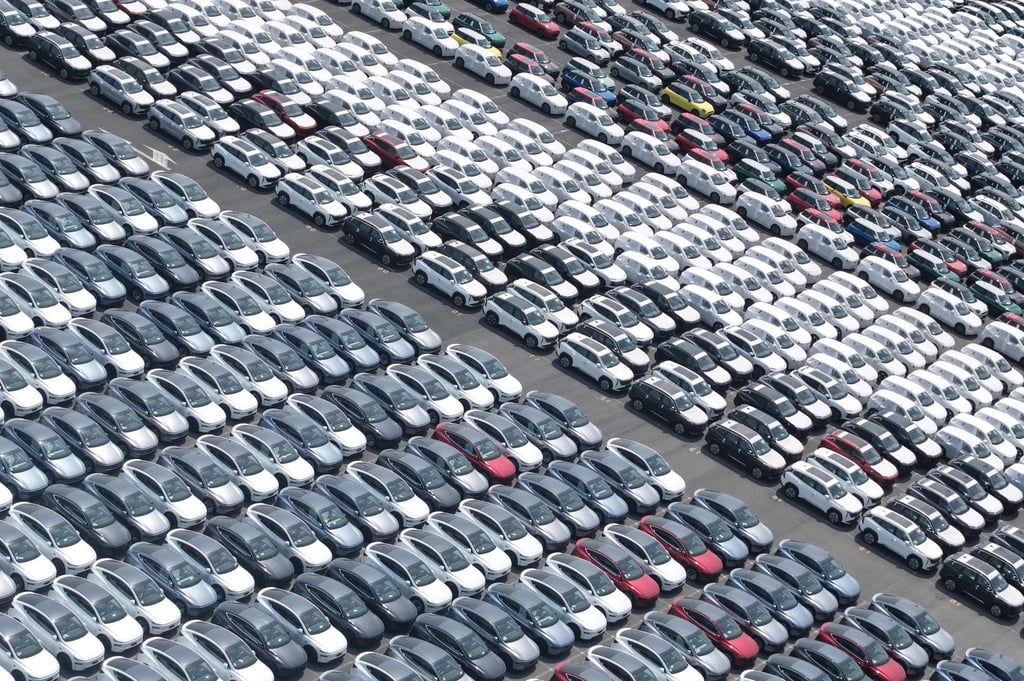
China shipped a total of 452,000 hybrid cars to the EU in the first half of 2026 alone, according to data from the European Automobile Manufacturers’ Association.
BYD alone would see its European sales decline by about 80,000 cars due to the quota, Deutsche Bank said, putting a drag on its export growth in the future.
SCMP Plus is a new premium news platform that gives you an
all-inclusive edge to stay ahead on China news.
To access our exclusive content you’ll need to subscribe.
Already a subscriber?
LOG IN
The bank said it had revised down its profit forecast for BYD in 2027 by 21 per cent.
“Europe is the major growth market for Chinese-made EVs, and an export quota is nothing less than a barrier for companies like BYD to pursue high growth there,” said Eric Han, a senior manager at Shanghai-based consultancy Suolei.
“They are encouraged to move up the value chain to build expensive, premium models to attract European customers.”
Chinese carmakers have pivoted to hybrid cars in the European market over the past two years, after the EU placed tariffs of up to 35.3 per cent on pure electric cars from China.
Buoyant overseas sales have offered China’s automotive industry a cushion against a weak domestic market, with car sales plunging 21.7 per cent year on year in the first nine months of 2026 to 13.3 million.
China’s vehicle exports are forecast to surge to 12 million this year, up 44 per cent from last year’s 8.3 million, according to the China Passenger Car Association.
Despite their growing popularity overseas, some of China’s EV makers are facing financial pressure as sluggish sales contribute to a fierce price war in the domestic market.
Among the nearly 30 Chinese carmakers that focus solely on EVs, only three generated a profit in the first half of the year: BYD, Stellantis-backed Leapmotor and premium EV assembler Nio.
Another 20 or so manufacturers make both EVs and petrol-powered cars.
Morgan Stanley said in a report on Monday that auto manufacturing facilities in the EU could be highly sought after by Chinese carmakers as they increasingly localised production to avoid tariffs and the new export quota.
Underutilised plants and contract manufacturers could gain pricing power as late entrants seek access, while Chinese battery and component suppliers with European capacity are likely to follow assemblies built by Chinese carmakers to expand capacity, it said.
KioskNews shows a cleaned-up reading view extracted from the publisher’s page — the original always lives on their site, not ours.