72% of migrants find better lives in south: Survey
For migrant workers, moving brings better livelihoods—but little job security
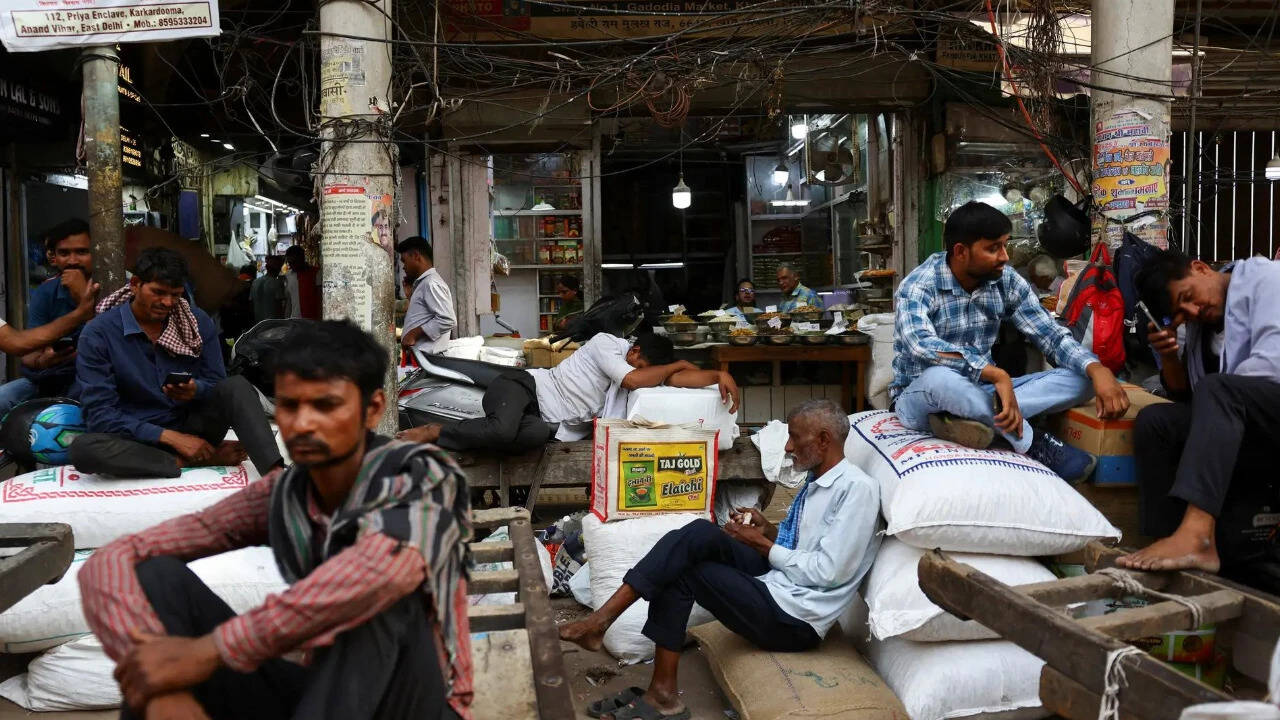
NEW DELHI: Nearly 72% of migrant workers surveyed in three south Indian states felt that moving for work has improved their standard of living and more than half (around 57%) intended to continue working in their destination state, as per a new report.At the same time, it turns out that over 86% of workers have no signed employment contracts and many face difficulties ranging from accessing welfare and essential services to experiencing language, communication and social barriers.Clearly migration decisions are shaped strongly by livelihood insecurity and limited employment opportunities. Migrants cited low wages at origin, lack of jobs, better opportunities, irregular employment, poverty and debt among the principal reasons for moving.These findings are part of the South India Interstate Migration Survey (SIIMS) 2026, that offers first-of-its-kind data on the changing nature of migration within India and on how migrant workers from other states (primarily from northern and eastern) live and work in Karnataka, Keralam and Tamil Nadu.The study surveyed 1,824 migrant workers and covered sectors including agriculture, fishing and marine work, and daily labour in all three states.
It also covered hospitality in Keralam, textile and garment work in Tamil Nadu, and scrap collection in Karnataka.Over 92% of the migrants came from West Bengal (26.2%), Bihar (21.8%), Assam (17.1%), Odisha (12%), UP (9.6%) and Jharkhand (5.6%).Conducted by the International Institute of Migration and Development (IIMAD), the study was supported by the United Nations Population Fund (UNFPA) in collaboration with the International Organization for Migration (IOM).It comes through that over 77% of the surveyed workers were recruited through non-contractor channels, nearly 58% are paid in cash with Rs 17640 the average monthly wage and the average working day being 9.87 hours. The report also brings into focus the gender disparity as it came through that women workers earned about Rs 3,313 less per month than men.The data shows that just a little over 19% of migrant workers can easily use their welfare benefits when they move between states; 35% can do so partly and around 45% can barely do so.It also comes through that over 73% face problems accessing welfare and 69% face problems accessing healthcare.The survey found that while 88.2% of migrant workers are included in formal financial services, exclusion was higher in Karnataka (26.8%) and among scrap collection workers (31.3%).
The study recommends building on One Nation One Ration Card so that welfare benefits follow the worker, multilingual help desks and helplines, stronger labour inspection and closer coordination between states.Andrea M Wojnar, UNFPA India Representative and Country Director Bhutan said, “By highlighting critical gaps in welfare portability, healthcare access, and workplace protections, this study provides a clear roadmap for stakeholders to turn data into targeted action.”
KioskNews shows a cleaned-up reading view extracted from the publisher’s page — the original always lives on their site, not ours.