6 Forgotten R-Rated War Movies That Are Perfect From Start to Finish

Liam Gaughan is a film and TV writer at Collider. He has been writing film reviews and news coverage for ten years. Between relentlessly adding new titles to his watchlist and attending as many screenings as he can, Liam is always watching new movies and television shows.
In addition to reviewing, writing, and commentating on both new and old releases, Liam has interviewed talent such as Mark Wahlberg, Jesse Plemons, Sam Mendes, Billy Eichner, Dylan O'Brien, Luke Wilson, and B.J. Novak. Liam aims to get his spec scripts produced and currently writes short films and stage plays. He lives in Allentown, PA.
The great French director Franco Truffaut once said that there’s no way to make an anti-war film, which is an interesting perspective considering how long the entertainment industry as a whole has been fascinating with conflicts. Many of the early works of cinema that are held up as classics today belonged to the epic genre, which drew from mythology, history, and legend to tell grandiose stories of conflict. Hollywood was revolutionized in the ‘40s when the industry had to find its place within World War II, which led to films being made that were set during the war and propaganda productions that were helmed by legitimate filmmakers. There is certainly a component of glamorization that can be found in almost any film that chooses to depict war in a dramatic way, but it would be hard to claim that they are all complicit in lionizing it. Just look at the original All Quiet on the Western Front, which was subjected to censorship in Nazi Germany because of its anti-war sentiments.
w
The MPAA has become a significant factor in the evolution of war films after Hollywood freed itself from some restrictions (while implementing some others) when the new guidelines were created in the ‘60s. It became less common to see rousing adventure war films, but there was an ability to create darker and more violent works that more openly reflected the hell that soldiers went through; due to the way that the ratings system works in the United States, it is far more common for a film to receive an NC-17 rating because of graphic sex and nudity, as there is an extreme amount of violence that can be shown in an R-Rated film. There’s a number of universally beloved R-Rated war films like Platoon, The Deer Hunter, and Saving Private Ryan that don’t need the additional spotlight, but a few have slipped through the cracks to become underrated gems.
6 ‘Who’ll Stop The Rain’ (1978)

Who’ll Stop the Rain is a stylized New Hollywood neo-noir thriller that uses the backdrop of the Vietnam War to explore the political unrest of the ‘70s. Nick Nolte stars as a merchant sailor who gets trapped within a standoff between corrupt DEA agents and drug dealers when he attempts to help a disillusioned soldier (Michael Moriarty) smuggle heroin to his wife (Tuesday Weld) in San Francisco. Although the scenes that are actually set in Vietnam feature riveting action cinematography, the backdrop of the conflict serves as a tone-setter that explains the moral depravity of the era, and why addiction became such an increasing problem for veterans and their families.
Who’ll Stop the Rain is both entertaining and thought-provoking, as it molds a classical noir premise out of events that were ongoing at the time of its release and tapped into the public psyche. Nolte wasn’t quite the massive star that he would become only a few short years later when 48 Hrs. became a sensation, but he shows in Who’ll Stop the Rain why he is one of the greatest living actors.
5 ‘Cross of Iron’ (1977)

Cross of Iron was an ambitious and dangerous World War II epic that dared to examine the perspective of the Nazi officers during one of the most pivotal conflicts during the Eastern Front, and it's just as uncompromising as what fans of Sam Peckinpah would have come to expect from the maverick filmmaker. Cross of Iron doesn’t necessarily imply that all of the men serving within the German military were xenophobic, but it does explore how individualism can be ironed out when a fascist regime forces ordinary citizens to sign up. There is absolutely no heroism within Cross of Iron, and the film doesn’t suggest that anything was solved as a result of the senseless bloodshed.
The violence in Cross of Iron is as excessive as what could be allowed in an R-Rating, but Peckinpah’s intent to examine the brutality of warfare ensured that it did not feel exploitative in the slightest. The film also benefits from an incredible ensemble, including James Coburn in one of his greatest performances and the German actor Maximilian Schell, who had famously become one of the youngest Best Actor winners in the history of the Academy Awards for his work in another beloved World War II film, Judgment at Nuremberg.
4 ‘Defiance’ (2008)

Defiance is directed by Edward Zwick, a filmmaker who most people might not know by name, even if they should. Although Zwick’s filmography is vast and expansive, he has a particularly knack for working within the war genre, as he directed Denzel Washington to an Oscar-winning performance in Glory, crafted one of the most essential World War I epics with Legends of the Fall, and made one of the last great feudal dramas with The Last Samurai. Defiance explores an underresearched era of World War II history, and stars Daniel Craig, Jamie Bell, and George McKay as a group of Jewish brothers who lead a rebellion against the Nazi forces in World War II.
Defiance is an inspirational story of loyalty and bravery in the face of impenetrable odds, and the intimate story of a family having to protect their heritage offers a powerful counter narrative to the many World War II films that focus on the suffering of Jewish people. Craig is so beloved for his role as James Bond that he isn’t always given enough credit for what a chameleonic actor he is, and Defiances allowed him to play a very different type of action star.
3 ‘Enemy at the Gates’ (2001)

Enemy at the Gates has a unique take on World War II because it is focused on a cat-and-mouse game between two snipers who find themselves on opposite sides of the Battle of Stalingrad. The isolating, exacting experiences of these lone gunmen aren’t often delved into in such detail, and Enemy at the Gates makes both sides of the rivalry compelling thanks to strong work from both Jude Law and Ed Harris.
Enemy at the Gates draws parallels between two men who have experienced tragedy, and end up being just as motivated to find each other as they are to claim victory for their respective countries. While adding in a romantic storyline can often feel like a drag if it comes at the expense of action in a war film, Enemy at the Gates features a compelling relationship that works because of the excellent chemistry between Law and Rachel Weisz.
2 ‘Tigerland’ (2000)

Tigerland is unlike any other film about the Vietnam War because it is almost entirely focused on the process of preparing soldiers to ship off, which involves both physical endurance and psychological transformation. Joel Schumacher was a filmmaker who understood how to depict complex and sensitive portrayals of masculinity, and Tigerland succeeds in examining the brotherhood that forms out of the recruits who share this experience at a young moment in their lives.
Tigerland is best known as being the film that launched Colin Farrell as an actor, even though it was not necessarily a box office hit at the time. It’s easy to see why there was so much acclaim for his performance, as Farrell put in the research needed to understand the role and went through extensive training so that he would endure the same labors that his character did.
1 ‘Nuremberg’ (2025)

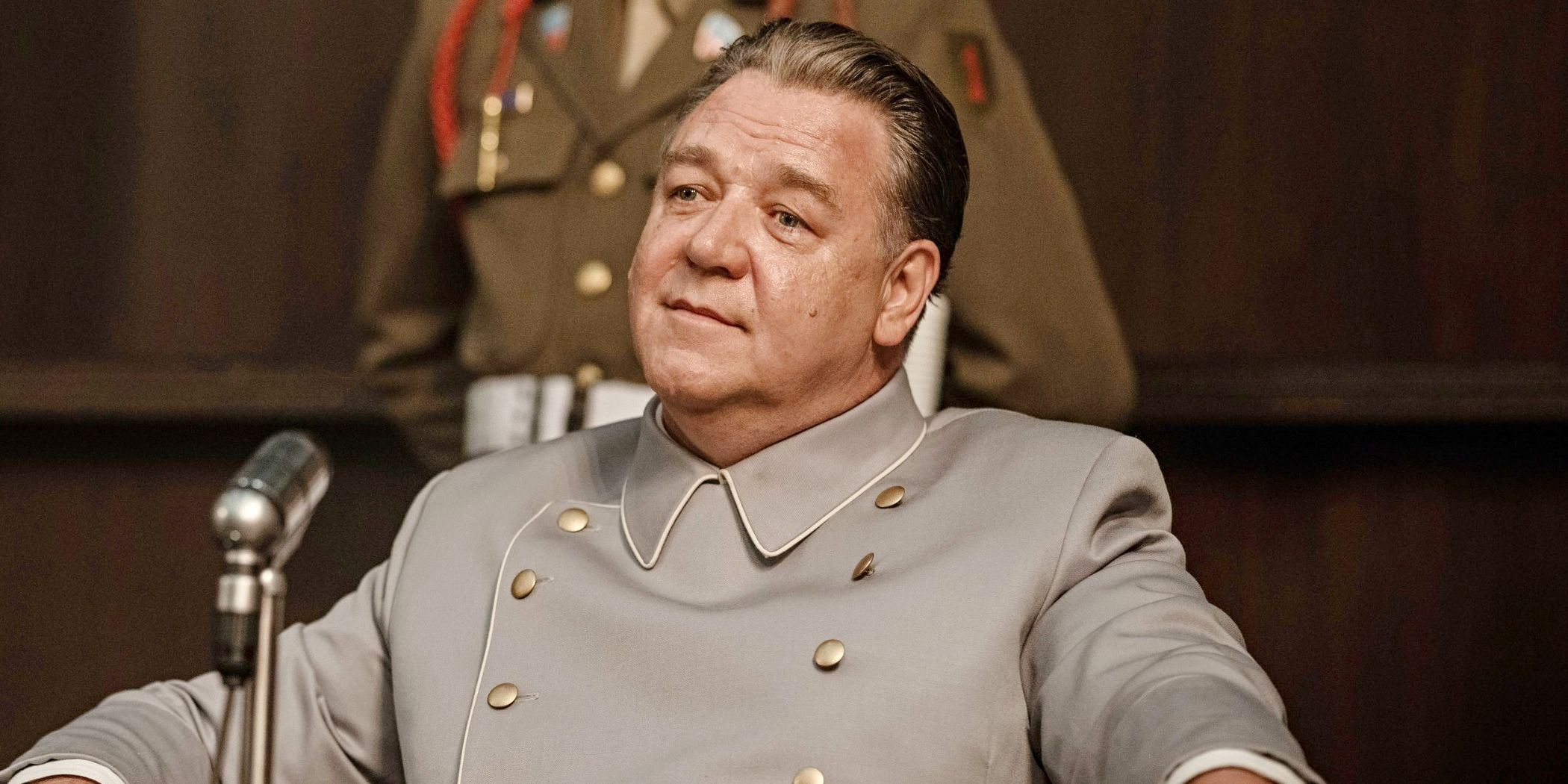
Nuremberg has thankfully earned a second life on Netflix after being ignored by audiences and awards voters at the end of last year, which is a shame because it is the exact type of “film that they don’t make anymore.” While obviously any film that approaches this specific subject is going to end up drawing comparisons to Judgment at Nuremberg, it tells a distinct enough story that it is worth considering as a unique and separate achievement; the actual Nuremberg trials were a demanding and complicated series of courtroom cases that involved multifaceted efforts from different parties, so there is certainly room for more than one film about them.
Nuremberg is worth noting because of the exceptional performances, with Russell Crowe in a major comeback role as the Nazi war criminal Hermann Göring, who attempted to mask his involvement in the Holocaust by claiming that he was simply a patriot who was doing his duty. Rami Malek proves to be his equal as Douglas Kelly, the psychologist who was tasked with evaluating Goring and determining whether he was mentally-equipped to be put on trial. Although Michael Shannon is predictably excellent as the American justice Robert H. Jackson, Nuremberg features a breakthrough role from Leo Woodall as Howard Triest, a German-born soldier in the United States military whose Jewish heritage becomes a matter of note during the trials; Woodall is having quite a year in 2026 thanks to Tuner, Tony, and being cast in The Lord of the Rings: The Rings of Power, and his performance in Nuremberg shows a soft and melancholy side to an actor with a tremendous amount of inherent charisma.
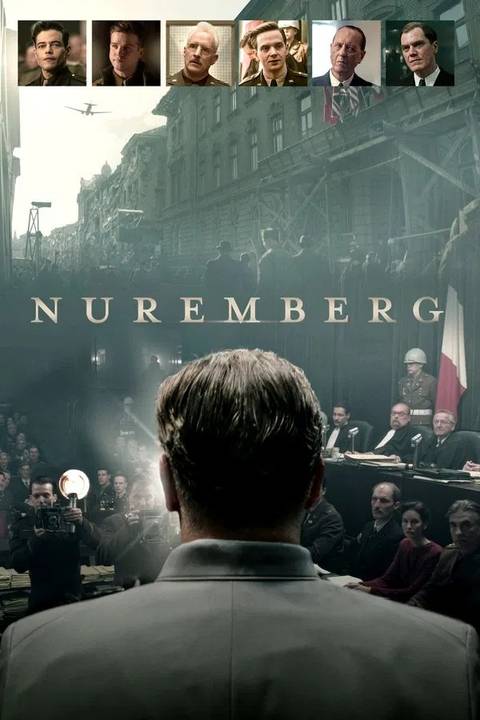
Nuremberg
6 10
- Release Date
- November 7, 2025
- Runtime
- 148 minutes
- Director
- James Vanderbilt
- Writers
- James Vanderbilt, Jack El-Hai
KioskNews shows a cleaned-up reading view extracted from the publisher’s page — the original always lives on their site, not ours.