Investors Lose Rs 5 Lakh Crore In An Hour: 5 Reasons Behind Market Crash Today
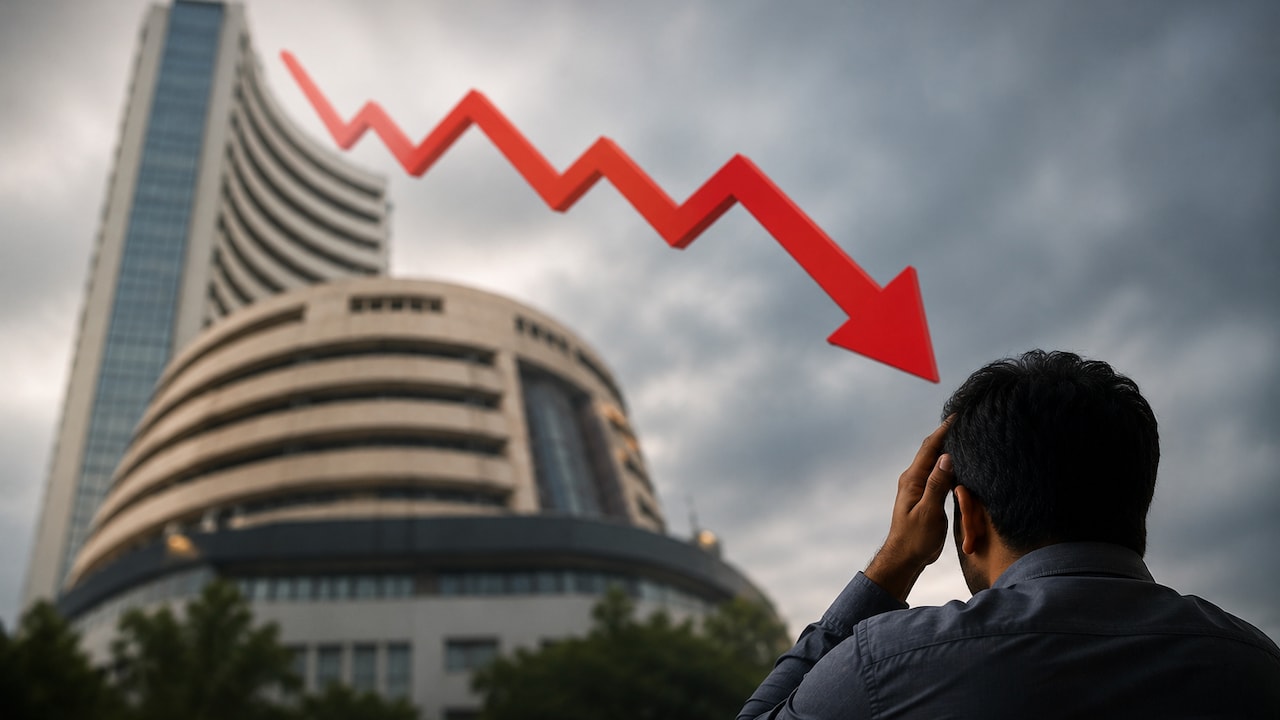
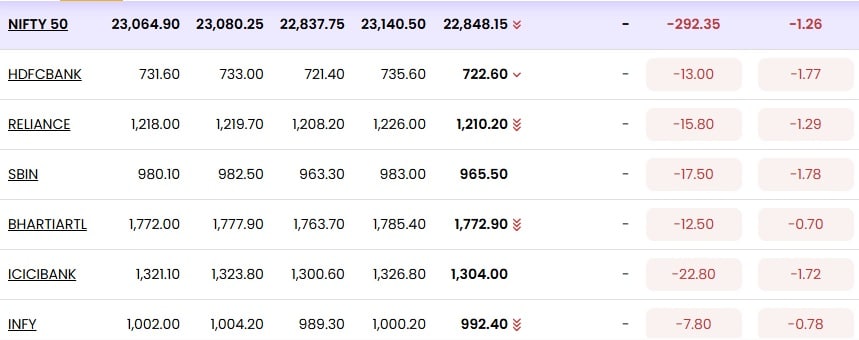
Stock Market News: The Indian stock market came under heavy selling pressure on Monday. The Sensex fell more than 900 points within an hour of the market open, and the Nifty 50 slipped below the 23,000 mark.
The crash came after both benchmarks had already posted their seventh consecutive weekly decline. Rising crude oil prices, higher US bond yields and continued foreign investor selling have added to the pressure on Indian equities.
At the open, the total market capitalisation of the BSE Sensex companies stood at around Rs 4,82,16,004 crore. By 10:15 am, the combined valuation had fallen to Rs 4,77,19,611, translating into a loss of around Rs 4.9 lakh crore in market value.
Also Read | Layoffs Are Rising In Tech, But These Skills Are Helping People Unlock Better Pay
The sharp decline was not driven by one single factor, as per experts. Here are five key reasons behind Monday's market crash. FOLLOW LIVE UPDATES
1. Crude Oil Prices Are Rising Again
Oil has emerged as one of the biggest concerns for Indian investors. Brent crude has remained above the $100-a-barrel mark amid continuing tensions involving the US and Iran. Higher crude prices are a concern for India because the country imports a large portion of its oil requirement.
"Expensive oil can push up India's import bill and inflation while putting pressure on the rupee. It can also squeeze the margins of companies that depend heavily on fuel and transportation. Markets have therefore been closely tracking every move in crude prices," Abhishek Bhilwaria, Partner at BhilwariaFinserv, told NDTV.
2. US Bond Yields Are Making Investors Nervous
Another major trigger is the sharp rise in global bond yields. The US 10-year Treasury yield has climbed to levels not seen in years. Higher US yields can make dollar-denominated fixed-income assets more attractive compared with riskier emerging-market equities.
This creates another challenge for markets such as India. Investors are also worried that persistent inflationary pressure from higher oil prices could keep US interest rates higher for longer. Recent market reports have pointed to rising rate-hike expectations as an additional source of pressure.
3. Foreign Investors Continue To Sell
Foreign investor outflows remain another weak spot for Indian equities. Foreign investors have been pulling money out of Indian markets amid concerns over global yields, oil prices and geopolitical uncertainty. This selling becomes particularly important when it hits large-cap stocks. Heavy selling in index-heavy companies can quickly drag the Sensex and Nifty lower.
"The continued foreign outflows have been one of the factors keeping sentiment weak even when domestic liquidity has provided some support," said Bhilwaria.
4. Banking And Financial Stocks Take A Hit
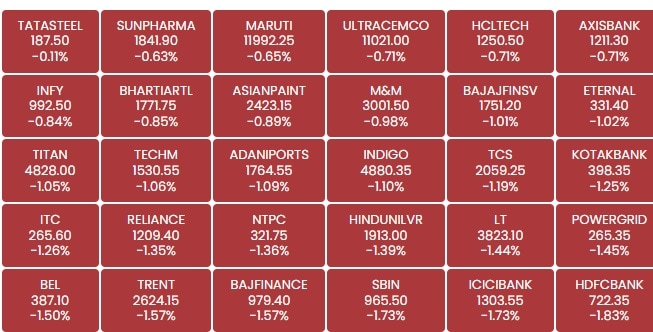
Banking and financial stocks were among the biggest losers in Monday's early trade. Banking and financial shares were the worst hit as the Sensex and Nifty moved sharply lower.
Banks and other financial companies have a significant weight in the benchmark indices. When these heavyweight stocks fall together, the impact on the Sensex and Nifty can be much larger than a similar decline in smaller companies.
5. Global Uncertainty Is Keeping Investors Away From Risk
The final piece of the puzzle is the broader global risk-off mood.
Tensions involving the US and Iran have pushed up oil prices and increased uncertainty across global markets. At the same time, higher bond yields have added another layer of pressure.
Indian equities were already coming off a weak week. The Sensex had closed Friday at 73,896, while the Nifty ended at 23,140.50. Both benchmarks had posted their seventh straight weekly decline. That left the market vulnerable to another wave of selling when global cues weakened.
KioskNews shows a cleaned-up reading view extracted from the publisher’s page — the original always lives on their site, not ours.