Greer says no specific timeline set for enforcing US-China Board of Trade
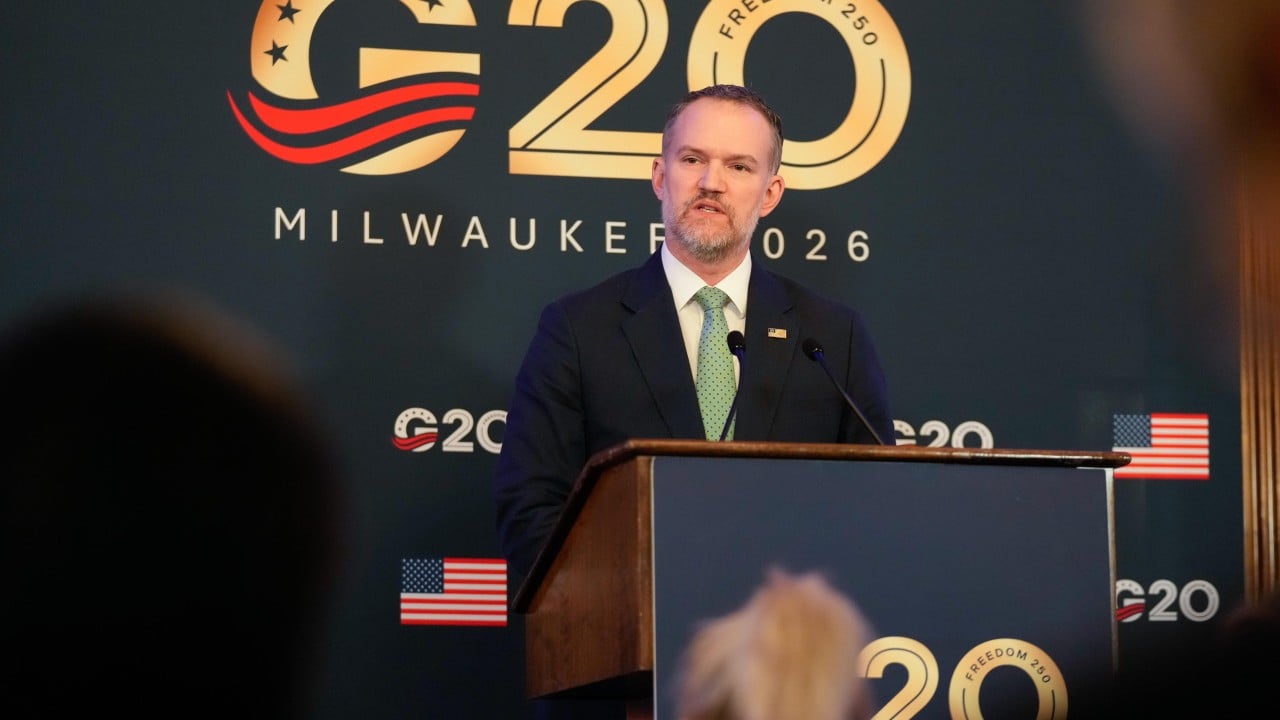
Speaking on the sidelines of the Group of 20 Trade Ministers’ meeting in Milwaukee, Wisconsin, Greer said the tariff reductions under the mechanism were “a policy outcome” and that the recommendations would have to go through a legal process before implementation.
The US government could put the Board of Trade recommendations out to the public, Greer said, adding that there would then be a “common process” in which the government could go “back and forth” before making a legal determination on whether to adopt them in a tariff action.
“We have to stick to our legal processes,” he said.
08:58
What are rare earths, and why is China’s dominance facing global pushback
At last week’s summit, Beijing and Washington launched the Board of Trade mechanism and on Sunday unveiled lists of non-sensitive products worth up to US$30 billion each that would be eligible for tariff reductions.
The White House released tariff-reduction lists covering 77 categories of Chinese imports into the US and 1,619 US products headed for China.
The US import list included a range of consumer goods, from microwave ovens and electric irons to Christmas ornaments and toys. China’s list was dominated by agricultural products such as beef and vegetables, along with coal, timber and medical devices including hearing aids and pacemakers.
China’s Ministry of Commerce said on Monday that more than 90 per cent of the products covered by the agreement would receive most-favoured nation tariff rates, with reciprocal tariffs fully waived.
The agreement, reached in South Korea in October 2025, reduced US tariffs on some Chinese goods, put additional US restrictions on Chinese-affiliated companies on hold, and suspended certain Chinese rare earth export controls.
No G20 consensus on forced labour, excess capacity
The two-day G20 Trade Ministers’ meeting in Milwaukee ended without consensus on forced labour and excess capacity, two of Washington’s major priorities for its 2026 presidency of the forum.
As it maintains a fragile trade truce with China, Washington has used its G20 presidency to highlight Beijing’s global trade surplus and press members to address what it calls “excessive imbalances” and forced labour practices. China has denied the allegations.
SCMP Plus is a new premium news platform that gives you an
all-inclusive edge to stay ahead on China news.
To access our exclusive content you’ll need to subscribe.
Already a subscriber?
LOG IN
“It is unfortunate that we could not reach consensus on the forced labour statement,” Greer said at a press conference on Thursday.
“Believe it or not, we have countries in the G20 that do not want to commit to having a prohibition on the import of goods made with forced labour,” he noted, indicating that opposition to the proposal extended beyond China.
01:21
Trump says he has ‘truly great friendship’ with China’s Xi during reception at White House
In July, the US imposed tariffs against 60 economies, including China, Japan, South Korea, India and European Union member states, ranging from 10 to 12.5 per cent after a trade investigation into forced labour allegations.
Experts say the forced labour allegations are a pretext for imposing tariffs as part of US President Donald Trump’s broader “America-first” trade agenda.
Similarly, Washington failed to secure a consensus on excess capacity, another issue where it sought broader G20 backing.
Without naming China, Greer said excess capacity “plagues” a range of sectors, including steel, automotive production, batteries and solar panels – industries where Beijing has a dominant global position.
“Nearly all countries agreed that this is an issue that requires action,” he said. “Again, it’s unfortunate we couldn’t reach consensus on a statement on this issue to address structural excess capacity and production.”
US proposes new global framework to address steel production capacity
“The United States has taken robust measures, and it probably makes sense for other countries to do that too,” Greer said after a meeting of the Global Forum on Steel Excess Capacity (GFSEC).
The forum adopted the framework, which calls for countries to reduce or eliminate “market-distorting subsidies” and share “information on non-market policies and practices” in countries outside the group.
The GFSEC has 28 members, including Canada, Mexico, Japan, South Korea, France and Germany, and works to address excess steel capacity globally. China is not part of the grouping.
China’s dominance of the global steel industry has drawn growing scrutiny over the past two decades, with multiple countries imposing tariffs, anti-dumping duties and other measures on its steel imports. It produced around 960.8 million tonnes of crude steel in 2025, accounting for nearly 52 per cent of global output.
According to Greer, the G20 trade ministers reached consensus on denouncing the weaponisation of food through coercive trade actions.
KioskNews shows a cleaned-up reading view extracted from the publisher’s page — the original always lives on their site, not ours.